Tag Archives: Holistic Education

5 Stages of Spiritual Practice… including becoming aware the universe is alive and acting compassionately towards all beings

Can we wake up in an instant? Yes, possibly.. and engaging in the five stages of spiritual practice can make this more likely.

This process begins with healing, becoming whole and closely following this, finding ways to be positive – all in all, happy and healthy. This is followed by ‘death’ of fixed, limiting views and then an emergence into directly experiencing interconnectedness – and potentially, the universe as alive. Finally, spiritual emergence unfolds – a profound understanding and appreciation of live and its preciousness – and engagement in spontaneous compassionate activity.

Here is more detail on each of these stages:

Stage 1: Integration – In this stage, the key meditation practice is mindfulness – including the Mindfulness of Breathing and simply being present with what is arising in the our immediate, embodied experience.

This is itself, in a context of many distractions is a radical revolutionary act of independence, and self-efficacy. Sometimes, we may realise that we need support and this can include engagement in bodywork or healing sessions to address painful past experiences.

Part of mindfulness is also being aware of when we fall short of our aspirations and values. Ethics are a key part of mindfulness – being aware of the effects of our actions on other beings and being aware of our intentions and when unhelpful habitual patterns may be arising so we have an opportunity to do something different.

Stage 2: POSITIVE EMOTION – This phase is about the quality of our attention – cultivating kindness, compassion, joy and overall positivity. Authenticity in this is key – and practices for cultivating emotional positivity include recollection of gratitude, cultivating loving kindness (metta bhavana).

The process enables us to feel delight, bliss and even rapture though opening into embodied levels of deep ‘absorption’ (the dhyānas). This process can reveal areas where we feel less inclusive, towards parts of ourselves, or others, including other humans and non-human beings – so that we can transform this.

A teaching on loving kindness (the Kariniya Metta Sutta) goes, “Whatever living beings there may be, (moving, strong) animals or (still, weak) plant, without exception, whether they are very long or large or middling in size, or short, great or small, whether they are visible or unseen, whether living nearby or far away, whether they are born, or not yet come to be: may all living beings have happiness.” In other words, the aim is to cultivate well wishes towards all beings, regardless of species or material form.

Stage 3: SPIRITUAL DEATH – This process is a progression into wisdom (prajna) and vision, as in seeing the truth in terms of ‘ultimate reality’ with liberation from a ‘fixed self-image’ and habitual delusions that arise from greed, aversion and ignorance. Sometimes this is described as entering the ‘gateless gate’.

Practices for this include contemplation on the elements, on conditioned co-arising, death and impermanence – and thereby recognising truths such as that of impermanence, insubstantiality and the poignant beauty of ’emptiness’ (sunyata).

In the process of drum journeying, there may be a direct experience of letting go of a sense of separateness and individuality, and awakening into interconnected presence.
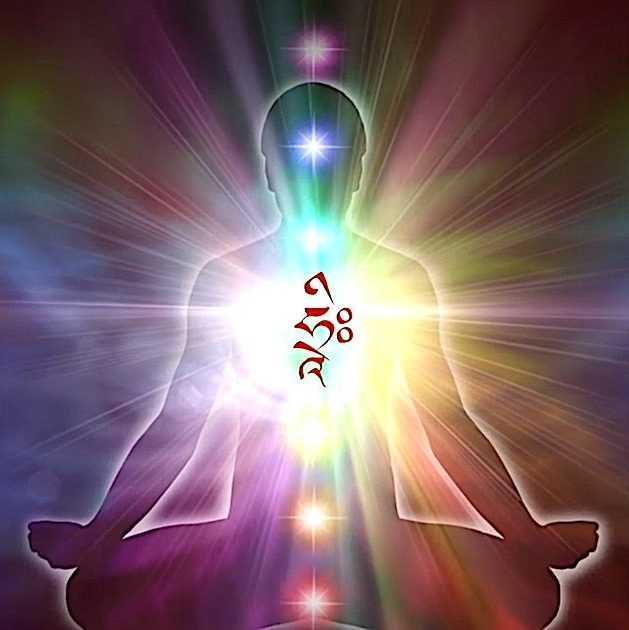
Meditation and spiritual practices enable a dissolution of the vijnana (false understanding) of separateness of self and the living universe.

Stage 4: SPIRITUAL REBIRTH – This stage is about the emergence of insight, wisdom is blended with dhyana and the process is one of transformation inline with the insights that arise – as a result of connection to wisdom energies (dharma Niyama). The practices for this may include visualisation of transcendent beings, such as buddha and bodhisattva figures. This is a stage of emergence transformation through connection with the truth as a living reality.  

Sangharakshita, the founder of the Triratna Buddhist Order, in his book, Living with Awareness, explains, “…a universe conceived of as dead cannot be a universe in which one stands any chance of attaining Enlightenment.’ Indeed Buddhist is a practice of embracing animism.

Through the drum journeying we shift into alterate states of consciousness that enable connection with these experiences and furthermore to gain wisdom and insight into answers to the deeper questions that we may have about our lives – and a profound appreciation of life itself.

Stage 5: COMPASSIONATE ACTIVITY – This stage is one of receptivity, a kind of ‘non-practice’, such as ‘just sitting’ and spontaneous compassionate activity – an overflow of enlightened presence and effortless compassionate being – as though a supra-personal force is flowing through one – the awakened consciousness or ‘will to enlightenment’ (bodhicitta).

Sangharakshita provides a summary of this system of practice – an edited extract from a seminar Nagarjuna’s Precious Garland – “All the time, every day, one has got five things to practice, as best you can, simultaneously:

  1. One keeps up the effort to be mindful and aware and to be as integrated as possible. 
  2. One remains in as positive a mental state as one possibly can. 
  3. One does not lose sight of one’s ultimate goal at any time. 
  4. Whatever you have realised/discovered/seen on the highest level of your being at any time, you try to apply this to practice at every level. 
  5. You do what you can to help people.  This is your spiritual life. All the other teachings on the Buddhist path are contained in this, in principle.”

In essence the key is to help all beings, human and non-human, awakened into awareness of a deeper essential interconnectedness.

I hope that this has been helpful.

Wishing you well, Guhyasakhi

User comments

EMDR: A unique and powerful therapy

What is EMDR? Eye Movement Desensitisation and Reprocessing (EMDR) is a unique, powerful therapy that helps people recover from problems triggered by distressing and even traumatic events in their lives. Experiencing such events can cause problems, including flashbacks, upsetting thoughts or images, depression or anxiety.

Who can benefit from EMDR? EMDR is recognised by the National Institute for Health and Care Excellence (NICE) as a treatment for post-traumatic stress disorder (PTSD), and the World Health Organisation (WHO), which also recognises it as an effective treatment for children. Overall, EMDR can help with a range of mental health conditions in people of all ages including depression and anxiety.

Who can deliver EMDR? EMDR is a complex therapeutic process that should always be delivered by properly trained therapists. In 2022, Guhyasakhi (Bernadette) Carelse completed training with EMDR Works, and became registered with the EMDR Association as a EMDR Therapist in Training.

There are more than 10,000 trained EMDR therapists in the UK alone, and it has helped millions of people worldwide. EMDR is internationally recognised and EMDR therapy is endorsed by many well known organisations, including the National Institute for Health and Care Excellence, the International Society for Traumatic Stress Studies, the NHS (in the UK) and many other bodies.

How does it work? EMDR stops difficult memories causing so much distress by helping the mind (using the neurology of the brain and body) to ‘reprocess’ these experiences. It works with with memory, movements of the body and present moment attention (mindfulness) to heal the legacy of past pain. Thus, it is effective in overcoming and healing from the effects of trauma.

When a person is involved in a traumatic event, they may feel overwhelmed and their brain may be unable to fully process what is going on. The memory of the event seems to become “stuck” so that it remains very intense and vivid. The person can re-experience what they saw, heard and smelt and the full force of the distress they felt whenever the memory comes to mind.

EMDR aims to help the mind to work more freely once again – to “unstick” -and reprocess the memory properly so that it is no longer so intense. It also helps to desensitise the person to the emotional impact of the memory, so that they can think about the event without experiencing such strong feelings.

What happens during a session? During the EMDR session, the person is supported in being able to recall the traumatic event while they also experiencing some side-to-side sensations – moving their eyes from side-to-side, hear a sound in each ear alternately, or feel a tap on each hand alternately. These side-to-side sensations – known as bilateral stimulation – seem to effectively stimulate the “stuck” processing system in the brain so that it can reprocess the information more like an ordinary memory, reducing its intensity.

The effect may be similar to what occurs naturally during REM (Rapid Eye Movement) sleep, when your eyes move rapidly from side to side as the brain processes the events of the day. It is possible that EMDR is effective because concentrating on a present moment task whilst processing a distressing memory gives the brain an opportunity to connect the past with the present. In effect the memory is processed in the present context, enabling the person to remember the event with new meaning and in a more helpful and manageable way.

How can I get EMDR and other holistic therapy sessions with Guhyasakhi? To book a session of therapy with Guhyasakhi (Bernadette) Carelse, you are very welcome to contact her directly. To book a therapy session and for more information, see here.

Mindfulness Practice Day 7 March 2015

Practicing mindfulness regularly helps enhance neural pathways in the brain, developing a deeper sense of peacefulness, clam and focus.

Research shows that practicing mindfulness regularly helps enhance neural pathways in the brain, developing a deeper sense of peacefulness, calm and focus, reducing symptoms of anxiety and depression and improving overall well-being.

On Saturday 7th March 2015, there will be a Mindfulness Practice Day.  This is a litte ‘retreat’ for those who have had some experience of practicing mindfulness, yoga or meditation in a group.

We will be reviewing practices from the Mindfulness-based Stress Reduction and Minduflness-based Cognitive Therapy courses.  The aim will be to delve into the heart of ‘being mode’ through a range of mindfulness practices, enabling us to turn towards our experiences with gentleness and curiosity as best as we can, moment by moment.

Research shows that regularly practicing mindfulness enhances neural pathways in the brain related to well-being and postive mental states and reduces those related to stress, anxiety and depression.

For more information see the Mindfulness Practice Day webpage.

Eventbrite - Mindfulness Practice Day in Walthamstow 7/3/15

CARE for Teachers: 7th Annual Retreat, Garrison Institute, NY, August 2014

The Garrison Institute is situated on the banks of the Hudson River, an hour norht of New York City.  It is located in a beautifully renovated former Cupucian Monestery, surrounded by forests and fields.  Its focus is on using contemplative practices to support social and ecological change.

The Garrison Institute is located in a beautifully renovated former Capuchin Monestery, of over 7000 square metres, surrounded by forests and fields.

This summer, from 8 to 13 August, I had the privilege of being at the Garrison Institute, NY, for their 7th Annual retreat on Cultivating Awareness and Resilience in Education (CARE) for Teachers.

The Garrison Institute is a not-for-profit, non-sectarian organization siutated on the banks of the Hudson river, an hour north of New York City.  Its focus is on using contemplative practices to support social and ecological change.

CARE for Teachers is an innovative and well-researched programme that directly enhances teacher well-being and indirectly that of their students.

CARE for Teachers is an innovative and well-researched programme that directly enhances teacher well-being and indirectly that of their students.

CARE for Teachers was developed by a team of researchers and professionals working in education and contemplative practices, including mindfulness-based approaches.  The 5-day retreat included daily meditation and other mindfulness practices and explicit teaching of key prinicipals.  The goals were to develop skills to manage the demands of teaching, enhance the joy of teaching and student-teacher relationships and prevent burn-out.

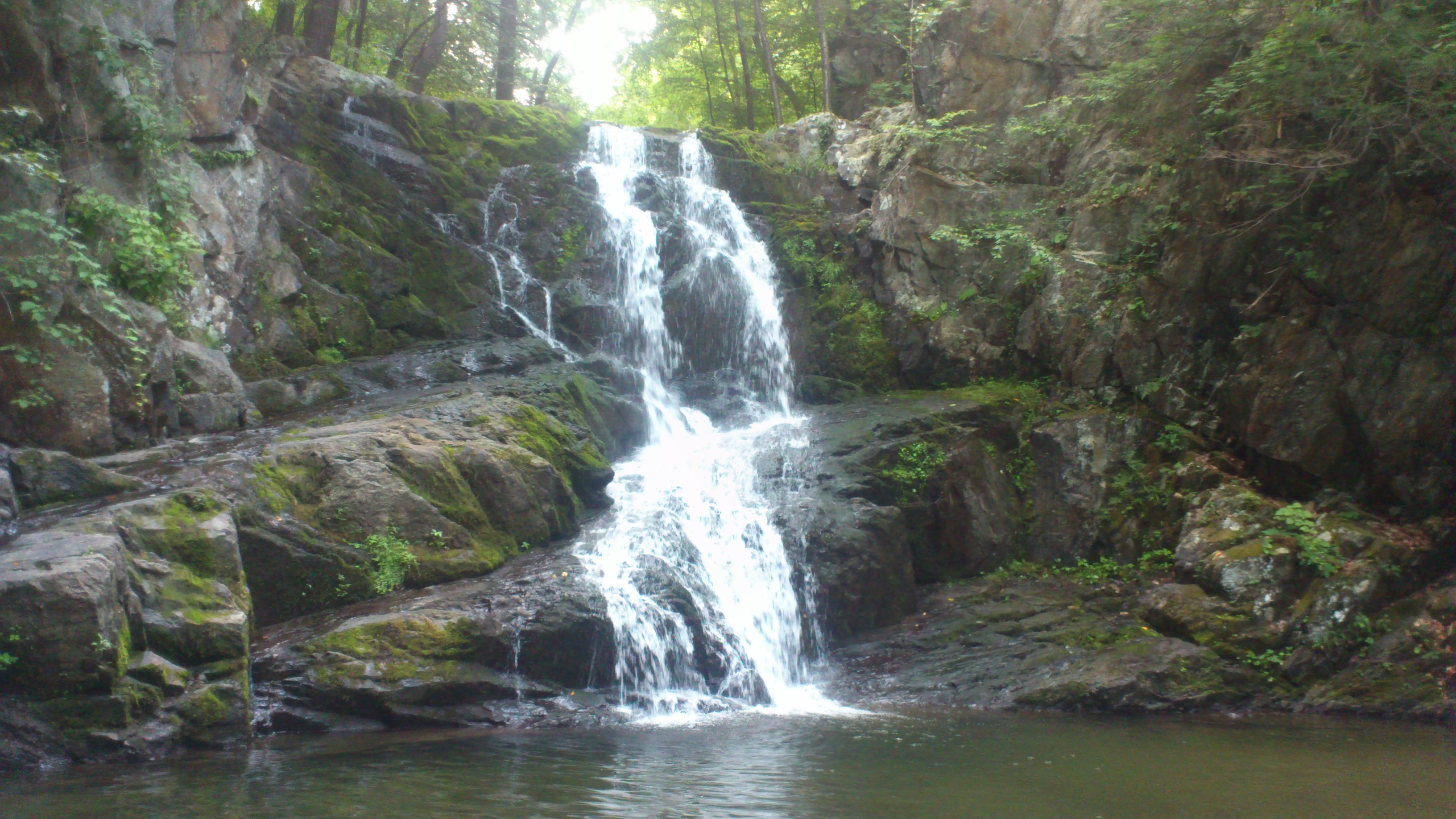
On some days, the retreat began with an early morning  meditation at a nearby waterfall.  There was the option to swim in the waters too: a refreshing way to begin the day.

On some days, the retreat began with an early morning meditation at a nearby waterfall. There was the option to swim in the waters as a refreshing way to begin the day.

The course included consideration of the resources required to develop emotional awareness.  This included respecting emotions and being able to recognise and label them.  It also involved improving how we regulate emotions and respond to complex and challenging situations.   Overall, greater awareness, presence and compassion were developed for use in complex and demanding work contexts, which for most of us, included classrooms. For more information see the CARE for Teachers website.

Presenting the Mindfulness-based Awareness Training intervention at the Implementation Science Conference

The Handbook of Implementation Science contains essential information for those wishing to implement interventions in educational settings.

The Handbook of Implementation Science contains essential information for those wishing to implement interventions in educational settings.

On 28th July 2014, I gave a presentation on the Mindfulness-based Awareness Training (MBAT) intervention at the Implementation Science Conference, organised by the East London Consortium of Educational Psychologists (ELCEP).  Implementation Science is a relatively new area of scientific, academic and practitioner interest that focuses on exploring and explaining what makes interventions work in real-world contexts.

The conference included inspiring talks and workshops.  One keynote speaker, Barbara Kelly, University of Cambridge, was the co-editor of the “Handbook of Implementation Science”.  She spoke about making use of implementation Science in order to successfully transfer and replicate evidence-based approaches, outlining what an intervention needed in order to be implemented successfully.  The factors for this included focusing on the beliefs and values of those trained to deliver the specific intervention and providing consultation and coaching during the implementation process itself.

Another keynote speaker was Elaine Wilson, also from the University of Cambridge.  She presented two case studies in educational contexts; firstly Initial Teacher Education (ITE) in school-university partnerships and secondly, teacher education reform in Kazakhstan.  She explained that certain factors were important to implementing sustainable change, including adopting a “can do” positive approach and focusing on a few, important ambitious goals.

Download the handout of the presentation on the MBAT intervention given at the Implementation Science Conference 28/7/14

Download the handout of the presentation on the MBAT intervention given at the Implementation Science Conference 28/7/14

One of the workshops was my presentation on the process by which the MBAT intervention had been developed through doctorate research and further refined when implemented in another setting.  The MBAT intervention is a mindfulness training course for children and young people with Special Educational Needs and Disability (SEND).  It aims to empower the participants with skills for self-regulation of emotions, helping them be calmer and better focused. The intervention includes gathering information about the context in which the child or young persons needs to develop their skills and understanding.  This enables the MBAT intervention to be adaptable to the needs of the individual concerned.

The process of developing the MBAT intervention was outlined in the presentation and the handout for this is available here.  Overall, the conference was an inspirational experience, motivating me to learn more about Implementation Science.  Currently the materials for the MBAT intervention are being developed into a practitioner workbook.  If you are interested in this work, please contact Holistic Education.


Chi Nei Tsang: an increasingly popular therapy provided by Holistic Education

Mantak Chia has been the main teacher in bringing Taoist practices into western awareness and has written dozens of books, including a few on CHi Nei Tsang.

Mantak Chia has been the main teacher in bringing Taoist practices into western awareness and has written dozens of books, including a few on CHi Nei Tsang.

Chi Nei Tsang is an ancient therapy that integrates aspects of Shiatsu, Chi Kung meditations and Tai Chi technique.  It aims to harmonise the flow of energy though working predominantly on the abdomen or hara.  It has become increasingly popular in recent years and the result has been an increase in the number of people requesting this therapy from Holistic Education.

In response to this, I have developed a new webpage, specifically on Chi Nei Tsang and I hope you enjoy finding out more about it and maybe, one day having a treatment for yourself.

In the meantime, I hope you enjoy watching this introductory video, created by Kris Deva North from the London Healing Tao Centre.  I’m in it, doing some treatments and a bit of teaching.  It was filmed in April 2013.  Your feedback is welcome.

Wishing you well-being, health and happiness, Bernadette

New! Join the Holistic Education Mailing List

MailinglistThe website has been updated! Now you can join a mailing list to receive updates from Holistic Education on events and information about its activities.  You can also specify your interests, choosing from Mindfulness, Yoga, Holistic Therapies and Educational Psychology Services.  if you’d like to join, please click on the picture or here for the sign up form.  Best wishes, Bernadette

Mindfulness Interest Group, Hackney Learning Trust

Hackney Learning Trust

There is a monthly Mindfulness Interest Group at the Hackney Learning Trust.

Today I ran the first Mindfulness Interest Group at the Hackney Learning Trust.  It was brilliant to spend my lunch break discussing and sharing a few mindfulness practices with others.  Some had no experience, and others had done an 8-week course.  Overall, they were keen to have more opportunity to learn about mindfulness at work.

The next session is planned for Tuesday 29th April and the plan is to discuss how best to promote mindfulness in the work place.  We will also explore material from the Peace in a Frantic World book.