I have just arrived home from the Buddhafield Festival, and what a lovely few days it was.
While I was there, I co-led three workshops on Buddhism and Deep Ecology with Sanghasiha, a fellow Triratna Order Member. We have been leading workshops together for a few years now, and it continues to be a joyful and enriching collaboration.
If you would like to join us, we’ll be offering another workshop at the London Buddhist Centre on Sunday 6 December 2026 (10am to 5pm).
The festival also coincided with a quiet personal anniversary. On Friday, it had been five years since I received the name Guhyasakhi during my private ordination. The name means they who have the mystery as a friend, and I found myself reflecting with gratitude on the aspiration and transformative power that this name continues to hold for me.
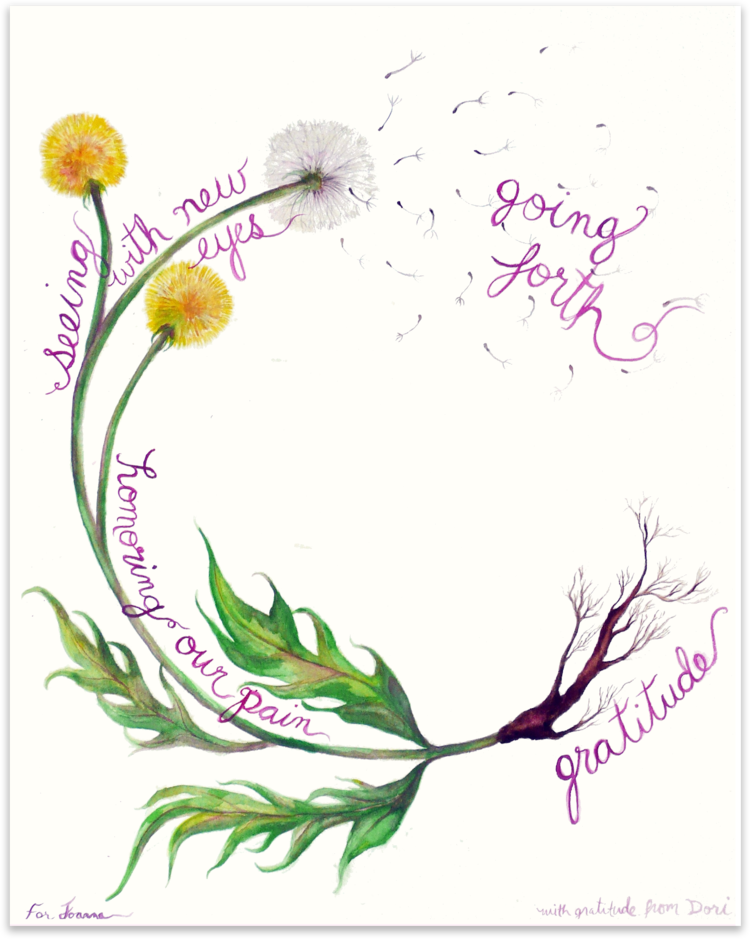
Each workshop was based on the stages of Joanna Macy’s Work That Reconnects. Because there are four stages and we had three workshops, we structured the series so that the first session explored Gratitude and Honouring Our Pain for the World, the second focused on Seeing with New Eyes, and the third on Going Forth.
Sanghasiha led the first half of each session, introducing aspects of Buddhism and its connections with Deep Ecology, the creative work of Arne Naess – through moving talks, engaging activities, poetry and ritual.
In the second half, I led a drum journey. During the drumming, participants were invited to imaginatively travel to the Lower World to meet an ally in animal form—whether mammal or bird—and to bring a question connected with the particular stage of the Work That Reconnects we had been exploring.
I find it profoundly rewarding to share this work with others, and the responses throughout the festival were heartening. It would be impossible to describe all of the journeys people experienced each session was well attended, with even more people joining us on the final day. Those who chose to share their experiences spoke of receiving remarkable insight and guidance through their encounters with these imaginal realms.
I would like to offer my gratitude to the allies, to the spirits of the land, and to all the seen and unseen presences and processes that inspired, guided and supported us. Through this work we can awaken and deepening our relationship with the more-than-human world. While this is a mysterious process, it is one that brings healing, wisdom and insight into our lives, and for which I am deeply grateful.
To everyone who participated, thank you for your openness and wholehearted engagement with these ancient practices. May the wisdom of the extraordinary beings that were encountered continue to bless and guide your path.
And finally, I offer thanks to the spirits, the ancestors, and all the conditions that support, inspire and guide us as we each meet the challenges and opportunities at this time of the Great Turning.
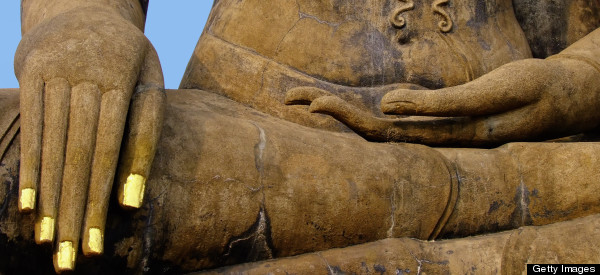
I heard a story about the Buddha, on the verge of enlightenment, calls the Spirit of the Earth to witness him – some say that this spirit was female in form, known as the Earth Goddess. Here is an image of the Buddha’s hand in the earth-touching mudra (see above).
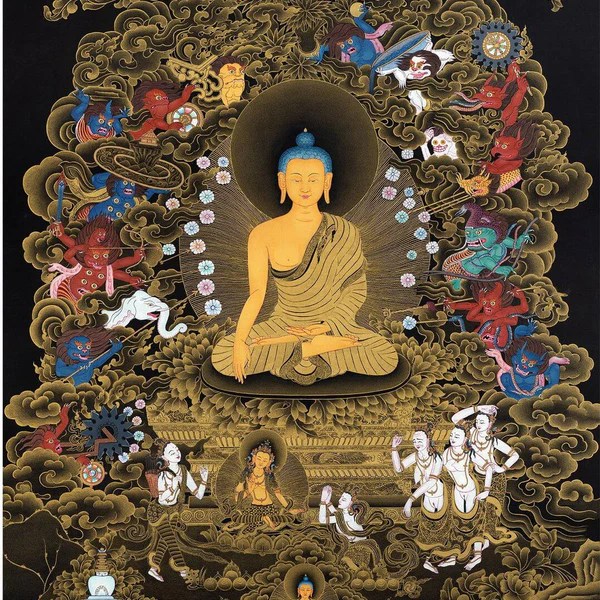
The story goes like this: the Buddha was being distracted and challenged by Mara when he was on the verge of enlightenment and asked, by Mara, who would be a witness to confirm any validity and depth to the Buddha’s emergent process towards awakening.
In response, the Buddha touches the ground, and in response this mystical earth spirit rises up as witness to the several lifetimes of practice that the Buddha had undertaken..
In addition, the earth shook, it is said. And as a result Mara and whatever doubts and challenges that had arisen, were dispelled. The Buddha was able to return to his meditation and in the resonance that followed, had a breakthrough into full awakening.
This story comes from the Jataka Tales, stories about the Buddha that arose much later, after his lifetime. This story is about the Earth Goddess is mentioned in the Jataka Tales, stories about the Buddha that came much later that when he lived.
And who was this earth spirit? This was “Vasundharā or Dharaṇī, described by Wikipedia as a “chthonic goddess from Buddhist mythology of Theravada in Southeast Asia“. The Earth Spirit or Presence of the Earth itself, exists “in or under the earth” as opposed to the “living surface of land on the earth”[2][3][4] – and can be considered a ‘deity’ or of the transcended god realms. Intriguing!
In the shamanic and buddhist views there are transcended planes: in shamanism there upper and lower worlds and in Buddhism, regarding the upper world, there are the Buddhas, Bodhisattvas and dakinis (sky dancers) etc and for the Lower World… well…
At times, I wonder if there is some degree of reticence to acknowledge that transcended compassionate beings can be of non-human form. Yet there is the story of the tree spirit that went to the Buddha and was highly commended by the Buddha and able to join the monastic community. This was a tree spirit with a child, no less.
There is another story after the Buddha’s enlightenment about Mucalinda the ruler of the Nagas, a the transcendent spirits of the water, coming in the form of a water dragon or snake with several hoods. Mucalinda imbued the Buddha with power, affording him protection from the elements.
And here, is another Lower World, transcended being, and she or they imbue the Buddha with the qualities of earth-quaking resolve and conviction – unshakeable determination that that dissipates any influence that Mara may have had. The Buddha is able to sit, return to his meditation and break through all the fetters and attain enlightenment. How wonderful!
Thank you Spirit of the Earth for shattering the remaining hindrances and investing the Buddha with the power needed to carry him forward into the ultimate awakening for the benefit of all beings.
I am growing plants for food and friendship. Plants can be allies – friends – helpful companions, beings with who we can share joy and company with. Well, we may not have a deep and meaningful philosophical conversation, at least not in the vernacular. Though, what about on the level of the heart-mind, the lived experience of presence – communicating with intent, reciprocal communication – the answer is yes.
I am not alone in this exploration of an interactive way of relating to plants. I was intrigued to learn more about this at the Listening to the Land Day in January this year – communication with the many beings in the universe is possible – the universe is alive.
It was here that I met Nathaniel Hughes, founder of the School of Intuitive Herbalism and author of Wild Enchantments – exquisitely illustrated by Fiona Owens. And we discovered we both knew the movement artist and anthropologist, Claire Loussouarn, author of How to be Feral: Movement Practices to Rewild Your Body. Claire is also an Intuitive Herbalist and regularly runs Plant Meetings, offering group and 1-to-1 sessions. I’ve been to both and highly recommended them. Engaging deeply with plants following her guidance, has been, for me, a moving, life-affirming and magical experience.
That the universe, and all that is within it, is alive, animate, filled with presence, consciousness, awareness, is nothing new. It was the very cultural context that was taken for granted by our ancestors, across nations, continents. Indeed this was what was in place at the time of the Buddha, and through this, there arises the very conditions that lead to liberation.
…a universe conceived of as dead cannot be a universe in which one stands any chance of attaining Enlightenment.’ to quote Bhante Sangharakshita, in his book “Living with Awareness”
Some ask, what is enlightenment? Enlightenment is a process of liberation. Liberation from what? Simply, liberation from suffering – liberation from being pushed and pulled by wants and desires, regardless of the impact that this has on ourselves and especially deliberately ignoring the impact that this has on others, and thereby perpetuating harm, cruelty and violence.
There is a process that leads to liberation from this. Enlightenment is possible – and mysterious, because it is difficult to put into words because it is ‘beyond words’, beyond conceptual thinking that request language to express itself. This does not make it imaginary – or unreal. Enlightenment, a path to liberation, is not trivial.
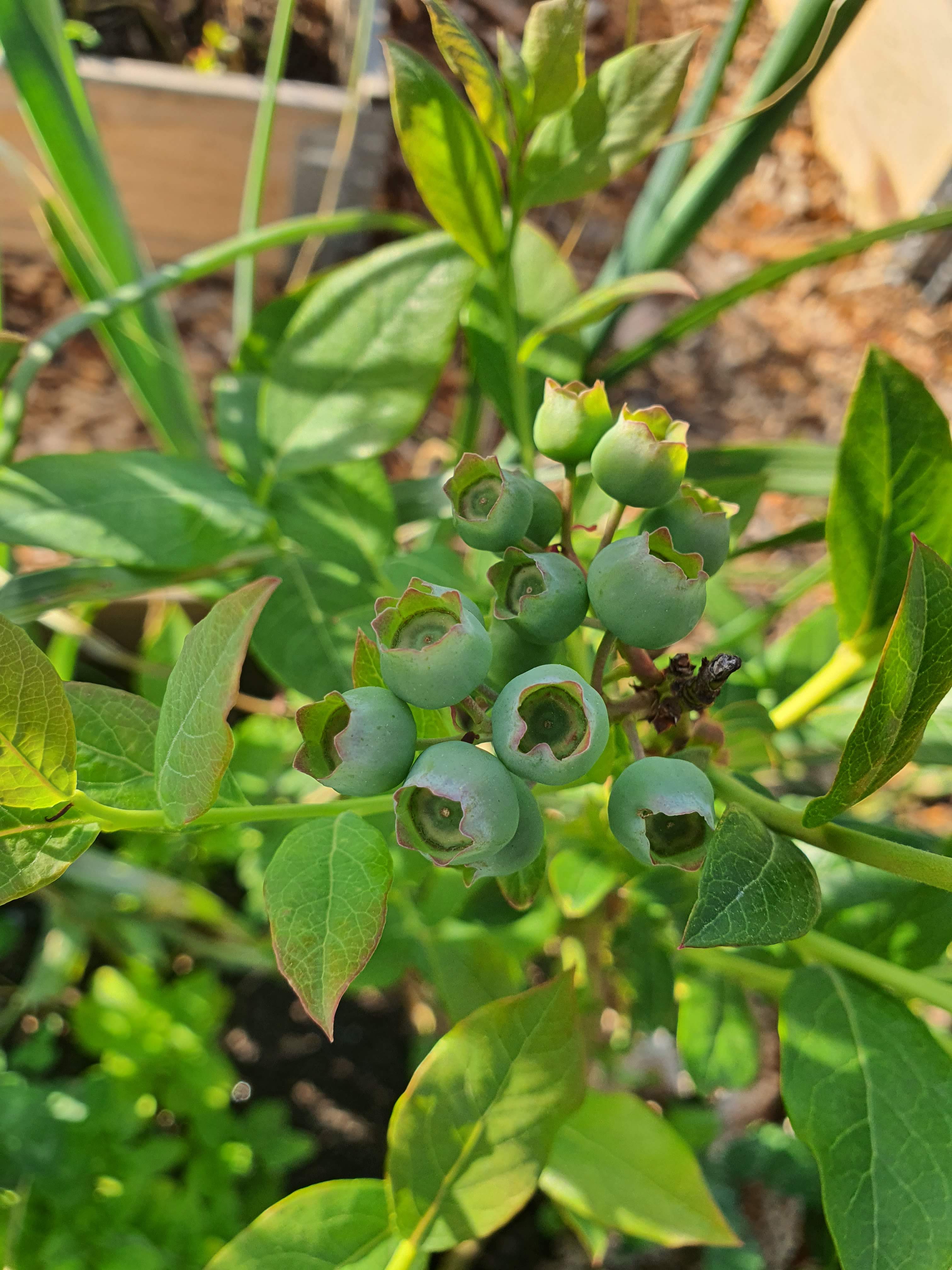
Blueberries emerging at my allotment in May 2026
There are many ‘hallucinations of modernity’ that need to be overcome to be free – such as the illusion of being separate from others, the illusion of having a fixed ‘self’, or being a fixed person that has to have things done this way or that way, according to what makes ‘me feel good’ – a kind of selfishness that is promoted though ‘modern culture’.
“By naming these hallucinations, we can begin to expose their influence, metabolize their weight, and open space for relational accountability”, she writes. One hallucination is that there exists some objective reality. “This hallucination assumes that reality is a fixed entity—fully knowable, measurable, and articulable through human perception and constructs.” We are invited to embrace the “layered, entangled, and emergent nature of existence” and in the process, open to diverse ways of knowing, the multiplicities of truth.
I find this work inspiring because I feel invited to awaken from the illusions – hallucinations – that trap me into ‘lifestyle choices’ that cause harm to ourselves and others, including our environment. Part of being a Buddhist is to wake up and change, to reduce harm and suffering.
Touching the Earth, is a way of awakening myself – and through potential inspiration and interconnectedness – ourselves into moments of awakening to the reality of the “layered, entangled, and emergent nature of existence” – moments that can come like individual drops of water falling from the sky, and build into streams and torrents of deeper experiences of insight that are timeless.
In growing plants for food and friendship, I touch the earth.
I touch the earth to engage – explore the texture of the soil, feel the condition of the world into which I am part. I find myself listening to it deeply with the heart, sensing it – the colour, texture, warmth and coolness, moisture and dryness, pliability and friability. I notice that it varies in smell too – depending on a combination of sweetness of composted matter and putridness of decay and stagnation of water.
All this is information: communication.
All this informs how I respond. The earth is the medium through which the plants can grow. There is an emergent reciprocity – I feel appreciation and gratitude for the food that nourishes and cares for me. And express this in the care and work done on the land, with the soil, the living earth. The plants respond, growing, producing food, nourishment and brining joy, pleasure, health and vitality.
It’s a reciprocal relationship – a friendship.
I wonder, about you, reading this. How is ‘touching the earth’ for you? What are your experiences of growing plants for food and friendship? Engaging with a more-than-human world, including the animate universe?
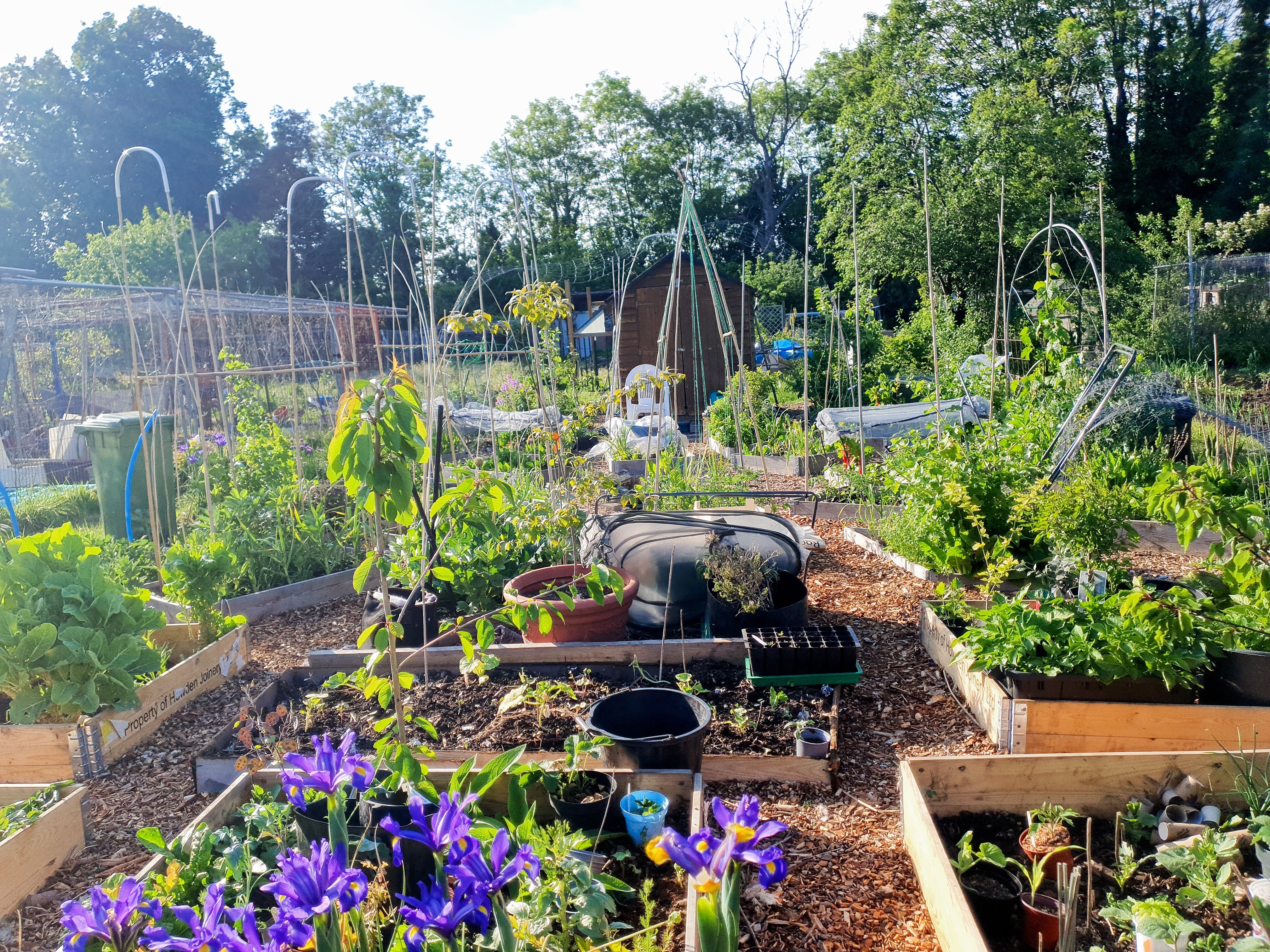
May 2026, the allotment with the bean and tomato plant structures – getting the plants into the ground is the focus at the moment. I was granted a number of plants from Time to Grow, a community based organisation in Waltham Forest and this supports the capacity of the allotment to generate food for others.
Today I got back from a Buddhism and Deep Ecology Retreat at Alfoxton Park. I was co – leading it with Sanghasiha, a fellow order member in Triratna – and the one who started running Deep Ecology events at the London Buddhist Centre about 15 years ago.
It ran from Thursday 23rd April until today – there were 17 participants – though at times we were joined by a few memebrs of the Alfoxton Community.
Most of us were camping.. and it was especially enjoyable as the weather was so lovely – sunny and bright and not too cold at night – and the facilities at Alfoxton are brilliant and the food excellent – high recommended. See their programme here.
In the morning Sanghasiha gave a talk and lead a ‘Natura bhavana’ – a meditation based on the metta bhavana (cultivation of loving kindness) for developing a deeper, more compassionate and kinder relationship with the natural world – in all their aspects.
And in the afternoon session, I lead a drum journey to support people in connecting to the ‘invisible’ world of spirit and the sacred within. We did journeys to the Lower World of ‘non-ordinary reality’ using the monotonous drumming pattern to support a shift in consciousness to open the gateways of perception and engagement in the ‘spirit’ or invisible world – all can support the development of skills as taught during Shamanic Counselling Sessions.
I also lead a few sessions during the ‘work period’ in the amazing and beautiful permaculture garden. this enabled the option to participate and learn about stewarding the land, engaging in a reciprocal process of food growing. The tasks may seem familiar ones to gardeners and included pricking out seedlings and potting them on, clearing brambles, filling up a raised bed in the new glasshouse, some weeding (of course!) and clarifying the borders of the flower beds. It was all deeply appreciated by the participants and resident gardeners for Alfoxton.
What is Deep Ecology? Deep Ecology emerged in 1972, through Arne Naess, as an environmental philosophy speaking out for all living beings – reminding us of their inherent worth regardless of their instrumental utility to human needs. Then, in 1984: Naess and George Sessions first articulated these principles:
All living beings have intrinsic value.
The richness and diversity of life has intrinsic value.
Humans do not have the right to reduce this diversity and richness.
It would be better for humans if we were fewer – and much better for other living creatures. Please note that this point can be controversial and I see this as also including the impact that we have on the planet – especially regarding the impact in regards to ‘livestock’ and animal agriculture.
The extent and nature of human interference in the various ecosystems is unsustainable.
An ideological change would essentially seek a better quality of life rather than a raised standard of living.
Those who accept the aforementioned points are responsible for trying to contribute directly or indirectly to the necessary changes.
Deep Ecology is compatible with Buddhism, reminding us that all beings are to be respected, cared for and allowed to live and flourish, independent of any instrumental benefit for humans.
The Triratna Buddhist Community – into which I was ordained in 2021 – also upholds animism. Our Founder, Bhante Shangharakshita declared, in his book, Living with Awareness, “I would go so far as to say that a universe conceived of as dead cannot be a universe in which one stands any chance of attaining Enlightenment.’ Imagine that! Deeply experiencing and appreciating the world as it is – alive, awake, animate – is deeply connected to the path to enlightenment.
Could this also be the essence of shamanic practice? Awakening into awareness of the animate universe as part of the path to fuller liberation from the cycles of death and rebirth?
Deeper questions aside, there is indeed something joyous about the direct experience of the aliveness of the universe, sensing the vibrancy of the sky, the earth, the space in between and being able to resonate with the joy of living in this way. To directly feel connected to this flow, we can truly feel alive in ourselves.
Places in nature that link the sky with the earth are immensely potent as places of healing and communication with the spirit realm.
I enjoy supporting and assisting on this events, with Kris – and this supports my own practice of Chi Nei Tsang. I first trained in Chi Nei Tsang – or CNT – in 1999 – initially taught by Kris and then, in 2000, I repeated Level 1 with Mantak Chia who was visiting London at the time. My CNT text book was signed by Mantak on 11 November 2000. This was when I was assessed by him and officially qualified.
Since then, I have been incorporating this form of therapy into the range of healing modalities that I use. I first trained in Holistic Massage, Reiki and Zen Shiatsu – that’s 30 years of practice – including 14 years as a Shiatsu teacher. In the last few years, I have also started incorporating techniques under the remit of Shamanic Healing. These practices are mysterious and beautiful, a gift from the Ancestral Spirits. And all these practices connect very well with CNT.
In the last few years, CNT has risen in popularity. And understandably so, as a full CNT session is immensely transformative. So what is CNT?
At one level, CNT can seem to be about getting your tummy massaged in a healing, soothing way – though various techniques including pressing, poking, prodding and tiny gentle ‘spiralling’ movements. At another level it is important to remember that CNT involves using Chi – the energy, the ‘life force’ that permeates through all things. Furthermore, ‘nei Tsang’ refers to the main internal organs, such as the heart, liver, spleen, kidneys, intestines and so on. In effect, CNT is a therapy that works through multiple levels, from the physical, to the etheric – the level through which the meridians flow – and beyond, the spiritual.
And if you are looking for a CNT session, you may be lucky and simply find someone that you connect well with. This connection, the healing relationship, can go a long way indeed.
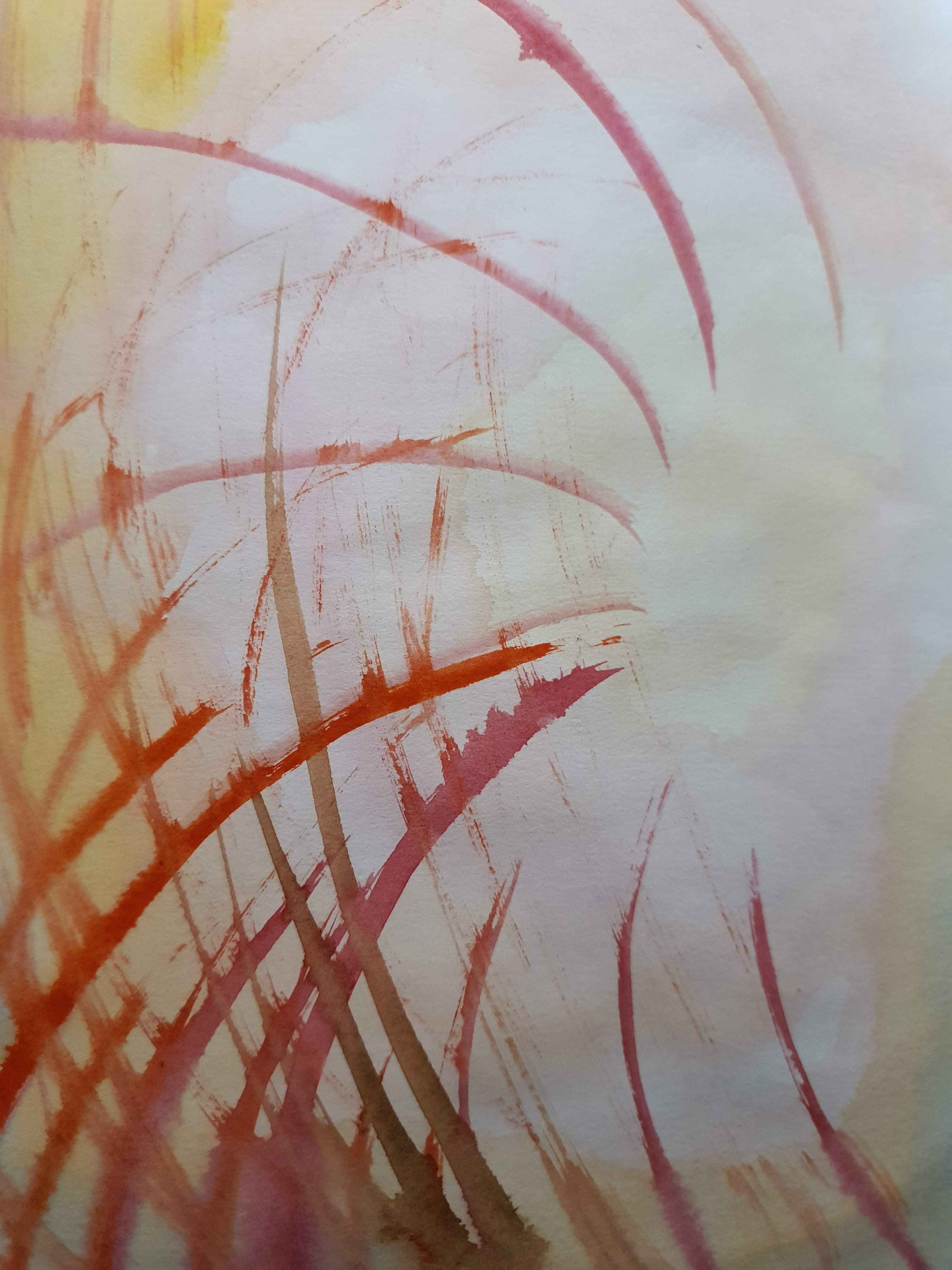
Original artwork by Guhaysakhi
Furthermore, CNT is that it does not end once the treatment is over. There is ‘home practice’ to be done. The CNT practitioner is required by the training itself to impart some CNT techniques for the client to practice at on themselves. This enables the empowerment and engagement in the healing journey.
In addition, the process of healing involves giving and receiving, such balance and harmony can be restored. I offer sessions on a ‘donation basis’ where the intention is to empower the person receiving the sessions to express appreciation by donating to reciprocate the practitioner’s time and skills. This can make the donation part of the healing process itself. The dichotomy between ‘healer’ and ‘the healed’ may need to dissolve away such that ‘healing’ is no longer being ‘done to’ and instead is being ‘done with’.
At its best, CNT is a creative, positive, life affirming, co-created process, enabling integration and awakening from the depths to the heights and back again.
Climate Activist and Buddhist, Joanna Macy, passed away this year and left us with her legacy, The Work That Reconnects. This work is inspirational and based on the following:
Our Earth is alive. It is not a supply house. Nor is the Earth a place for disposing of waste from the Industrial Growth Society. The Earth is a living, complex system – with its own intrinsic value.
Our true nature is far more ancient and encompassing than the separate self defined by habit and one encourage by consumerism. The planet is a living system that has self-reflexive consciousness – and in this way can know and see itself through us – and respond to its own suffering.
Our experience of moral pain for our world springs from our interconnectedness with all beings. We can enhance our power to be part of the the healing of the world, when we turn towards our pain for the world and what grieves us about current circumstances. In Buddhism, the cultivation of compassion begins by turning towards ‘suffering’, also known as ‘dukkha’.
Unblocking occurs when our pain for the world is not only intellectually validated, but also experienced and expressed. We need more than cognitive information about the social and ecological crises. We need to experience our hurt and grief for the world. In this way, we can become mobilised to act, our of compassionate free will – and a recognition of our belonging to the world and interconnectedness to the web of life.
When we reconnect with life, by willingly enduring our pain for it, the mind retrieves its natural clarity. Not only do we experience our interconnectedness in the Earth community and the human community, but also mental eagerness to match this experience with new paradigm thinking. Significant learnings occur as the individual re-orients to wider reaches of identity and self-interest.
The experience of reconnection with the Earth community, human and other-than-human, arouses desire to act on its behalf. Through the truth of our interconnectedness, we may notice a deep yearning for healing and concern about the welfare of all beings. We may become motivated to act – and even more beyond a habitual ‘comfort zone’ that has been numbing us to the cries of suffering of the world. Through courageous and spontaneous compassionate action, we can live more fully, authentically and experience moments of pure joy.
Collective liberation within our species is essential to the flourishing of the larger web of planetary life. We are all in this together and no one is free until we are all free of the systemic inequalities. The Industrial Growth Society is based on and sustained by inequalities and generational and contemporary oppressions (see also the work of the Anti-Oppression Resource Group)
Places in nature that link the sky with the earth are immensely potent as places of healing and communication with the spirit realm.
This process begins with healing, becoming whole and closely following this, finding ways to be positive – all in all, happy and healthy. This is followed by ‘death’ of fixed, limiting views and then an emergence into directly experiencing interconnectedness – and potentially, the universe as alive. Finally, spiritual emergence unfolds – a profound understanding and appreciation of live and its preciousness – and engagement in spontaneous compassionate activity.
Here is more detail on each of these stages:
Stage 1: Integration – In this stage, the key meditation practice is mindfulness – including the Mindfulness of Breathing and simply being present with what is arising in the our immediate, embodied experience.
This is itself, in a context of many distractions is a radical revolutionary act of independence, and self-efficacy. Sometimes, we may realise that we need support and this can include engagement in bodywork or healing sessions to address painful past experiences.
Part of mindfulness is also being aware of when we fall short of our aspirations and values. Ethics are a key part of mindfulness – being aware of the effects of our actions on other beings and being aware of our intentions and when unhelpful habitual patterns may be arising so we have an opportunity to do something different.
Stage 2: POSITIVE EMOTION – This phase is about the quality of our attention – cultivating kindness, compassion, joy and overall positivity. Authenticity in this is key – and practices for cultivating emotional positivity include recollection of gratitude, cultivating loving kindness (metta bhavana).
The process enables us to feel delight, bliss and even rapture though opening into embodied levels of deep ‘absorption’ (the dhyānas). This process can reveal areas where we feel less inclusive, towards parts of ourselves, or others, including other humans and non-human beings – so that we can transform this.
A teaching on loving kindness (the Kariniya Metta Sutta) goes, “Whatever living beings there may be, (moving, strong) animals or (still, weak) plant, without exception, whether they are very long or large or middling in size, or short, great or small, whether they are visible or unseen, whether living nearby or far away, whether they are born, or not yet come to be: may all living beings have happiness.” In other words, the aim is to cultivate well wishes towards all beings, regardless of species or material form.
Stage 3: SPIRITUAL DEATH – This process is a progression into wisdom (prajna) and vision, as in seeing the truth in terms of ‘ultimate reality’ with liberation from a ‘fixed self-image’ and habitual delusions that arise from greed, aversion and ignorance. Sometimes this is described as entering the ‘gateless gate’.
Practices for this include contemplation on the elements, on conditioned co-arising, death and impermanence – and thereby recognising truths such as that of impermanence, insubstantiality and the poignant beauty of ’emptiness’ (sunyata).
In the process of drum journeying, there may be a direct experience of letting go of a sense of separateness and individuality, and awakening into interconnected presence.
Meditation and spiritual practices enable a dissolution of the vijnana (false understanding) of separateness of self and the living universe.
Stage 4: SPIRITUAL REBIRTH – This stage is about the emergence of insight, wisdom is blended with dhyana and the process is one of transformation inline with the insights that arise – as a result of connection to wisdom energies (dharma Niyama). The practices for this may include visualisation of transcendent beings, such as buddha and bodhisattva figures. This is a stage of emergence transformation through connection with the truth as a living reality.
Sangharakshita, the founder of the Triratna Buddhist Order, in his book, Living with Awareness, explains, “…a universe conceived of as dead cannot be a universe in which one stands any chance of attaining Enlightenment.’ Indeed Buddhist is a practice of embracing animism.
Through the drum journeying we shift into alterate states of consciousness that enable connection with these experiences and furthermore to gain wisdom and insight into answers to the deeper questions that we may have about our lives – and a profound appreciation of life itself.
Stage 5: COMPASSIONATE ACTIVITY – This stage is one of receptivity, a kind of ‘non-practice’, such as ‘just sitting’ and spontaneous compassionate activity – an overflow of enlightened presence and effortless compassionate being – as though a supra-personal force is flowing through one – the awakened consciousness or ‘will to enlightenment’ (bodhicitta).
Sangharakshita provides a summary of this system of practice – an edited extract from a seminar Nagarjuna’s Precious Garland – “All the time, every day, one has got five things to practice, as best you can, simultaneously:
One keeps up the effort to be mindful and aware and to be as integrated as possible.
One remains in as positive a mental state as one possibly can.
One does not lose sight of one’s ultimate goal at any time.
Whatever you have realised/discovered/seen on the highest level of your being at any time, you try to apply this to practice at every level.
You do what you can to help people. This is your spiritual life. All the other teachings on the Buddhist path are contained in this, in principle.”
In essence the key is to help all beings, human and non-human, awakened into awareness of a deeper essential interconnectedness.
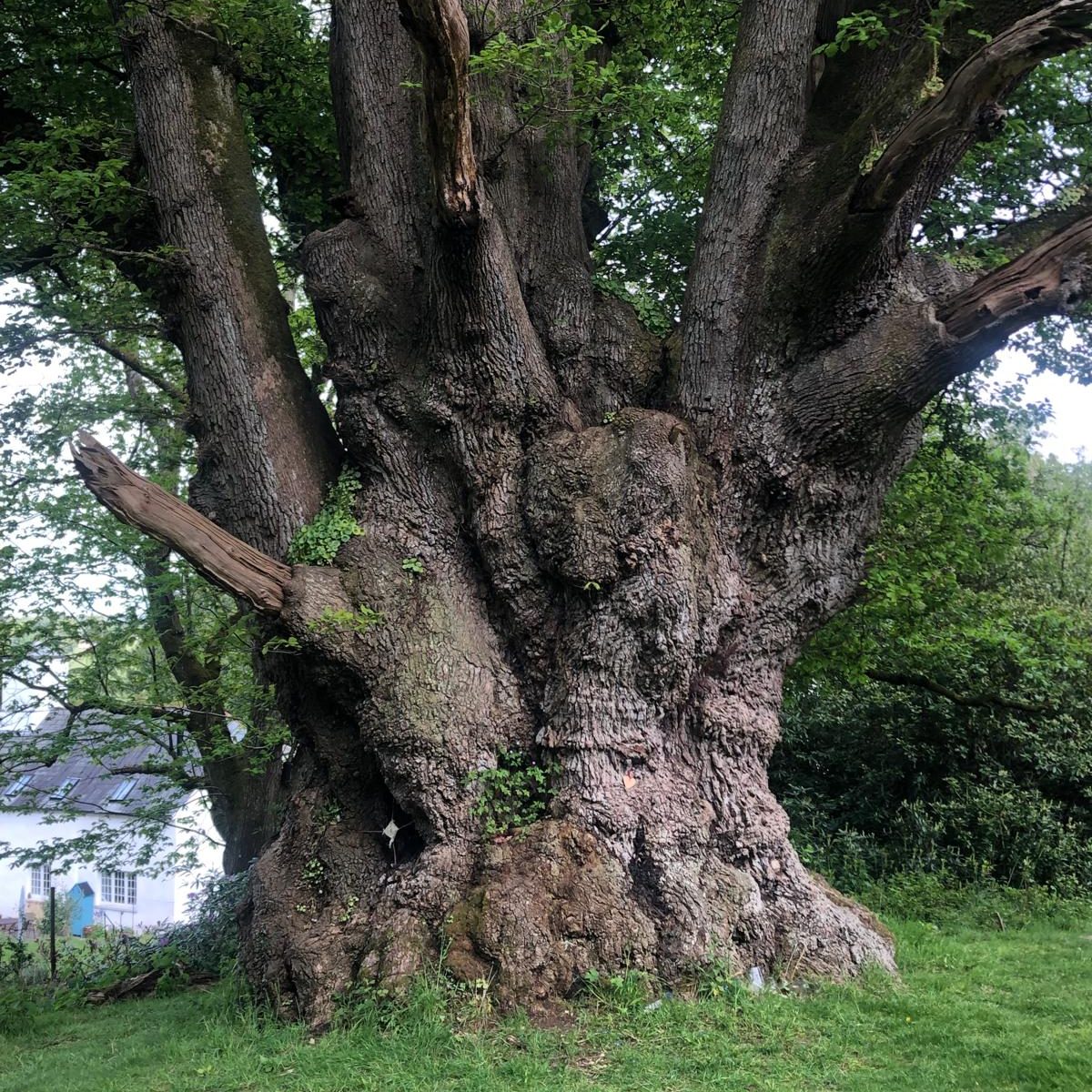
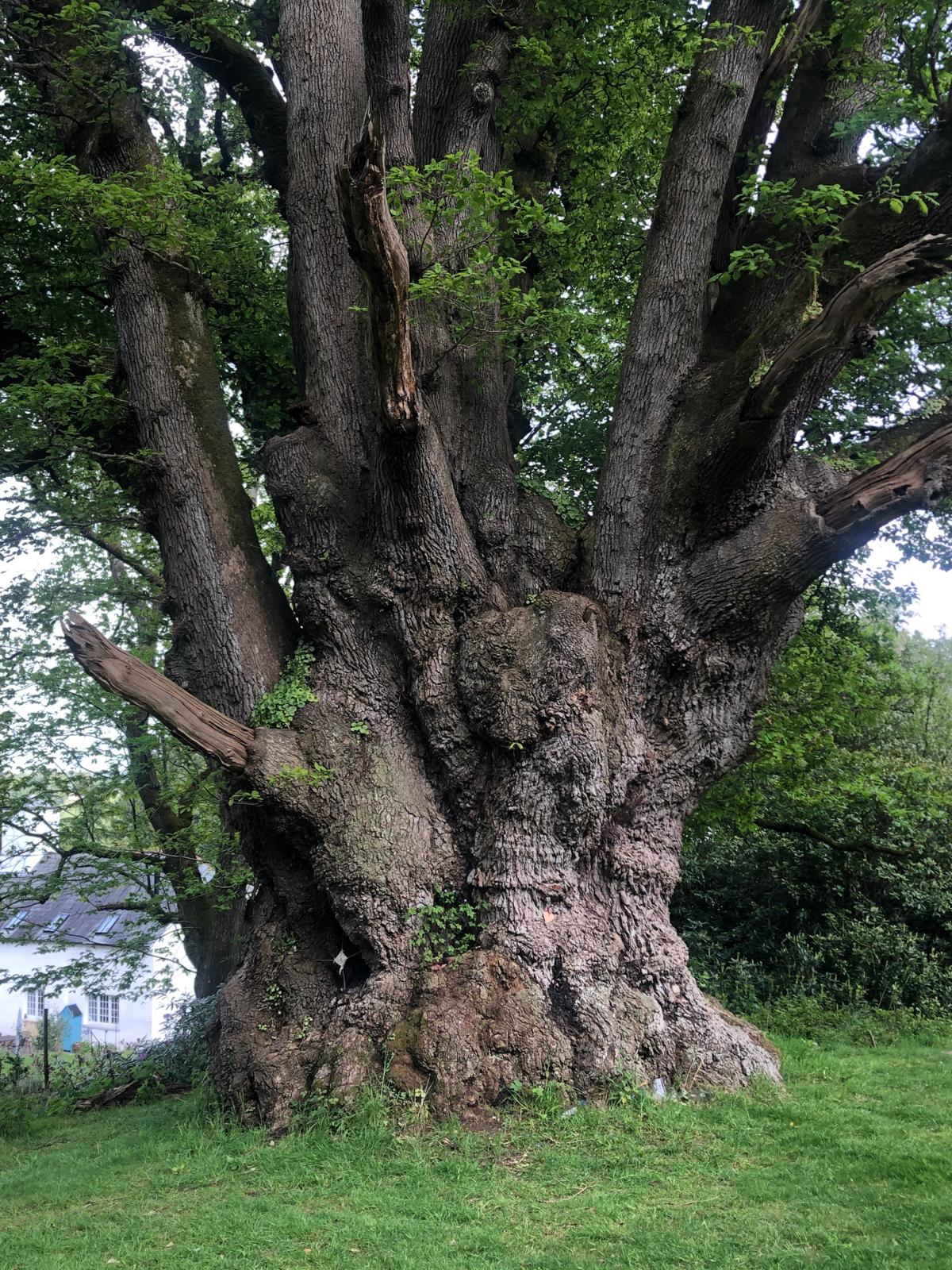
The beautiful 900+ year old Oak Tree at Alfoxton Park – where we had the last Deep Ecology Camping Retreat.
I have had some time to reflect on the pat few months and realise the emergence of a few new themes.. in the process of engaging in retirement (more on that another time perhaps!)
Deep Ecology Days and Retreats – For a few years, I have been co-facilitating Day Retreats and longer Camping Retreats on Buddhism and Deep Ecology with Sanghasiha, another Buddhist Order Member.
During the Deep Ecology sessions, I have been teaching Shamanic Journeying – building on providing this on a 1 to 1 basis – Shamanic Counselling and the Shamanic Healing work. Through this, I have been more and more intrigued by Buddhist Shamanic Practices – the world of the Dakinis and the Tibetan ‘Cho’ practice and this practice continues unfolding.
In the months after ordination in 2021
Teaching Buddhism and meditation at the North London Buddhist Centre. On Wednesdays I have had the pleasure of working with Ratnaprabha, another Order member and a very experienced one too.
I have been enjoying leading some of the teaching sessions on Buddhism and during the lunch-time meditation sessions. This has inspired and been inspired by having a daily meditation and yoga practice.
Offering sessions for volunteers at my allotment – It has been one year since I signed the contract for my allotment. What a journey of mud, sweat and delight – and an abundance of harvests of salad leaves!
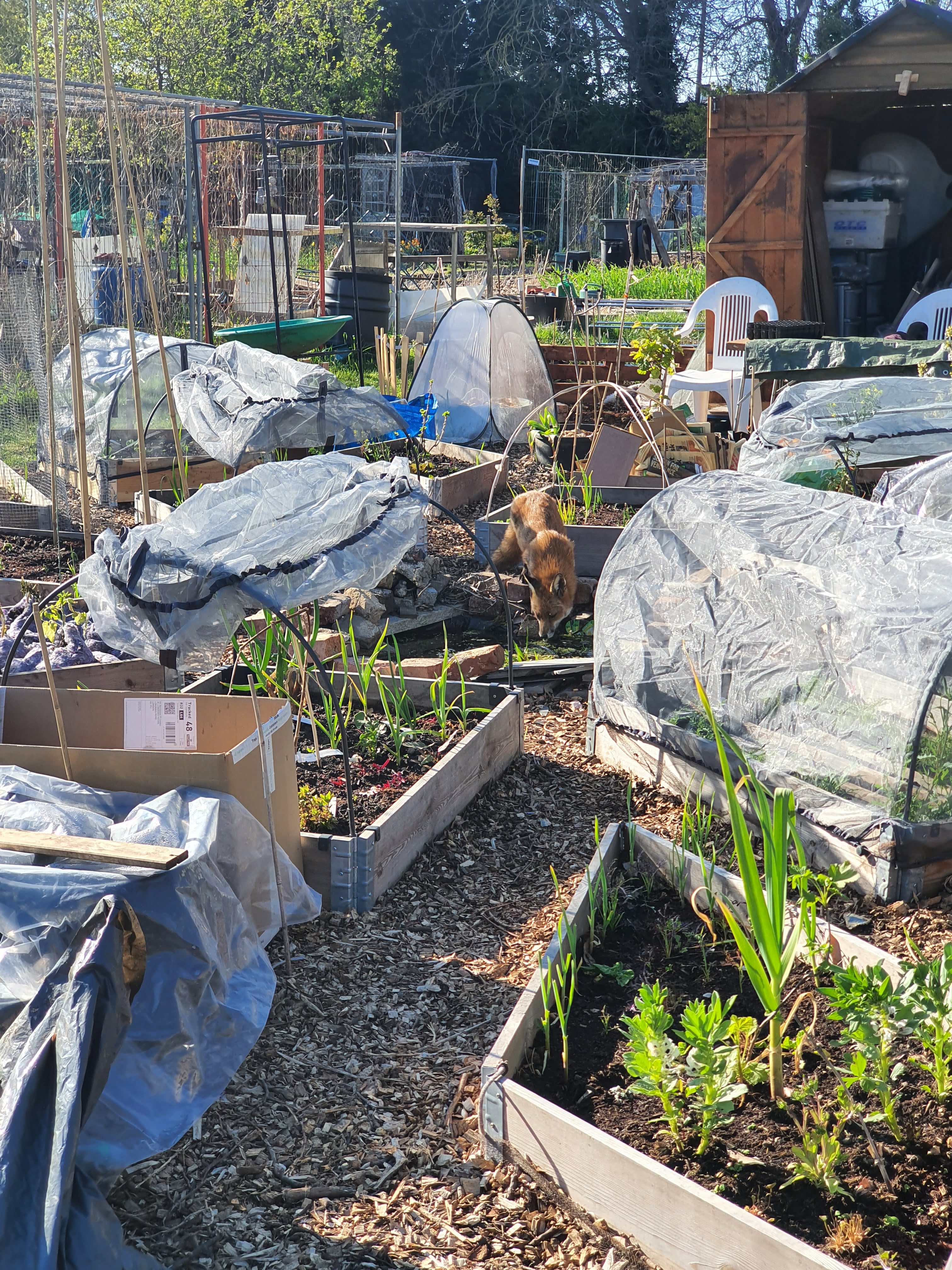
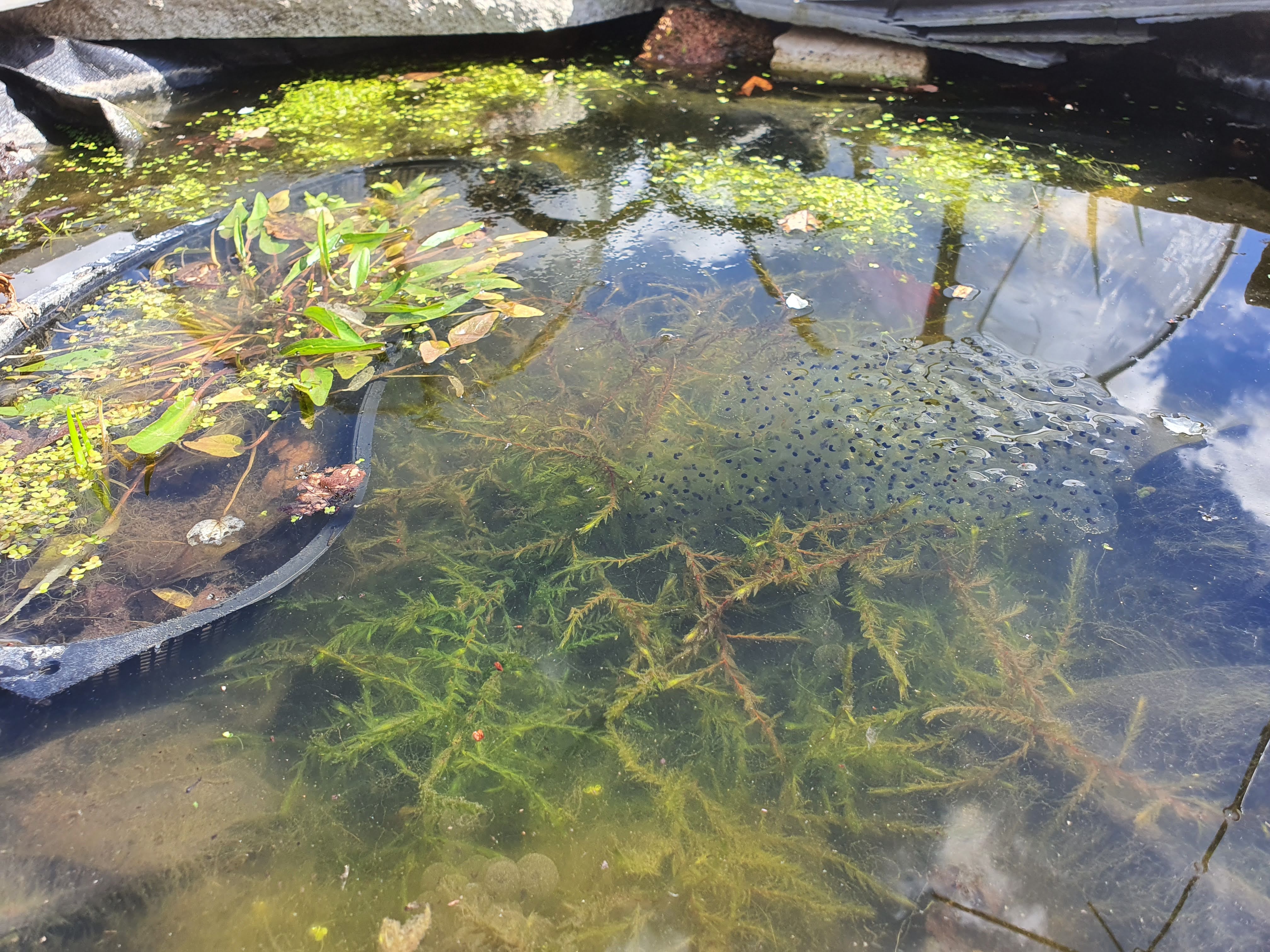
The local allotment fox comes to visit – for a little drink at the pond.
I am also on a 9-month placement at Organiclea – this is to develop my skills in working with fruiting plants – trees, bushes, etc.
I am also involved in Time to Grow and the Waltham Forest Food Growers Network and Capital Growth. I am interested in food sovereignty though learning and practicing growing as much food as possible – so that I can share this with others.
And think of every living thing without exception: the weak and the strong, from the smallest to the largest, whether you can see them or not, living nearby or far away, beings living now or yet to arise – may all beings become happy in their heart of hearts!
This quote is from the Kariniya Metta Sutta, the Buddha’s words on compassion – it encourages well wishes to all beings. It invites us to develop metta: loving kindness – unconditional good will towards all beings – whether visible or invisible.
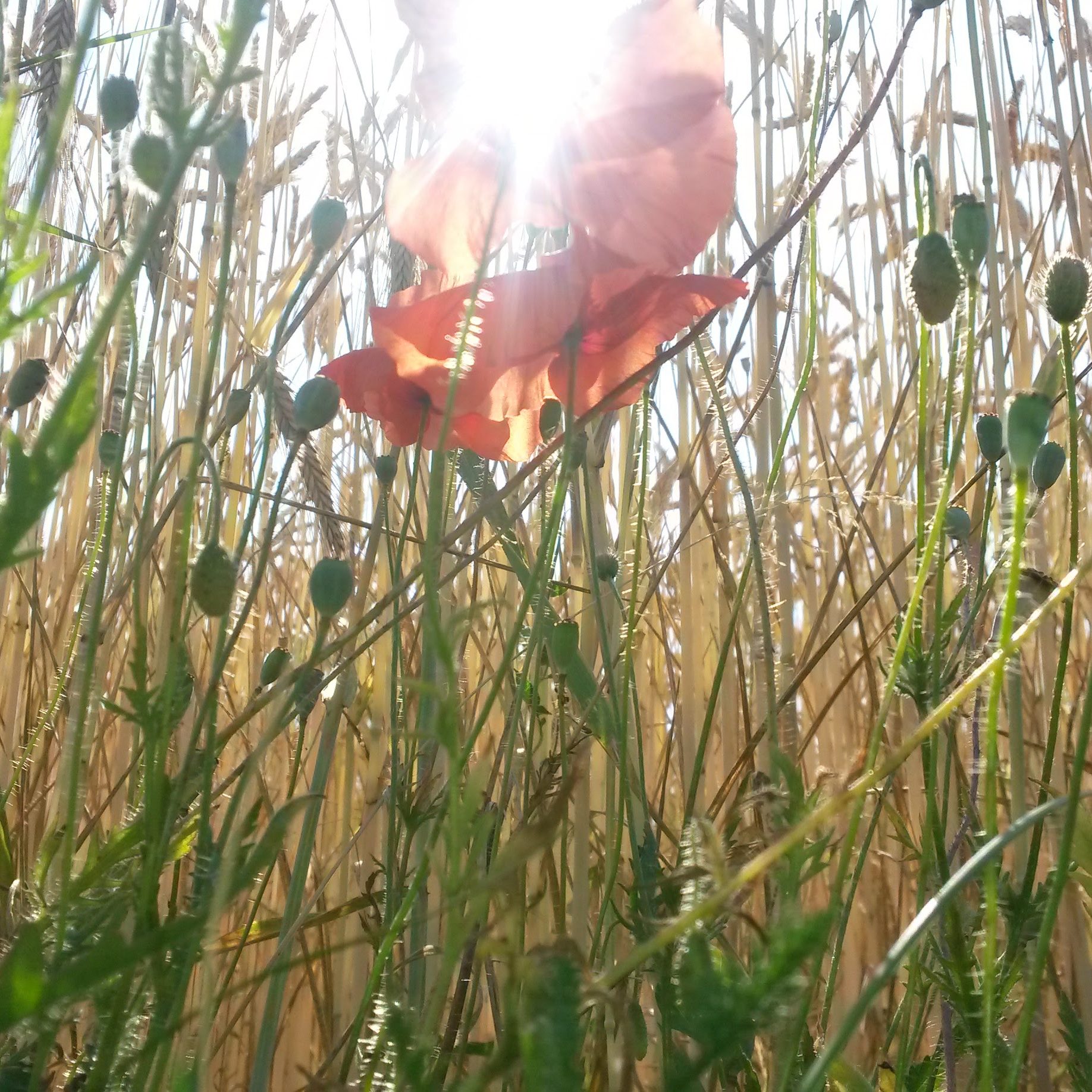
Poppy flower – a being dancing in the sunlight, in a wheatfield.
So what is it to be invisible, not to be seen or acknowledged? What is it to simply be overlooked – as if you do not even exist? It is these beings that I wish to consider – to bring into a greater sphere of compassionate awareness. Mettā is one of the four “divine abodes” (Pali: brahmavihāra) – this includes feeling happy when others are happy. It includes feeling compassion when others suffer. In short, feeling interconnected with all beings.
The result… interpersonal harmony, meditative concentration, our own wellbeing regardless of what is happening around, regardless of external circumstances. This is happiness indeed! Mettā is indeed one of the ten “perfections” (pāramī) that facilitates the attainment of awakening – Bodhi – itself.
The Buddha taught the practice of loving kindness to help some monks were trying to meditate in a forest. They had became frightened by ‘earth devas’ or ‘forest spirits’ – that were ‘invisible’ to them. Through mettā they began to radiate loving-kindness. The invisible beings settled, and left the monks to meditate peacefully amongst them.
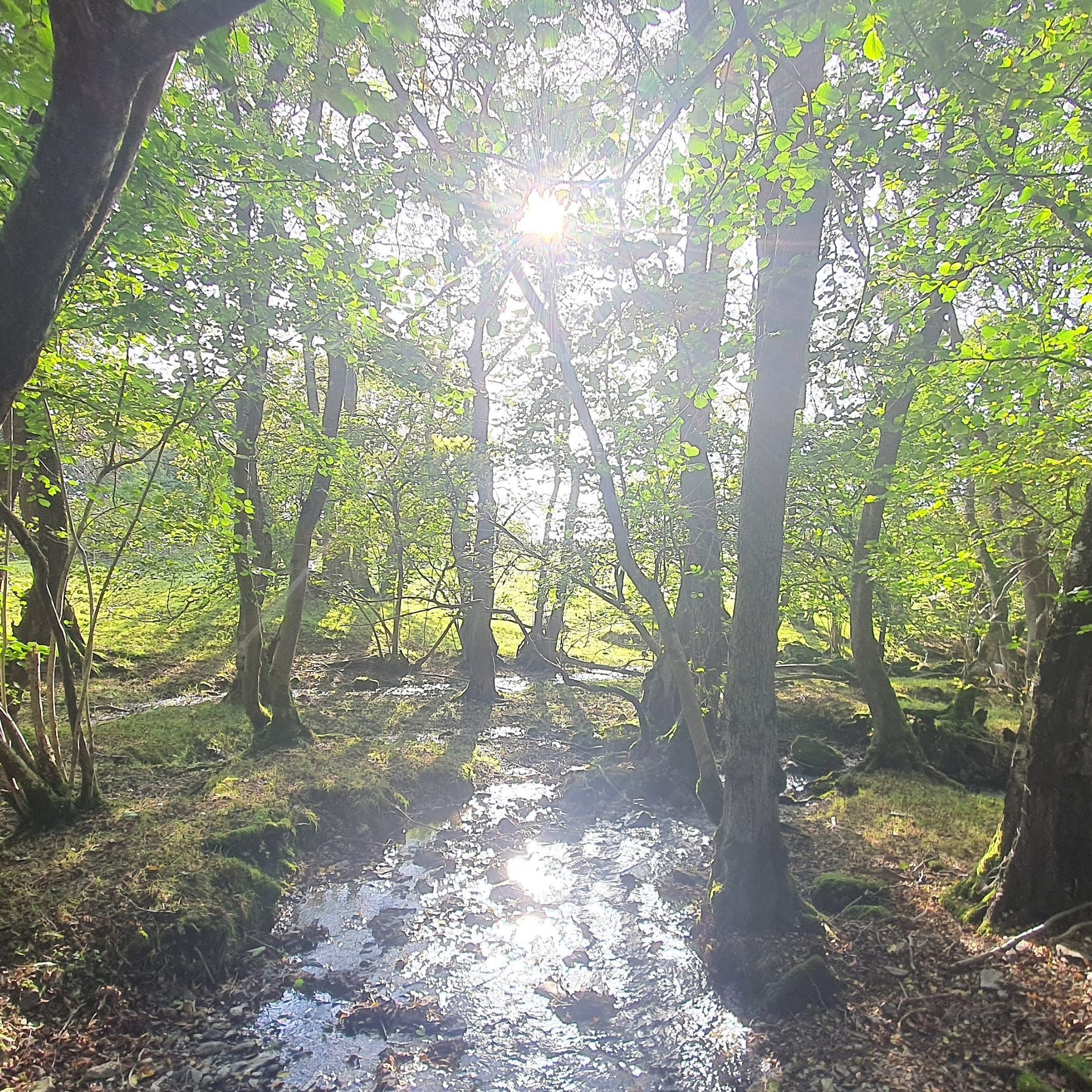
Sunlight on a stream, interacting living elementals within the realm of space
Shamanism is embedded in animism. It recognises how our states of heart-mind affect the living space around – visible or invisible. Our thoughts, words, actions evoke resonances though the time-space continuum. These can hurt and harm others, energetically, mentally or physically. Shamanism includes practices to remove harmful ‘intrusions’ and re-establish harmony in a person and their environment.
This animist paradigm exists globally, across cultures. Shamanism is the practical engagement with an animate universe. The universe is alive, our actions, thoughts and words have effects on others. This is the basis of the ethics of Buddhism too. By empathizing with others though loving kindness and compassion, we become free – and non-violent.
Let’s acknowledge invisible beings – nature spirits, devas, earth spirits – and that they also suffer as a result of human activity. Let’s acknowledge that a minority of human on the planet do the majority of the damage. Here is an example. If you have the power and privilege to be able to travel by plane then you are in the top 10% of people creating 80% of the air pollution on the planet. We are complicit in contributing to countless lives lost to flooding, fires or starvation.
Let’s follow the teachings of Buddhism and the practices of Shamanism to develop compassion and loving kindness, creating compassionate thoughts, words and deeds.
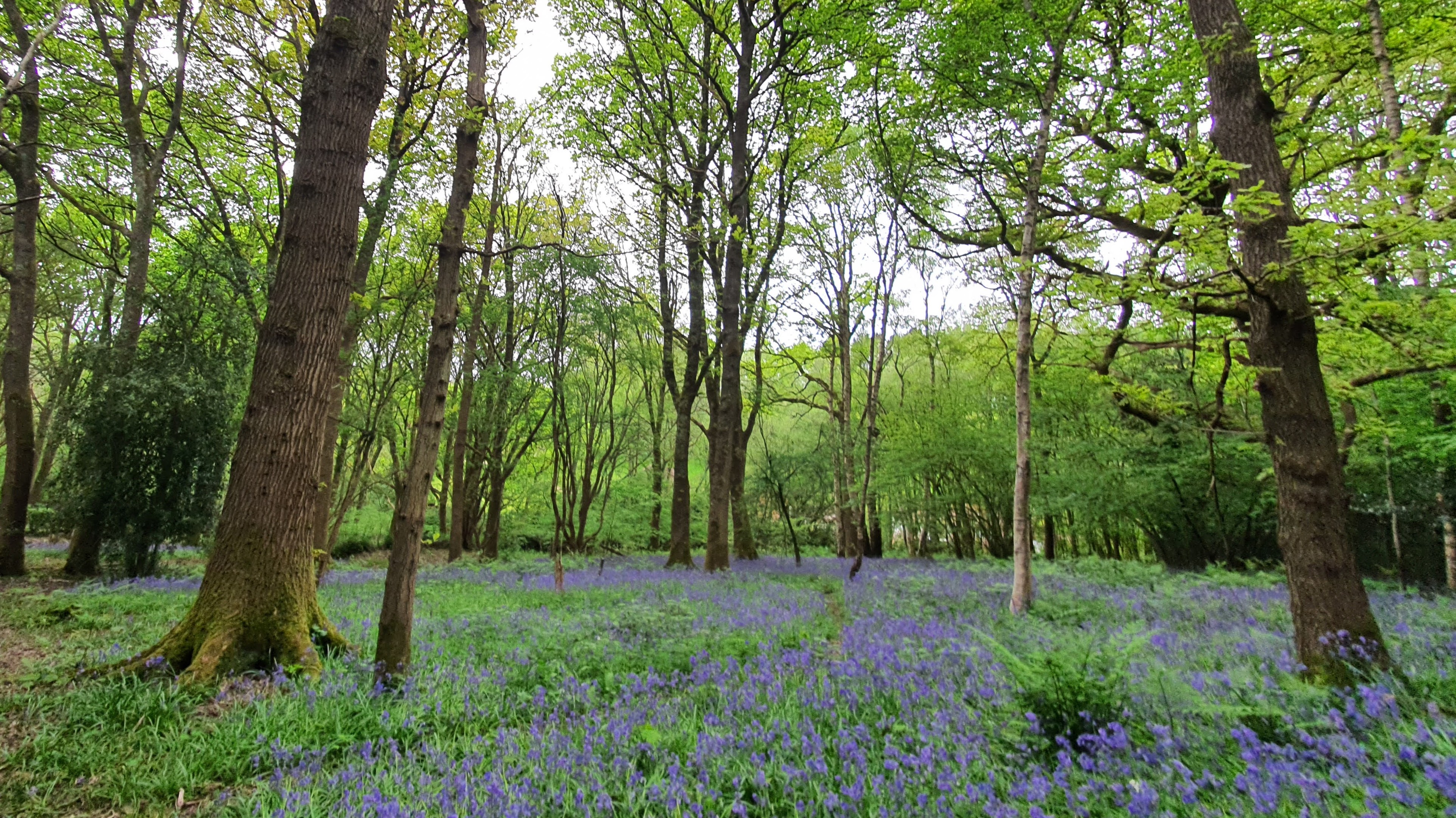
Bluebells protected by tree spirits and a living sign of spring and the uprising energy of renewal
‘…a universe conceived of as dead cannot be a universe in which one stands any chance of attaining Enlightenment.’ – Sangharakshita, Living with Awareness
Meditation and spiritual practices enable a dissolution of the ‘false view’ of separateness of ‘self’ and ‘other’ – there is the arising of interconnectedness with the living universe.
What is Shamanism? Indigenous practices of connecting to the non-material or spirit realm have been in place, cross-culturally, for thousands of years.
In Shamanism and Buddhism the universe is alive and sacred and there are practices for directly experiencing this. However, centuries of trauma have lead to disconnection from the realms of ‘non-ordinary reality, the spirit world. This has happened as a result of many factors, including colonialisation, removal of peoples from their ancestral lands and the imposition of oppressive belief systems.
Mircea Eliade explains, in his book, “Shamanism: Archaic Techniques of Ecstasy”, that ‘shamanism’ is pre-eminently a religious phenomenon of Siberia and Central Asia and which may have evolved from the same foundations as Buddhism – and spread as Buddhist teachings and practices also spread.
Indeed the origins of the word “shaman” go to the Tungusic word, šaman – and even further back to the Sanskrit word “Sramana” (श्रमण) which means “a seeker” or “one who toils or exerts themselves for a higher religious purpose”. This correlation presents the shaman as one who “toils”, “labours”, makes effort in practicing to achieve spiritual liberation.
Ancient Oak at Alfoxton Park – a portal to communications with spirits of the land.
While this may be stereotypically associated with an ascetic lifestyle, it is at its heart about seeking enlightenment or liberation through a renunciation of material attachments and deeper connection to the esoteric and spiritual. From this understanding, there is a deep connection between Buddhism and Shamanism.
For the ethnologist, the shaman has been described as a ‘medicine man’, ‘sorcerer’, ‘magician’ or ‘druid’. For those able to interact with the spirit world – the universe perceived as living – there is an understanding of the realms beyond material, dualistic perceptions of ‘ordinary reality’.
In classical shamanism, which I practice and teach to others, the key practice is to form an intention and ‘journey’ though the imaginal consciousness, into the spirit realm. This can include exploring and interacting with the spirit world. This journeying involves altered states of consciousness, such as meditation, trance – and the tool to support a shift in consciousness is the ‘sonic drive’, the repetitive drum beat, delivered at a particular frequency.
The purpose of shamanic journeying can be to clarify answers to life’s questions of to direct spirits or spiritual energies into the physical world for the purpose of healing, divination. All this is to aid the community in some other way, including those in the community who have passed and need support to transcend from connections with the ‘middle realm’. All in all the practice is to restore balance and harmony.
With a primary purpose of helping or healing those in the community, Shamanism expresses the Buddhist ideal of the Bodhisattva. The Bodhisattva is one who vows to attain enlightenment for the benefit all beings. Shamanic practice includes a requirement to practice breaking through the blockages of conditioned existence in order to connect with a ‘living transcendental plane’ – and to do this for the benefit of all beings, including the ancestors, the children and others in the community.
Places in nature that link the sky with the earth are immensely potent as places of healing and communication with the spirit realm.