
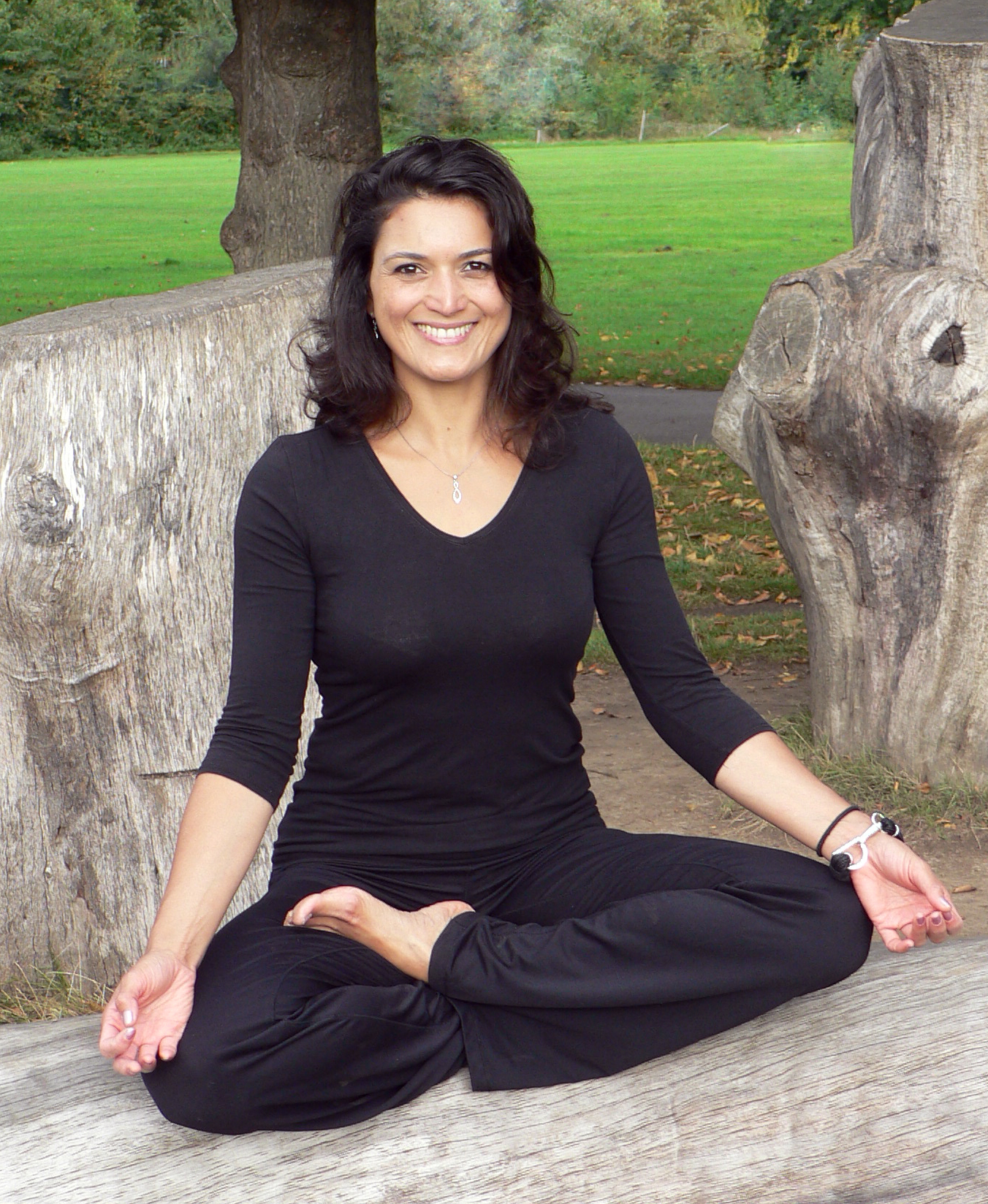
Buddhist Integral Yoga is an approach to health and healing developed by myself, Dr Guhyasakhi (Bernadette) Carelse, based on my background and experience of practicing and teaching Buddhism, mindfulness, yoga and shiatsu.
I discovered a book on yoga when I was 11 and dabbled a little. Then when I was 14, I gave it a more concerted effort – and after 5 weeks of practice, I discovered it’s healing and transformational benefits – I suddenly found self-confidence, poise and a calm, focused state of mind that was invaluable for school.
I have been teaching yoga since 1998, and been qualified with the British Wheel of Yoga since 2001 – though movement practices of tai chi, chi gung and knowledge of Buddhism and trauma-sensitive yoga therapy, I have developed a synthesis of yoga and energy practices is to enhance holistic health – body, mind, and beyond. The intention is to support the development of deep embodied awareness, and mindfulness at all levels of being.
What is Buddhist Integral Yoga? Yoga is a generic term that refers to a range of physical, mental and spiritual practices that originated in ancient India. It includes physical postures (asanas), breathing techniques (pranayama) and meditation.
Healing is a process of integration – through the multiple levels of being: physical, emotional, mental, and so on. The process embodied level, with all the impact of past experiences that lead to reactions, including automatic reactions, unconscious tendencies, addictive habits. It also involves the meta-physical (energy level) and the levels that connect the two. It is here, in this ‘etheric’ region, that the meridians flow.
My background: I have been teaching Yoga since 1998, when I began training as a Yoga Teacher with the British Wheel of Yoga (BWY). The following year, I began the Healing Tao practices as taught by Mantak Chia and Kris Deva North – this included training in working with the meridian energy flow through yoga postures. In 2001, I qualified as a yoga teacher with the British Wheel of Yoga and used this foundation to adapt yoga and meditation to the needs of the participants – by this time was leading two yoga classes a week. One of these classes I ran for seventeen years.
Over the decade that followed, with further training in mindfulness, I developed the Buddhist Integral Yoga. From 2008 to 2012, I completed Doctoral Research as an Educational Psychologist focusing on how mindfulness can be used to develop attention skills.
During 2021, I was ordained in the Triratna Buddhist Order and this process enabled me to integrate Buddhist principles and practices within a trauma-sensitive yoga approach – and build upon a personal practice of energy/ prana/ chi cultivation and over 20 years of experience as a teacher.
Over all, Integral Yoga is a synthesis of a range of practices, such as Mindfulness, yoga practices – outlined by the 8 limbs of Yoga (Yoga Sutras of Patanjali). This includes yamas (retraints), niyamas (observances), asana (physical posture work), pranayama (breathing practices), dharana (concentration) and dhyana (contemplation) – and the integration of this with Buddhism, including the Noble Eightfold Path and cultivation of deep meditative states – levels of dhyana. It also build on Taoist ‘esoteric’ Yoga practices for health and vitality – such as Tai Chi / Chi Kung to enhance and harmonise the meridians – the networks of energy channels that flow throughout the body and which include the ‘chakras’, places within the body where the energy channels converge.
What do participants say about the classes?
“The teaching is to a high standard. Bernadette is very knowledgeable and brings this to each class and person attending.”
“Bernadette is an excellent tutor.”
“ It [the class] improves my health.”
“The best thing about this course is the varied programme and the challenges presented.”
“I’ve tried different courses in the past and our teacher is the most professional and I like the way she teaches.”

