Tag Archives: meditation

5 Stages of Spiritual Practice… including becoming aware the universe is alive and acting compassionately towards all beings

Can we wake up in an instant? Yes, possibly.. and engaging in the five stages of spiritual practice can make this more likely.

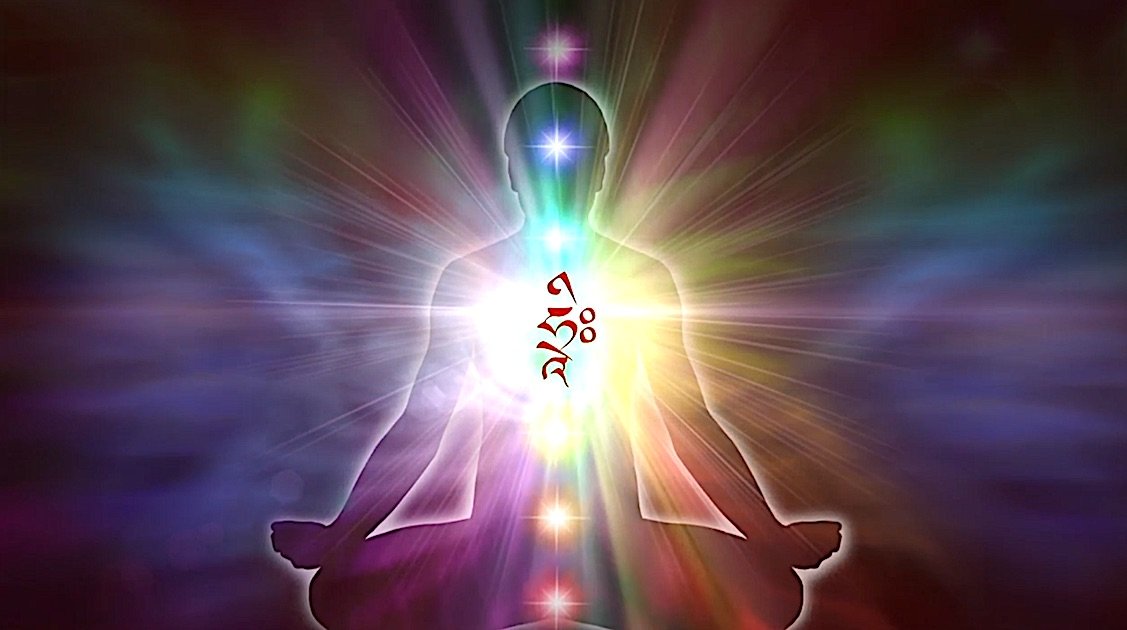
This process begins with healing, becoming whole and closely following this, finding ways to be positive – all in all, happy and healthy. This is followed by ‘death’ of fixed, limiting views and then an emergence into directly experiencing interconnectedness – and potentially, the universe as alive. Finally, spiritual emergence unfolds – a profound understanding and appreciation of live and its preciousness – and engagement in spontaneous compassionate activity.

Here is more detail on each of these stages:

Stage 1: Integration – In this stage, the key meditation practice is mindfulness – including the Mindfulness of Breathing and simply being present with what is arising in the our immediate, embodied experience.

This is itself, in a context of many distractions is a radical revolutionary act of independence, and self-efficacy. Sometimes, we may realise that we need support and this can include engagement in bodywork or healing sessions to address painful past experiences.

Part of mindfulness is also being aware of when we fall short of our aspirations and values. Ethics are a key part of mindfulness – being aware of the effects of our actions on other beings and being aware of our intentions and when unhelpful habitual patterns may be arising so we have an opportunity to do something different.

Stage 2: POSITIVE EMOTION – This phase is about the quality of our attention – cultivating kindness, compassion, joy and overall positivity. Authenticity in this is key – and practices for cultivating emotional positivity include recollection of gratitude, cultivating loving kindness (metta bhavana).

The process enables us to feel delight, bliss and even rapture though opening into embodied levels of deep ‘absorption’ (the dhyānas). This process can reveal areas where we feel less inclusive, towards parts of ourselves, or others, including other humans and non-human beings – so that we can transform this.

A teaching on loving kindness (the Kariniya Metta Sutta) goes, “Whatever living beings there may be, (moving, strong) animals or (still, weak) plant, without exception, whether they are very long or large or middling in size, or short, great or small, whether they are visible or unseen, whether living nearby or far away, whether they are born, or not yet come to be: may all living beings have happiness.” In other words, the aim is to cultivate well wishes towards all beings, regardless of species or material form.

Stage 3: SPIRITUAL DEATH – This process is a progression into wisdom (prajna) and vision, as in seeing the truth in terms of ‘ultimate reality’ with liberation from a ‘fixed self-image’ and habitual delusions that arise from greed, aversion and ignorance. Sometimes this is described as entering the ‘gateless gate’.

Practices for this include contemplation on the elements, on conditioned co-arising, death and impermanence – and thereby recognising truths such as that of impermanence, insubstantiality and the poignant beauty of ’emptiness’ (sunyata).

In the process of drum journeying, there may be a direct experience of letting go of a sense of separateness and individuality, and awakening into interconnected presence.
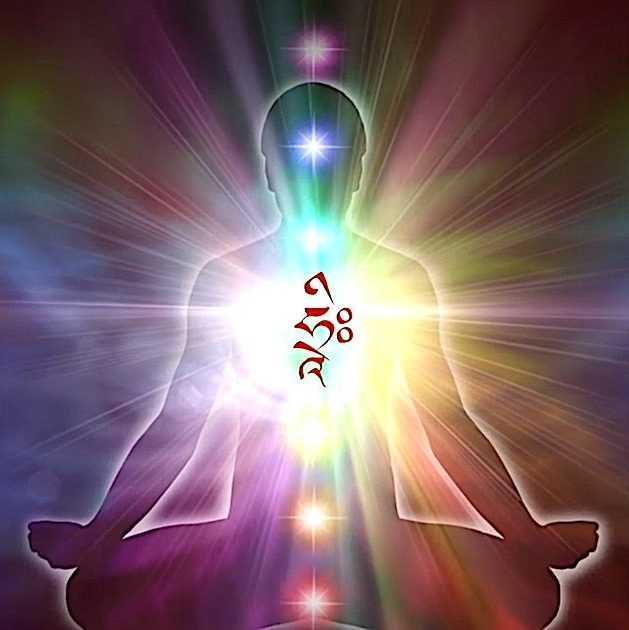
Meditation and spiritual practices enable a dissolution of the vijnana (false understanding) of separateness of self and the living universe.

Stage 4: SPIRITUAL REBIRTH – This stage is about the emergence of insight, wisdom is blended with dhyana and the process is one of transformation inline with the insights that arise – as a result of connection to wisdom energies (dharma Niyama). The practices for this may include visualisation of transcendent beings, such as buddha and bodhisattva figures. This is a stage of emergence transformation through connection with the truth as a living reality.  

Sangharakshita, the founder of the Triratna Buddhist Order, in his book, Living with Awareness, explains, “…a universe conceived of as dead cannot be a universe in which one stands any chance of attaining Enlightenment.’ Indeed Buddhist is a practice of embracing animism.

Through the drum journeying we shift into alterate states of consciousness that enable connection with these experiences and furthermore to gain wisdom and insight into answers to the deeper questions that we may have about our lives – and a profound appreciation of life itself.

Stage 5: COMPASSIONATE ACTIVITY – This stage is one of receptivity, a kind of ‘non-practice’, such as ‘just sitting’ and spontaneous compassionate activity – an overflow of enlightened presence and effortless compassionate being – as though a supra-personal force is flowing through one – the awakened consciousness or ‘will to enlightenment’ (bodhicitta).

Sangharakshita provides a summary of this system of practice – an edited extract from a seminar Nagarjuna’s Precious Garland – “All the time, every day, one has got five things to practice, as best you can, simultaneously:

  1. One keeps up the effort to be mindful and aware and to be as integrated as possible. 
  2. One remains in as positive a mental state as one possibly can. 
  3. One does not lose sight of one’s ultimate goal at any time. 
  4. Whatever you have realised/discovered/seen on the highest level of your being at any time, you try to apply this to practice at every level. 
  5. You do what you can to help people.  This is your spiritual life. All the other teachings on the Buddhist path are contained in this, in principle.”

In essence the key is to help all beings, human and non-human, awakened into awareness of a deeper essential interconnectedness.

I hope that this has been helpful.

Wishing you well, Guhyasakhi
User comments

Deep Ecology, teaching meditation and enjoying the allotment

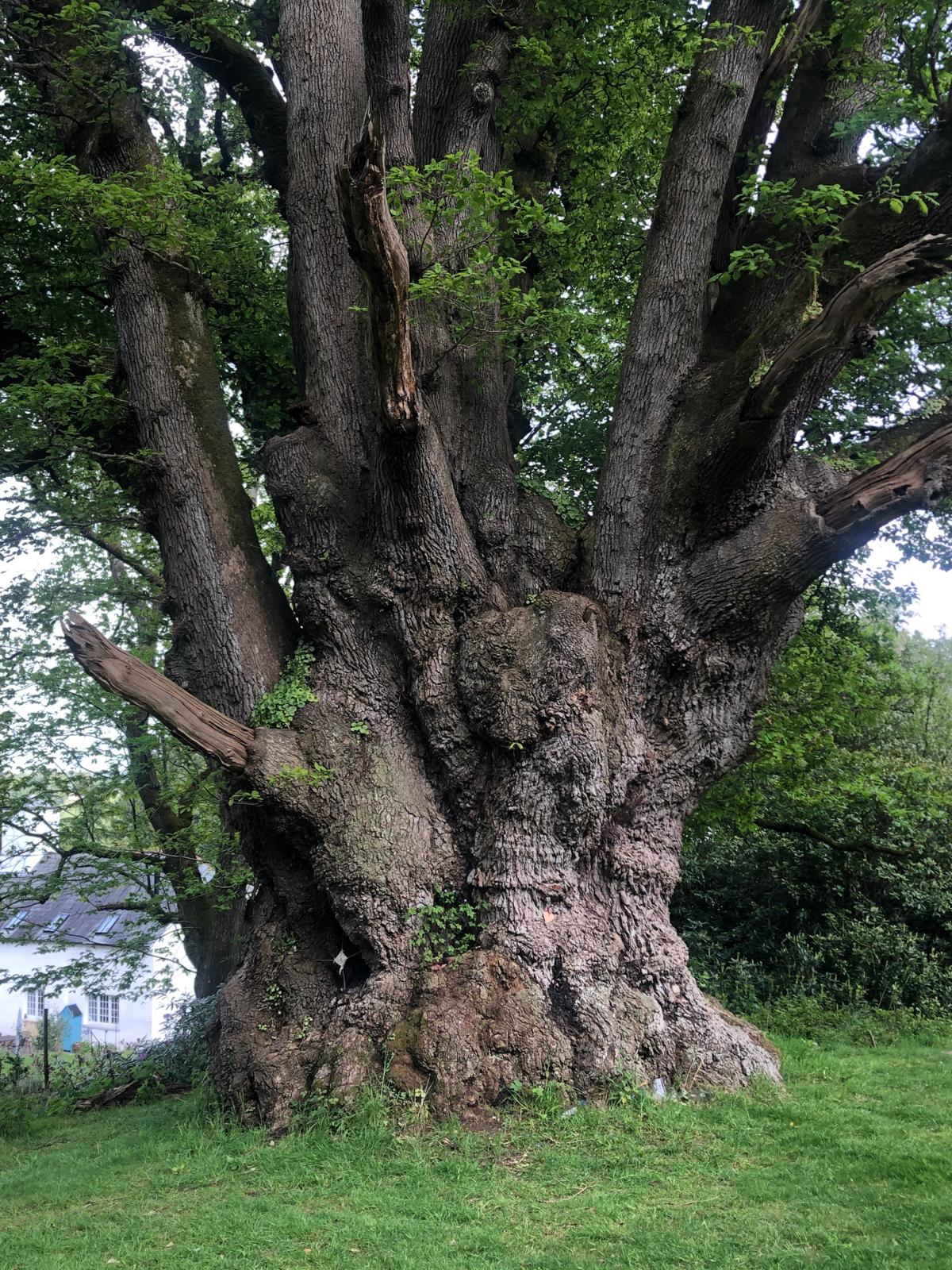
The beautiful 900+ year old Oak Tree at Alfoxton Park – where we had the last Deep Ecology Camping Retreat.

I have had some time to reflect on the pat few months and realise the emergence of a few new themes.. in the process of engaging in retirement (more on that another time perhaps!)

Deep Ecology Days and Retreats – For a few years, I have been co-facilitating Day Retreats and longer Camping Retreats on Buddhism and Deep Ecology with Sanghasiha, another Buddhist Order Member.

This week, we just came back from one at Alfoxton Park Retreat Centre – and in 2025, we are leading sessions in many different Buddhist Centres in the UK.

During the Deep Ecology sessions, I have been teaching Shamanic Journeying – building on providing this on a 1 to 1 basis – Shamanic Counselling and the Shamanic Healing work. Through this, I have been more and more intrigued by Buddhist Shamanic Practices – the world of the Dakinis and the Tibetan ‘Cho’ practice and this practice continues unfolding.

In the months after ordination in 2021

Teaching Buddhism and meditation at the North London Buddhist Centre. On Wednesdays I have had the pleasure of working with Ratnaprabha, another Order member and a very experienced one too.

I have been enjoying leading some of the teaching sessions on Buddhism and during the lunch-time meditation sessions. This has inspired and been inspired by having a daily meditation and yoga practice.

Offering sessions for volunteers at my allotment – It has been one year since I signed the contract for my allotment. What a journey of mud, sweat and delight – and an abundance of harvests of salad leaves!

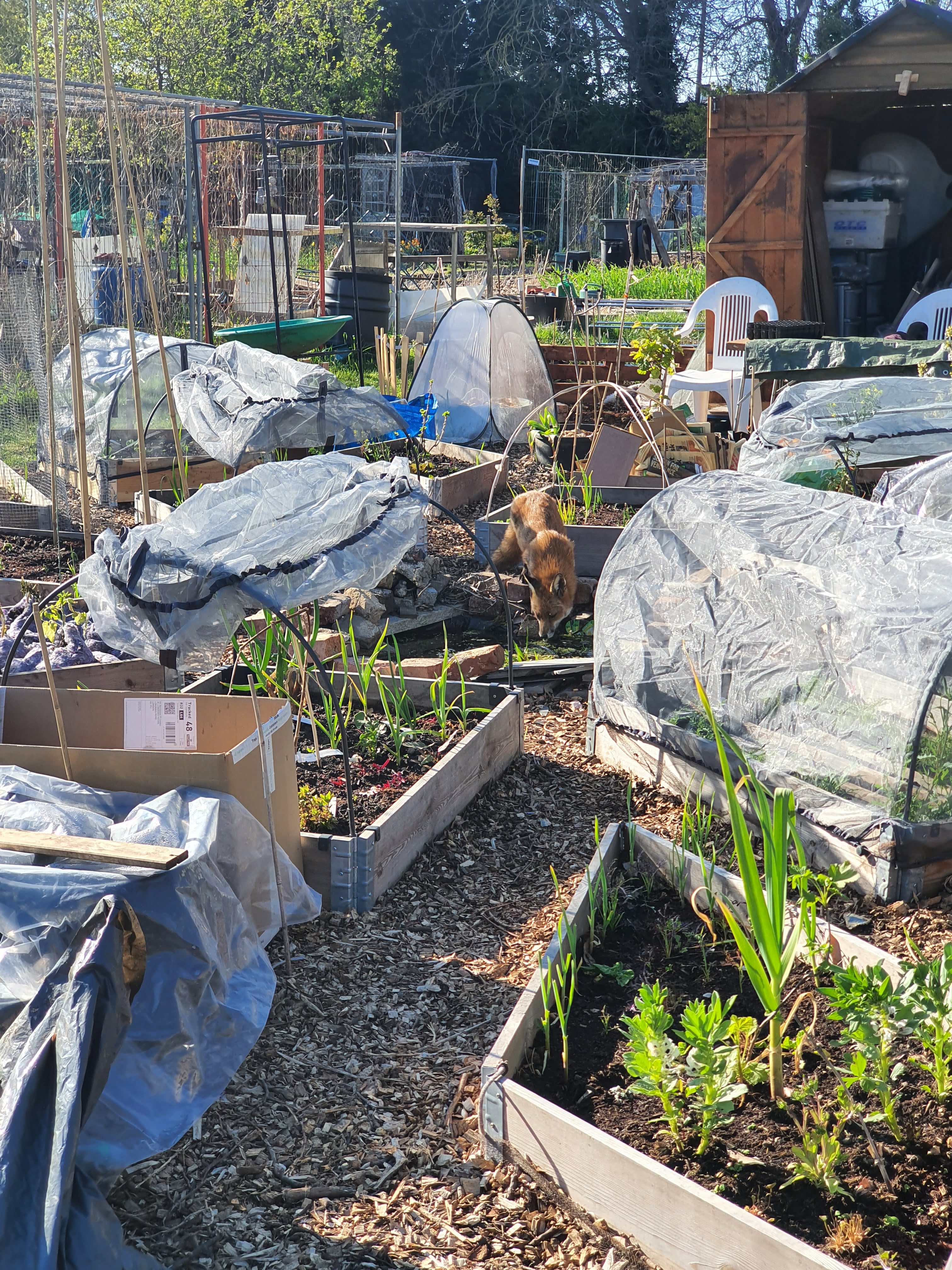
The local allotment fox comes to visit – for a little drink at the pond.

This year I opened up the site to a weekly session for volunteers – if you’d like to join our WhatsApp group – and come to one of the sessions, please let me know!

I am also on a 9-month placement at Organiclea – this is to develop my skills in working with fruiting plants – trees, bushes, etc.

I am also involved in Time to Grow and the Waltham Forest Food Growers Network and Capital Growth. I am interested in food sovereignty though learning and practicing growing as much food as possible – so that I can share this with others.

Climate Resilience – I am trained in leading Climate Cafes and Climate Fresk workshops. I am running workshops on this soon – and if you are interested, please let me know so that I can inform you of them.

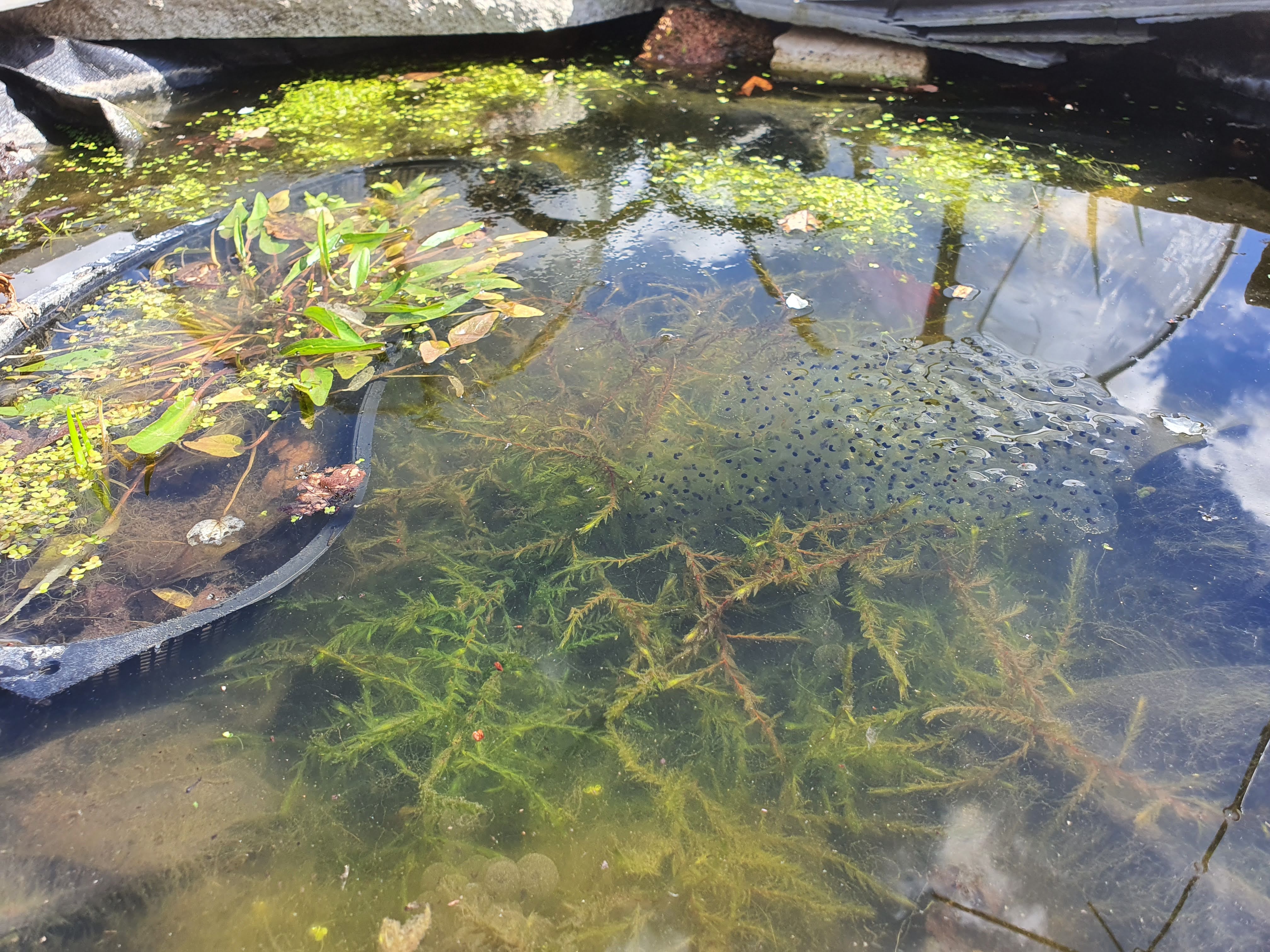
The pond is a delight – especially with all the tadpoles and the variety of creatures that are living in it.

Buddhism and Shamanism: Compassion for All Beings

And think of every living thing without exception:
the weak and the strong, from the smallest to the largest, whether you can see them or not, living nearby or far away, beings living now or yet to arise –
may all beings become happy in their heart of hearts!

This quote is from the Kariniya Metta Sutta, the Buddha’s words on compassion – it encourages well wishes to all beings. It invites us to develop metta: loving kindness – unconditional good will towards all beings – whether visible or invisible.

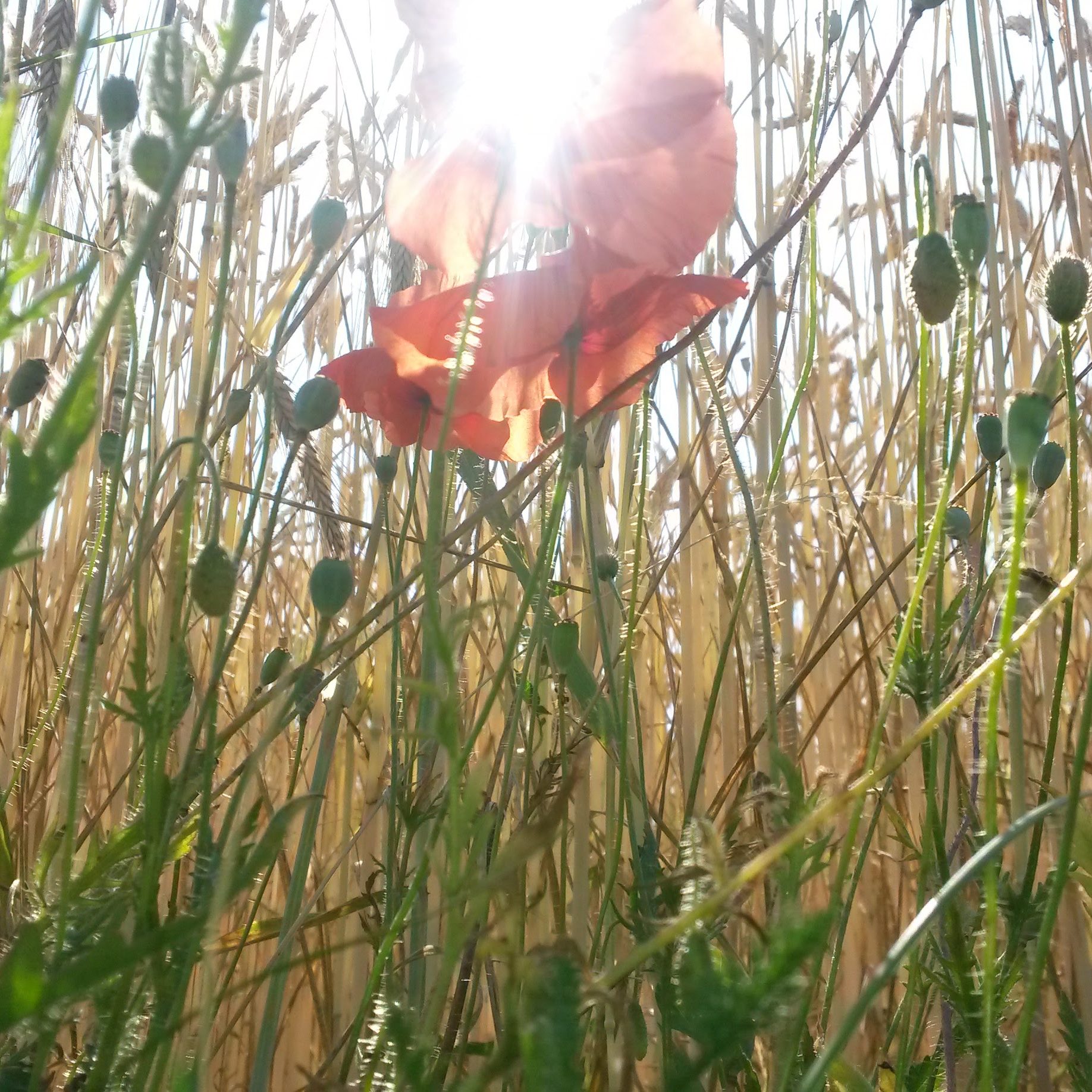
Poppy flower – a being dancing in the sunlight, in a wheatfield.

So what is it to be invisible, not to be seen or acknowledged? What is it to simply be overlooked – as if you do not even exist? It is these beings that I wish to consider – to bring into a greater sphere of compassionate awareness. Mettā is one of the four “divine abodes” (Pali: brahmavihāra) – this includes feeling happy when others are happy. It includes feeling compassion when others suffer. In short, feeling interconnected with all beings.

The result… interpersonal harmony, meditative concentration, our own wellbeing regardless of what is happening around, regardless of external circumstances. This is happiness indeed! Mettā is indeed one of the ten “perfections” (pāramī) that facilitates the attainment of awakening – Bodhi – itself.

The Buddha taught the practice of loving kindness to help some monks were trying to meditate in a forest. They had became frightened by ‘earth devas’ or ‘forest spirits’ – that were ‘invisible’ to them. Through mettā they began to radiate loving-kindness. The invisible beings settled, and left the monks to meditate peacefully amongst them.

Sunlight on a stream, interacting living elementals within the realm of space

Shamanism is embedded in animism. It recognises how our states of heart-mind affect the living space around – visible or invisible. Our thoughts, words, actions evoke resonances though the time-space continuum. These can hurt and harm others, energetically, mentally or physically. Shamanism includes practices to remove harmful ‘intrusions’ and re-establish harmony in a person and their environment.

This animist paradigm exists globally, across cultures. Shamanism is the practical engagement with an animate universe. The universe is alive, our actions, thoughts and words have effects on others. This is the basis of the ethics of Buddhism too. By empathizing with others though loving kindness and compassion, we become free – and non-violent.

Let’s acknowledge invisible beings – nature spirits, devas, earth spirits – and that they also suffer as a result of human activity. Let’s acknowledge that a minority of human on the planet do the majority of the damage. Here is an example. If you have the power and privilege to be able to travel by plane then you are in the top 10% of people creating 80% of the air pollution on the planet. We are complicit in contributing to countless lives lost to flooding, fires or starvation.

Let’s follow the teachings of Buddhism and the practices of Shamanism to develop compassion and loving kindness, creating compassionate thoughts, words and deeds.

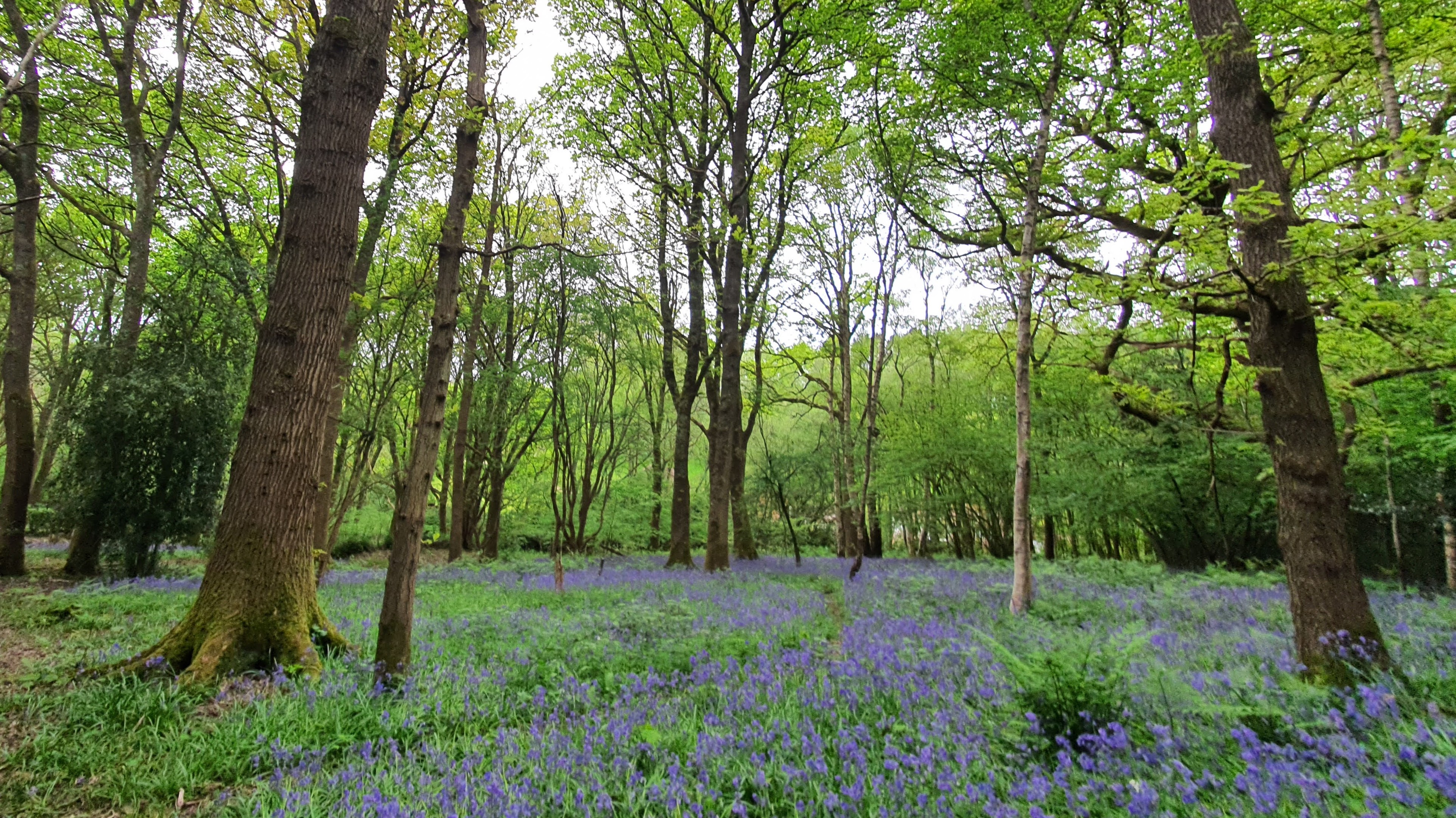
Bluebells protected by tree spirits and a living sign of spring and the uprising energy of renewal

Exploring the Connection Between Shamanism and Buddhism

…a universe conceived of as dead cannot be a universe in which one stands any chance of attaining Enlightenment.’  – Sangharakshita, Living with Awareness

Meditation and spiritual practices enable a dissolution of the ‘false view’ of separateness of ‘self’ and ‘other’ – there is the arising of interconnectedness with the living universe.

What is Shamanism? Indigenous practices of connecting to the non-material or spirit realm have been in place, cross-culturally, for thousands of years.

In Shamanism and Buddhism the universe is alive and sacred and there are practices for directly experiencing this. However, centuries of trauma have lead to disconnection from the realms of ‘non-ordinary reality, the spirit world. This has happened as a result of many factors, including colonialisation, removal of peoples from their ancestral lands and the imposition of oppressive belief systems.

Mircea Eliade explains, in his book, “Shamanism: Archaic Techniques of Ecstasy”, that ‘shamanism’ is pre-eminently a religious phenomenon of Siberia and Central Asia and which may have evolved from the same foundations as Buddhism – and spread as Buddhist teachings and practices also spread.

Indeed the origins of the word “shaman” go to the Tungusic word, šaman – and even further back to the Sanskrit word “Sramana” (श्रमण) which means “a seeker” or “one who toils or exerts themselves for a higher religious purpose”. This correlation presents the shaman as one who “toils”, “labours”, makes effort in practicing to achieve spiritual liberation.

Ancient Oak at Alfoxton Park – a portal to communications with spirits of the land.

While this may be stereotypically associated with an ascetic lifestyle, it is at its heart about seeking enlightenment or liberation through a renunciation of material attachments and deeper connection to the esoteric and spiritual. From this understanding, there is a deep connection between Buddhism and Shamanism.

For the ethnologist, the shaman has been described as a ‘medicine man’, ‘sorcerer’, ‘magician’ or ‘druid’. For those able to interact with the spirit world – the universe perceived as living – there is an understanding of the realms beyond material, dualistic perceptions of ‘ordinary reality’.

In classical shamanism, which I practice and teach to others, the key practice is to form an intention and ‘journey’ though the imaginal consciousness, into the spirit realm. This can include exploring and interacting with the spirit world. This journeying involves altered states of consciousness, such as meditation, trance – and the tool to support a shift in consciousness is the ‘sonic drive’, the repetitive drum beat, delivered at a particular frequency.

The purpose of shamanic journeying can be to clarify answers to life’s questions of to direct spirits or spiritual energies into the physical world for the purpose of healing, divination. All this is to aid the community in some other way, including those in the community who have passed and need support to transcend from connections with the ‘middle realm’. All in all the practice is to restore balance and harmony.

With a primary purpose of helping or healing those in the community, Shamanism expresses the Buddhist ideal of the Bodhisattva. The Bodhisattva is one who vows to attain enlightenment for the benefit all beings. Shamanic practice includes a requirement to practice breaking through the blockages of conditioned existence in order to connect with a ‘living transcendental plane’ – and to do this for the benefit of all beings, including the ancestors, the children and others in the community.

Places in nature that link the sky with the earth are immensely potent as places of healing and communication with the spirit realm.

Empower Yourself with Shamanic Counselling

Classical Shamanic Counselling is individual training to learn how to become one’s own ‘shaman’, being able to undertake shamanic journeying independently. If this interests you please contact me to schedule an initial chat.

Shamanism is humanity’s oldest spiritual tradition, dating back at least 40,000 years to the earliest days of human consciousness. It is not a religion but rather a body of spiritual techniques. Its distinguishing methodology is the art of moving ‘outside of time’ and thereby enabling the shaman to contact and communicate with – to be in the company of – wise, compassionate and transcendent beings. This is done for the purposes of healing and problem solving on behalf of oneself and others.

Shamanic journeying involves shifting one’s consciousness to experience more than ‘ordinary’, everyday reality – this is the informative, creative, healing and imaginal realm known as ‘non-ordinary reality’.

Training in the method is undertaken over six in-person sessions, each lasting about 1 1/2 to 2 hours. The sessions involve teaching you a method session by session. The aim is to empower you to undertake shamanic journeys independently to obtain reliable answers to important life questions – to be able to communicate with the ‘true counsellors’, transcended, loving, helpful ‘spirits’ or ‘beings’ that exist all around us. 

The objective of Shamanic Counselling is to restore or enhance spiritual power and authority for use in everyday life – in essence to become empowered to become your own shaman and gain the answers to important life questions. These questions may deal with many issues, such as physical, emotional or spiritual health, work, relationships, fears, phobias and addictions.

If Shamanic Counselling interests you please be in touch with me to schedule an initial chat. Please be aware that while this training is free, there are limited spaces available and I am in training under supervision.

Retreats of inspiration, reflection and community

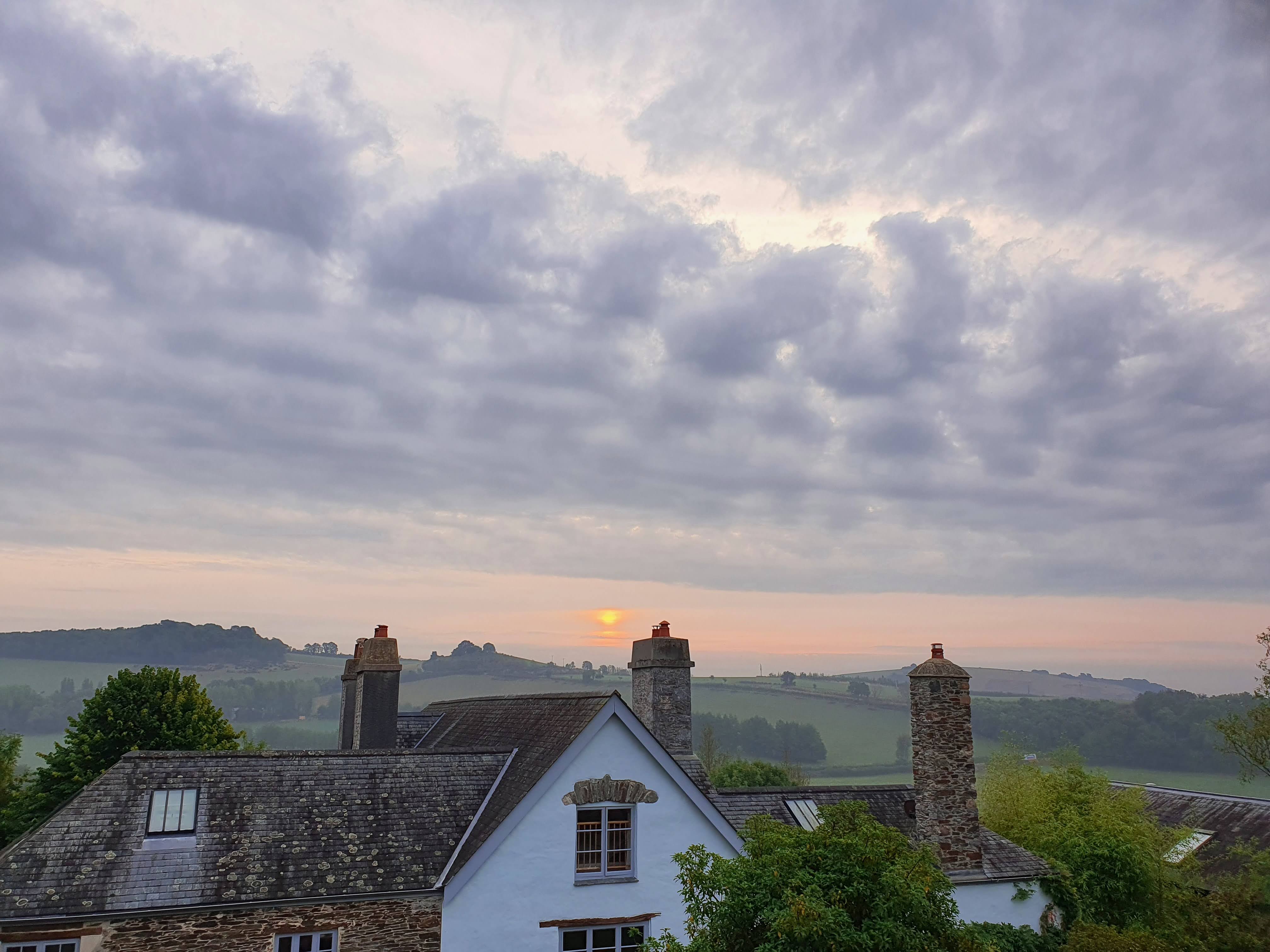
Sunrise in Devon at the Spirit of the Drum Retreat

From the end of June to the middle of October, I had the privilege – of inclination, time and financial resources – to have gone on a number of retreats. For those for whom this is unfamiliar, going on retreat is a way of dedicating some time and space to practice something.

This year I have been practicing mediation, exploring Buddhism or learning more about the ‘imaginal’ or ‘formless realms’.

Each retreat has been nourishing to body, mind, spirit and interconnectedness with nature.

29 June to 5 July Deep Ecology Camping Retreat. I was co leading this retreat with two other Order Members and it was heartening to share teachings and practices that can empower and inspire us are we face the Climate Emergency using Buddhist teachings.

This retreat was ‘well timed’ in many ways, including because I had just completed Level 1 of a City and Guilds Horticultural Course. I did the course with Organiclea and was delighted to learn lots about Organic Gardening, including soil types, companion planting, weed identification etc. I was so inspired and deeply feel that this is a way to feel empowered in the light of the climate catastrophe that I am now doing the Level 2 training – this time the focus is on Practical Horticultural skills.

28 to 31 July 2022: Into the Wild Retreat with James Low. I went on this camping retreat with my partner. We both engaged in the approach of openness, clarity and sensitivity of direct-seeing into the ‘nature of reality’ – a bright, fresh awareness emerges in each moment that is scintillatingly refreshing!

17 to 21 August 2022: Combined UK/Ireland Are Order Convention. This was an inspiring event and deepened an experience of connection to the Triratna Buddhist Order – and in case you missed it, I was ordained in July 2021. It was heartening!

I enjoyed meeting so many Order Members and felt deeply appreciative and part of an inspiring community – the teachings were heartfelt and I was especially delighted to be lead through the Vajrasattva Sadhana by Suryagupta, the Chair of the London Buddhist Centre, who also lead the POC retreat (see below).

I also camped, and packed my tent, sleeping bag and roll up mat into the front bag of my Brompton and carried my clothes in a rucksack on my back. So I was able to cycle to the venue with everything that I needed for the event. It was fun and something with lots of potential.

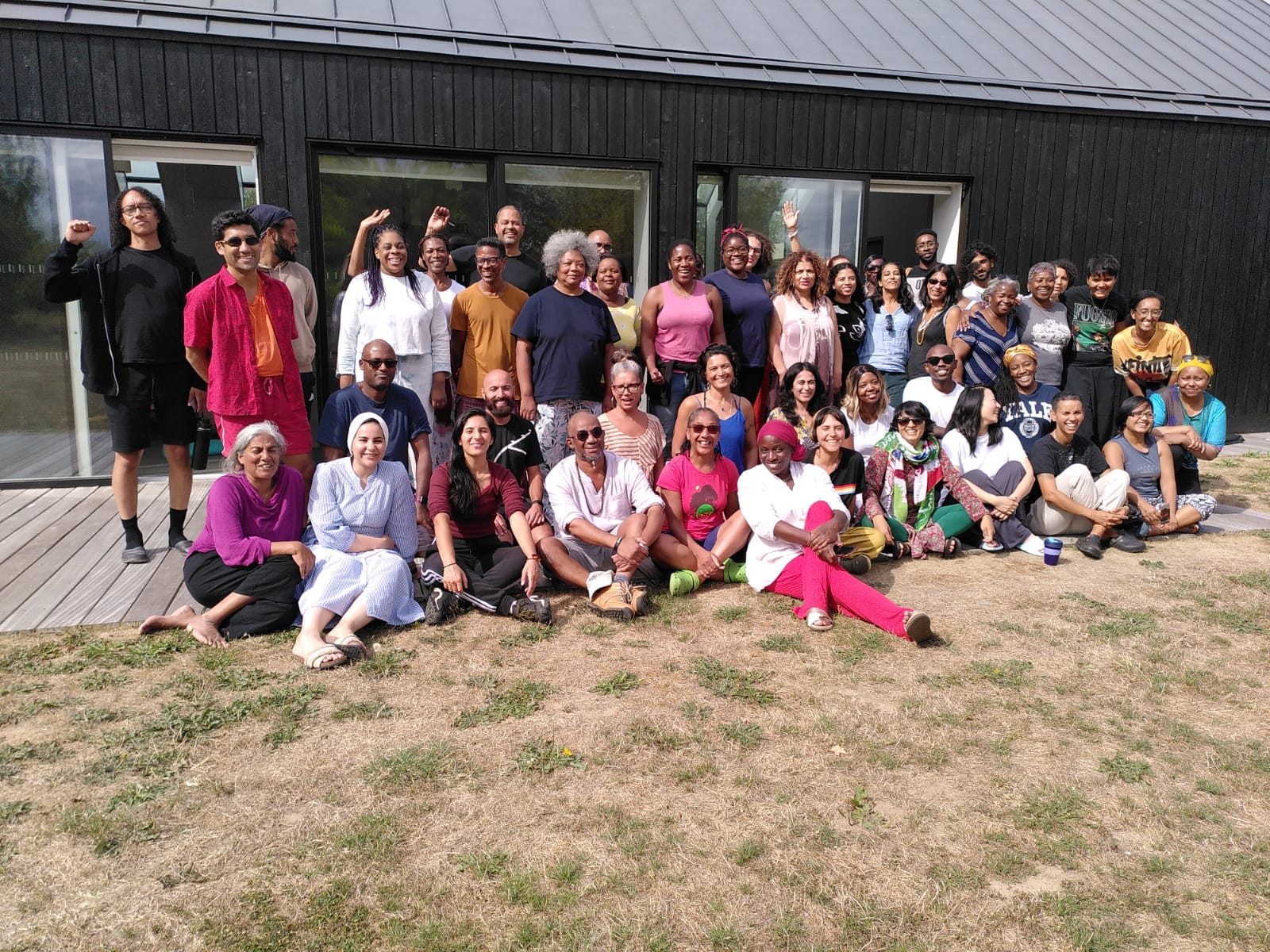
The POC retreatants – what an lovely and inspiring group of people!

25 August to 2 September 2022: A retreat for People of Colour (POC) at Vajrasana with the Triratna Buddhist Community. I was on the team for this retreat – and came a day earlier so we could reflect upon and review the experiences of the POC team over the last year or so.

Then the retreat began and I found that being with other POC people, evoked a spirit of openness, appreciation and vibrant connection. There is a freedom in POC spaces – and a resultant deep embodied sense of joy and friendliness.

The theme was on the Wisdom of Equality, evoked through the spirit of the Buddha Ratnasambhava. There were periods of silence on the retreat and this offered an opportunity to connect deeper into the mystery of being and the realms of embodiment and formlessness.

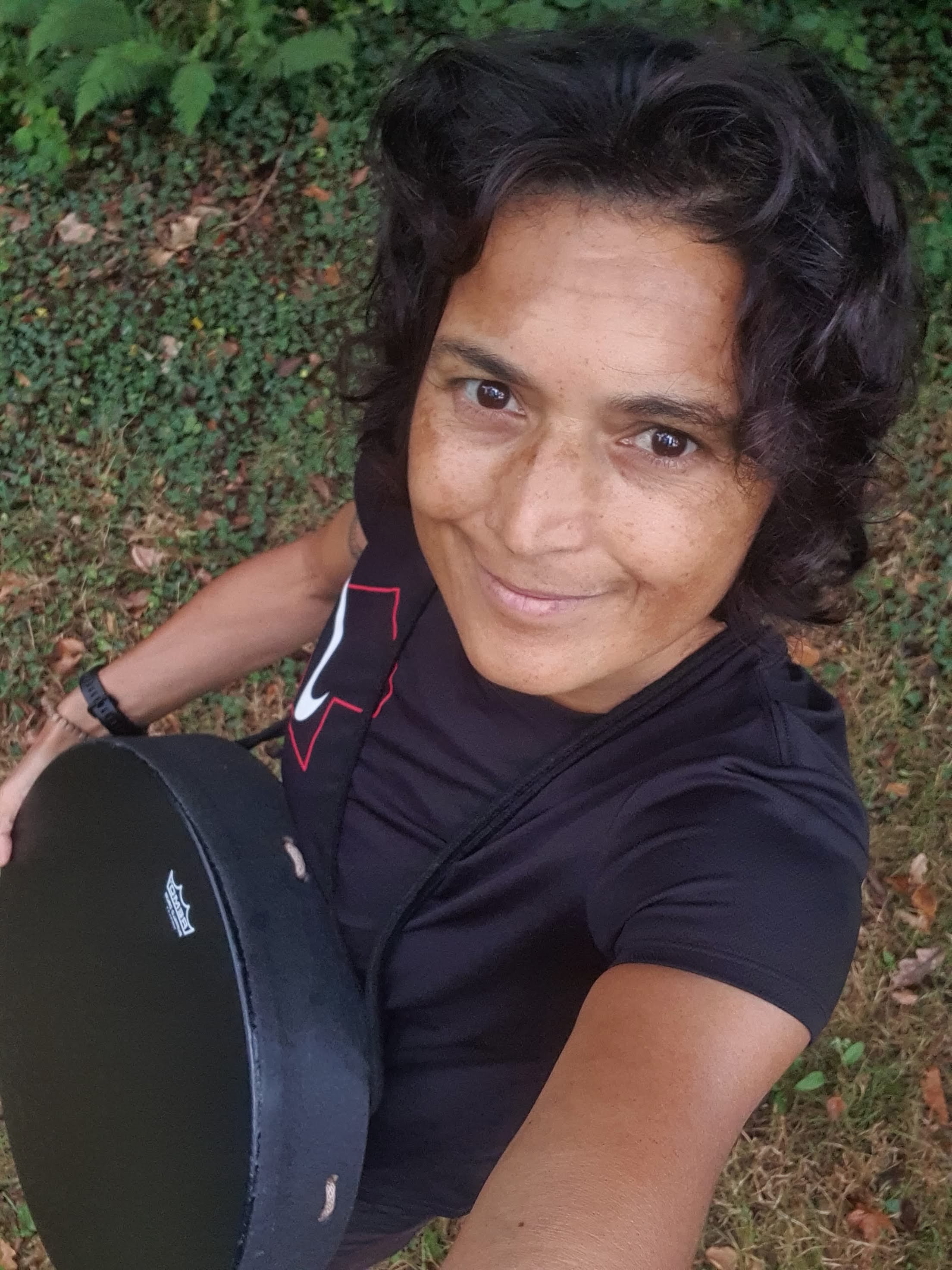
At the Spirit of the Drum Retreat I connected with and came away with a brand new, beautiful black drum which has been a pleasure to bring with me to a number of subsequent retreats.

2 to 5 September 2022: The Spirit of the Drum retreat with the Sacred Trust. This profound and inspirational retreat plunged into the depths of the arupaloka – the formless realms – and it was deeply transformative.

9 to 18 September 2022: Taraloka Retreat on Ritual and the Imagination in which we explored the mythic dimension of rituals and the imaginal realms. It was lead by Order Members – Punyamala, Moshalila, Singhcandra and Samantabhadri.

It was tremendously beautiful to plunge into this retreat so soon after the previous one. I appreciated the opportunity to invoke and ‘work with’ the magic and majesty of various Bodhisatva figures – also within the formless realms – in the ‘homeland’ of Triratna.

I also had the pleasure of drumming during the rituals and that was a transformative experience, enabling beings from the formless realms to be evoked, welcomed and appreciated.

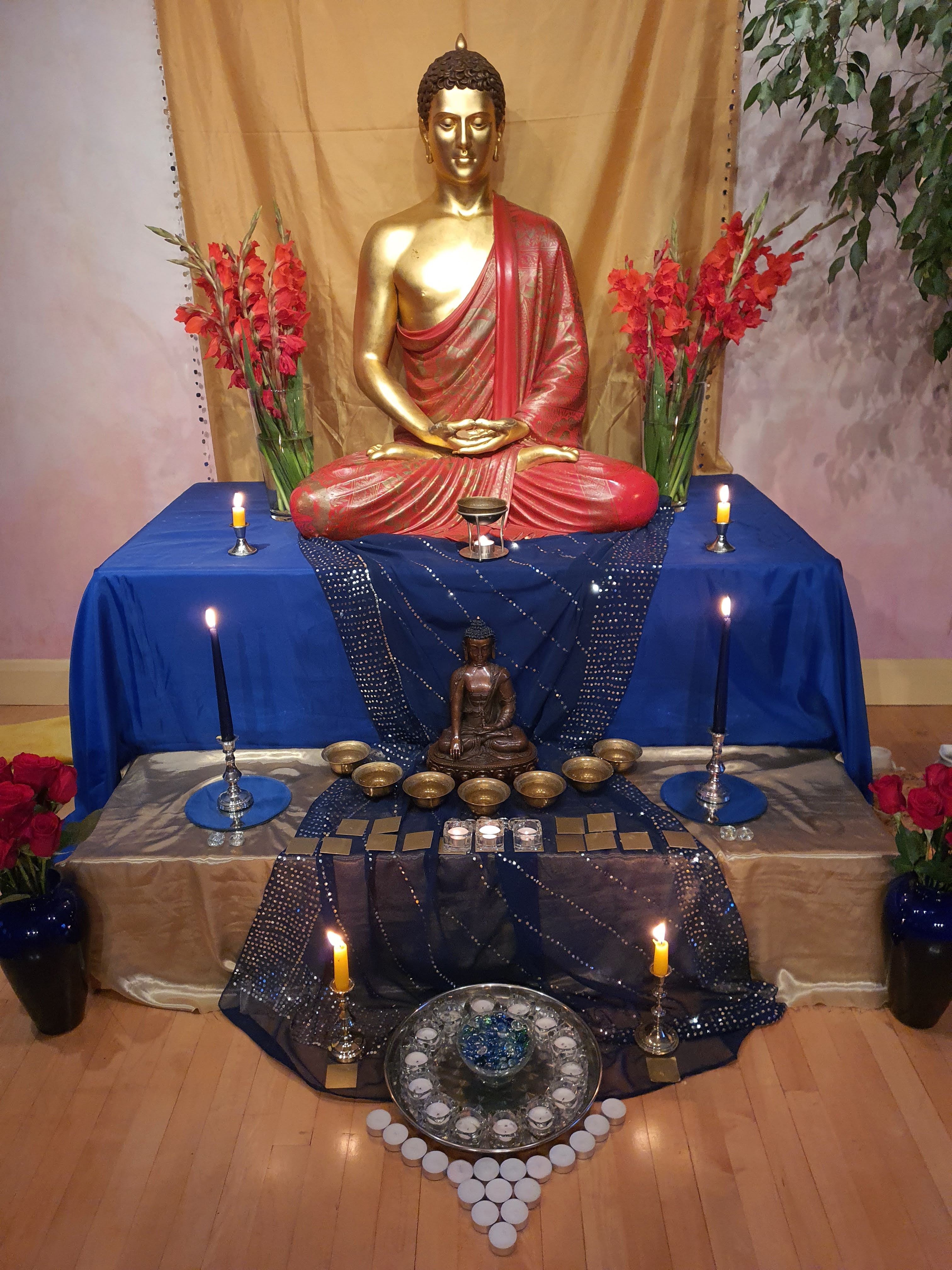
Once I returned, I was blessed to be able to lead another puja at the North LOndon Buddhist Centre and this time, I was inspired to dedicate it to Akshobya – there is an Akshobya pond at Vajrasana that may have connected me to this. This Buddha figure is a majestic blue-black in colour. I wanted to evoke the darkness and beauty of the midnight sky and celebrate the Mirror-like Wisdom of Water and the depths and values that this can bring. I also brought drumming into this ritual and the feedback was positive.

Shrine to Akshobya that I was inspired to create after the retreat on Ritual and the Imagination. I wanted to evoke the qualities of peaceful imperturbability and unshakeable resolve. I used the colours of blue and black or the midnight sky and put water in the tray to evoke the element of Water.
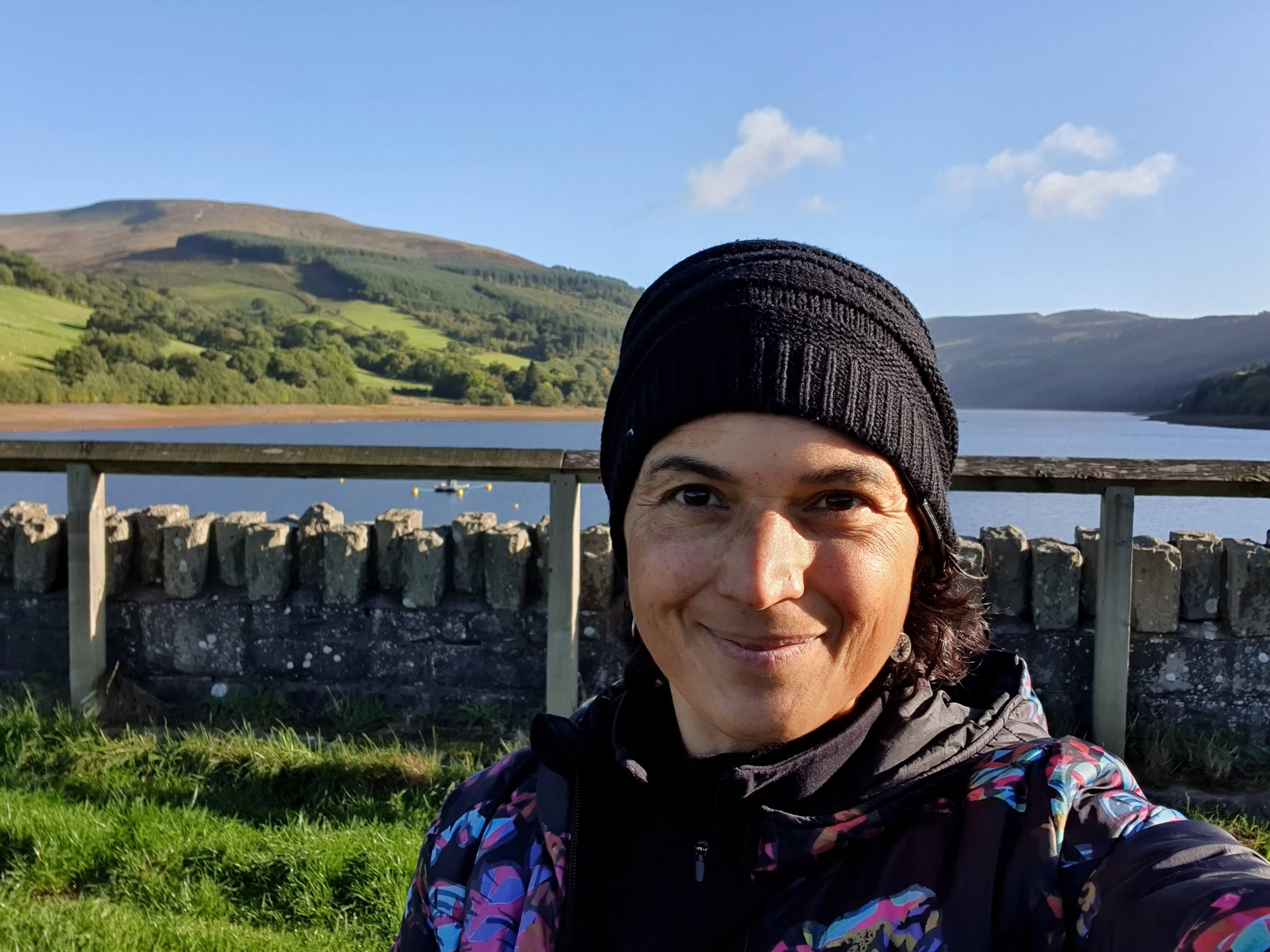
The reservoir near Tiratnaloka – ona bright and sunny day in October 2022.

7 to 14 October 2022: Buddhist Retreat for those in the Nissaya period. The Nissaya period is the first five years after ordination. It was lead by the Tiratnaloka Ordination Team and I was in a group lead by Dharmadassin.

This retreat was the first of its kind for women order members, focused on aspects of ‘weaving oneself in to the Order’. The Order, of course being Triratna Buddhist Order and as I was ordained in July 2021, this was just the kind of retreat that I needed for this stage of emerging as an Order Member.

There were talks on relevant topics such as Being in a Kula and How to give Feedback – it was practical and supportive. There was also time to practice ethics – through ‘confession practice. This is where we bring awareness to how one or more of the ten precepts (undertaken at ordination) may not have been followed close enough. We practice awareness, remorse and resolve to change. It is a healing and life affirming practice that leaves one feeling lighter and liberated.

So now I am back and enjoying being back home again – and on another retreat, this time online, called the Mandala of Awakening. it is happening live at Vajraloka and I am honoured to to set recordings each day and be able to join a group of other Order Members to follow the practices and teachings. It has been illuminating.

Endings unfold into new beginnings

It has been a long time since I have sent some news about Holistic Education and my work teaching mindfulness, yoga and using holistic approaches.  As a result there is a lot of news to share.

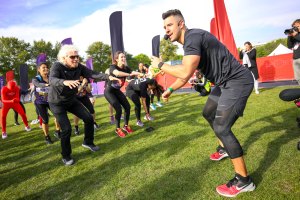
Virgin Sport Hackney at Hackney Marshes, London, UK - 30 Apr 2017.

Doing a warm up with Richard Branson prior to the Hackney Half-Marathon

As something ends, something begins.  I have renewed my interest in running and on 30 April 2017, I ran the Hackney Half-Marathon with my daughter.  I also used this as an opportunity to fund raise for St Joseph’s Hospice who had been so kind and supportive to our family.

On 6 June 2017, an opportunity to teach mindfulness at work suddenly manifested.  There is a lot of evidence for the benefits of mindfulness in the workplace for mental health and wellbeing.  I welcomed this new beginning and so I began to teach a Mindfulness-based Stress Reduction course on Tuesdays for staff at Hackney Council.

Due to the additional course, I decided to let go of my Wednesday yoga class. I made a resolve and on Wednesday 12 July, I taught my last class, marking a pause in almost 19 years as a yoga teacher.  It was sad, but in the space that followed, I sensed light emerging in my heart, a gift to encourage me taking steps into the unknown.  Incidentally, I was recently reflecting on how I missed teaching yoga and tonight I am looking forward to covering my old yoga class as their current teacher is away.

2017-01-13 Last Mitra Study Session - Group

My Buddhist study group – our last session

The next day, on 13 July,  after nearly 6 1/2 years, my Mitra Study course  was coming to an end  That evening, we completed the presentations of our very last Year 4 module.  After a chant for ‘transferring merits’ together, I realised just how much studying Buddhism on a regular basis had been a key part of my life.  At the moment, I am looking to co-teach a study group and am optimistic that something will arise in 2018.

On Saturday 15 July, I had my last acupuncture session until September – the series of treatments has really supported the grieving process and helped me cope with the intensity of change.  It has rekindled my interest in promoting Shiatsu in schools.

On Friday 21 July the school holidays began and a week later, I went on a 9 day “Women’s Intensive Retreat” at Vajrasana.  As a mindfulness teacher following the UK Network of Mindfulness Teachers Good Practice Guidelines, it is important to participant in retreats regularly to deepen one’s practice of mindfulness meditation.  This retreat included a week of silence (with opportunities for a 10 minute ‘meditation review’ every other day).  It was a deeply healing process and I would like to share more about it in another post one day.

That’s the first part of the update for now.  So much has also happened since July, including traveling to Japan in August and then, in September, being involved in a BBC 1 documentary with Susan Bogels and Esther de Bruin who run the MyMind for ADHD in Amsterdam – I had done the MyMind training with them in 2014.

Thank you for sharing this update with me by reading this post.

Warmly,

Bernadette

Endings and beginnings


IMG-20170407-WA0000

At the crematorium, at the end of the funeral: the last moments.

Right now, there is a sense of spring in the air.  The trees are in blossom and the light from the sun is a little stronger, streaming in from the window next to my desk. Winter is ending, summer is beginning.


Recently, I have had a bereavement: my father, Dr Xavier Francis Carelse, passed away last month.  For several months, my mother and I had been closely involved in his care, as he had chosen to pass at home.  This period of great activity and intensity suddenly ended as his life drew to a close and a new experience of his ‘not living’ arose.

In treasuring and honouring the life and death of this man, there has emerged a deeper sense of staying present and ’embracing’ the moment.  It arose from a perspective of perceiving each moment as precious and unique and having infinite possibilities, including opportunities for connectedness with rather than separation from others.  In acknowledging this oneness, there arises a poignant sensitivity towards all beings.

The alternative is to allow the mind to become distracted and separated from the present, preoccupied with thoughts: plans for the future and memories of the past.  However, this choice sustains the mind and heart in a state of mourning and distress, making the process of healing painful and slow.

It is poignant to recognise each moment as embodying opportunities for oneness with and sensitivity towards all beings.  In this middle way, ending and beginning are embraced for what they are: two sides of the same coin.  In this moment, life and death are one, the mind and heart are at peace and the path to healing becomes clearer.

In this experience, there is no end state.  There is no goal to reach.  In this time-space continuum, there is neither ending nor beginning: an unfolding of beauty and love.


IMG-20170407-WA0002

A celebration with friends and family in honour of Dr Xavier Francis Carelse, my father and friend, who lived from 11 March 1933 until 26 March 2017.


What is MBSR? #mindfulness #MBSR

Mindfulness group 06A

Practicing mindfulness regularly helps enhance neural pathways in the brain, developing a deeper sense of peacefulness, calm and focus.

What is Mindfulness-based Stress Reduction, aka MBSR?  This is the topic of tomorrow night’s Mindfulness Meetup – a taster session being run by Holistic Education CIC.

Substantial research shows that practicing mindfulness regularly can help reduce stress and enhance well-being, confidence and positivity.  Mindfulness is essentially a particular way of paying attention, on purpose and non-judgementally that can enhance the awareness of our experiences, moment by moment.  One of the best ways to learn to practice mindfulness regularly is to attend an MBSR course.

MBSR was originally developed by Dr. Jon Kabat-Zinn and colleagues at the University of Massachusetts Medical Centre (USA) in the 1980s. It is a well-researched and evidence-based mindfulness programme that aims to help participants to develop confidence and skills in practicing mindfulness.  It consists of eight sessions (each between 2 and 3 hours long) and an additional all-day of practice.  It includes theory on how mindfulness works and opportunities to practice.  Home practice is an important part of the course and audio files are available to help with this.

Holistic Education runs regular MBSR courses following training by the University of Bangor’s Centre for Mindfulness Research and Practice and the UK Network of Mindfulness Teachers Good Practice Guidelines.  The next MBSR course will be on Monday evenings from 6:30pm to 9pm from 18 Jan to 14 Mar 2016 (no session on 15 Feb). Included in the course is an Introduction and Orientation session (11 Jan 2016) and a Mindfulness Practice Day, Saturday 6 March 2016, 9am to 3pm.

Eventbrite - Mindfulness-based Stress Reduction (MBSR) in Walthamstow Jan to Mar 2016

My new children’s book: My Mindful Little One – Bedtime

Mindful Little one - coverMy first book on mindfulness is now available for pre-order on Amazon UK   It is called My Mindful Little One: Bedtime and is being  published by Scholastic and will be available in May 2016.  This  children’s picture book is for 3 to 6 years olds – and includes mindfulness practices for them and their parents and carers.  I enjoyed writing it and hope you enjoy reading it to your little loved ones. It has been beautifully illustrated by Paula Bowles too.

This is essentially a delightful way to peacefully connect to the breath and each other, savour the precious moments of the day and before hugging goodnight and gently fall asleep. Click to pre-order a copy.  Please spread the word.