I am a spiritual being having a human experience. I am a mother, daughter, partner, friend. I work as an educational psychologist, shiatsu therapist and mindfulness and yoga teacher. My approach is trauma-sensitive, Buddhist, yogic and focused on mind-body-spirit integration.
Climate Activist and Buddhist, Joanna Macy, passed away this year and left us with her legacy, The Work That Reconnects. This work is inspirational and based on the following:
Our Earth is alive. It is not a supply house. Nor is the Earth a place for disposing of waste from the Industrial Growth Society. The Earth is a living, complex system – with its own intrinsic value.
Our true nature is far more ancient and encompassing than the separate self defined by habit and one encourage by consumerism. The planet is a living system that has self-reflexive consciousness – and in this way can know and see itself through us – and respond to its own suffering.
Our experience of moral pain for our world springs from our interconnectedness with all beings. We can enhance our power to be part of the the healing of the world, when we turn towards our pain for the world and what grieves us about current circumstances. In Buddhism, the cultivation of compassion begins by turning towards ‘suffering’, also known as ‘dukkha’.
Unblocking occurs when our pain for the world is not only intellectually validated, but also experienced and expressed. We need more than cognitive information about the social and ecological crises. We need to experience our hurt and grief for the world. In this way, we can become mobilised to act, our of compassionate free will – and a recognition of our belonging to the world and interconnectedness to the web of life.
When we reconnect with life, by willingly enduring our pain for it, the mind retrieves its natural clarity. Not only do we experience our interconnectedness in the Earth community and the human community, but also mental eagerness to match this experience with new paradigm thinking. Significant learnings occur as the individual re-orients to wider reaches of identity and self-interest.
The experience of reconnection with the Earth community, human and other-than-human, arouses desire to act on its behalf. Through the truth of our interconnectedness, we may notice a deep yearning for healing and concern about the welfare of all beings. We may become motivated to act – and even more beyond a habitual ‘comfort zone’ that has been numbing us to the cries of suffering of the world. Through courageous and spontaneous compassionate action, we can live more fully, authentically and experience moments of pure joy.
Collective liberation within our species is essential to the flourishing of the larger web of planetary life. We are all in this together and no one is free until we are all free of the systemic inequalities. The Industrial Growth Society is based on and sustained by inequalities and generational and contemporary oppressions (see also the work of the Anti-Oppression Resource Group)
Places in nature that link the sky with the earth are immensely potent as places of healing and communication with the spirit realm.
This process begins with healing, becoming whole and closely following this, finding ways to be positive – all in all, happy and healthy. This is followed by ‘death’ of fixed, limiting views and then an emergence into directly experiencing interconnectedness – and potentially, the universe as alive. Finally, spiritual emergence unfolds – a profound understanding and appreciation of live and its preciousness – and engagement in spontaneous compassionate activity.
Here is more detail on each of these stages:
Stage 1: Integration – In this stage, the key meditation practice is mindfulness – including the Mindfulness of Breathing and simply being present with what is arising in the our immediate, embodied experience.
This is itself, in a context of many distractions is a radical revolutionary act of independence, and self-efficacy. Sometimes, we may realise that we need support and this can include engagement in bodywork or healing sessions to address painful past experiences.
Part of mindfulness is also being aware of when we fall short of our aspirations and values. Ethics are a key part of mindfulness – being aware of the effects of our actions on other beings and being aware of our intentions and when unhelpful habitual patterns may be arising so we have an opportunity to do something different.
Stage 2: POSITIVE EMOTION – This phase is about the quality of our attention – cultivating kindness, compassion, joy and overall positivity. Authenticity in this is key – and practices for cultivating emotional positivity include recollection of gratitude, cultivating loving kindness (metta bhavana).
The process enables us to feel delight, bliss and even rapture though opening into embodied levels of deep ‘absorption’ (the dhyānas). This process can reveal areas where we feel less inclusive, towards parts of ourselves, or others, including other humans and non-human beings – so that we can transform this.
A teaching on loving kindness (the Kariniya Metta Sutta) goes, “Whatever living beings there may be, (moving, strong) animals or (still, weak) plant, without exception, whether they are very long or large or middling in size, or short, great or small, whether they are visible or unseen, whether living nearby or far away, whether they are born, or not yet come to be: may all living beings have happiness.” In other words, the aim is to cultivate well wishes towards all beings, regardless of species or material form.
Stage 3: SPIRITUAL DEATH – This process is a progression into wisdom (prajna) and vision, as in seeing the truth in terms of ‘ultimate reality’ with liberation from a ‘fixed self-image’ and habitual delusions that arise from greed, aversion and ignorance. Sometimes this is described as entering the ‘gateless gate’.
Practices for this include contemplation on the elements, on conditioned co-arising, death and impermanence – and thereby recognising truths such as that of impermanence, insubstantiality and the poignant beauty of ’emptiness’ (sunyata).
In the process of drum journeying, there may be a direct experience of letting go of a sense of separateness and individuality, and awakening into interconnected presence.
Meditation and spiritual practices enable a dissolution of the vijnana (false understanding) of separateness of self and the living universe.
Stage 4: SPIRITUAL REBIRTH – This stage is about the emergence of insight, wisdom is blended with dhyana and the process is one of transformation inline with the insights that arise – as a result of connection to wisdom energies (dharma Niyama). The practices for this may include visualisation of transcendent beings, such as buddha and bodhisattva figures. This is a stage of emergence transformation through connection with the truth as a living reality.
Sangharakshita, the founder of the Triratna Buddhist Order, in his book, Living with Awareness, explains, “…a universe conceived of as dead cannot be a universe in which one stands any chance of attaining Enlightenment.’ Indeed Buddhist is a practice of embracing animism.
Through the drum journeying we shift into alterate states of consciousness that enable connection with these experiences and furthermore to gain wisdom and insight into answers to the deeper questions that we may have about our lives – and a profound appreciation of life itself.
Stage 5: COMPASSIONATE ACTIVITY – This stage is one of receptivity, a kind of ‘non-practice’, such as ‘just sitting’ and spontaneous compassionate activity – an overflow of enlightened presence and effortless compassionate being – as though a supra-personal force is flowing through one – the awakened consciousness or ‘will to enlightenment’ (bodhicitta).
Sangharakshita provides a summary of this system of practice – an edited extract from a seminar Nagarjuna’s Precious Garland – “All the time, every day, one has got five things to practice, as best you can, simultaneously:
One keeps up the effort to be mindful and aware and to be as integrated as possible.
One remains in as positive a mental state as one possibly can.
One does not lose sight of one’s ultimate goal at any time.
Whatever you have realised/discovered/seen on the highest level of your being at any time, you try to apply this to practice at every level.
You do what you can to help people. This is your spiritual life. All the other teachings on the Buddhist path are contained in this, in principle.”
In essence the key is to help all beings, human and non-human, awakened into awareness of a deeper essential interconnectedness.
The beautiful 900+ year old Oak Tree at Alfoxton Park – where we had the last Deep Ecology Camping Retreat.
I have had some time to reflect on the pat few months and realise the emergence of a few new themes.. in the process of engaging in retirement (more on that another time perhaps!)
Deep Ecology Days and Retreats – For a few years, I have been co-facilitating Day Retreats and longer Camping Retreats on Buddhism and Deep Ecology with Sanghasiha, another Buddhist Order Member.
During the Deep Ecology sessions, I have been teaching Shamanic Journeying – building on providing this on a 1 to 1 basis – Shamanic Counselling and the Shamanic Healing work. Through this, I have been more and more intrigued by Buddhist Shamanic Practices – the world of the Dakinis and the Tibetan ‘Cho’ practice and this practice continues unfolding.
In the months after ordination in 2021
Teaching Buddhism and meditation at the North London Buddhist Centre. On Wednesdays I have had the pleasure of working with Ratnaprabha, another Order member and a very experienced one too.
I have been enjoying leading some of the teaching sessions on Buddhism and during the lunch-time meditation sessions. This has inspired and been inspired by having a daily meditation and yoga practice.
Offering sessions for volunteers at my allotment – It has been one year since I signed the contract for my allotment. What a journey of mud, sweat and delight – and an abundance of harvests of salad leaves!
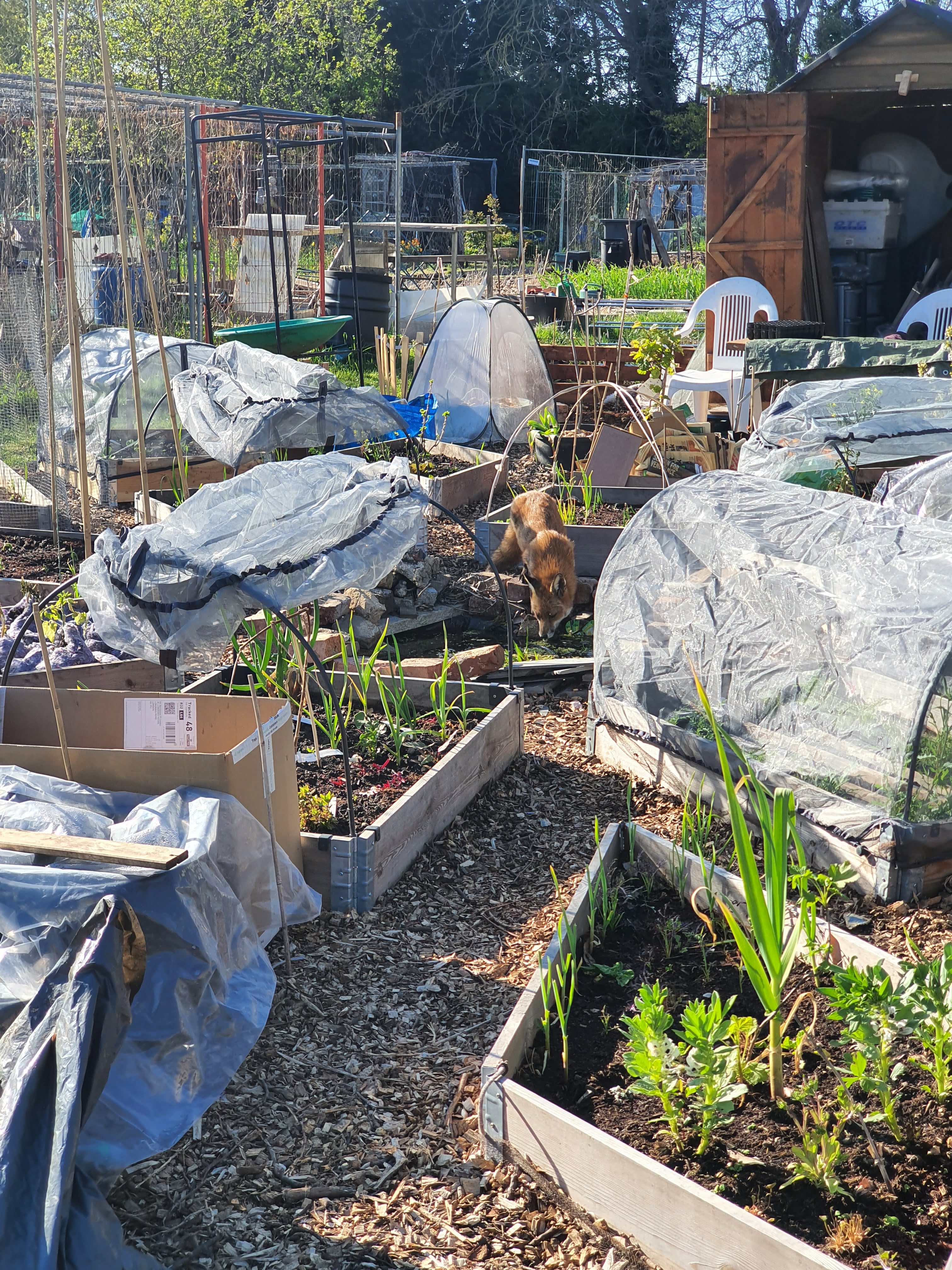
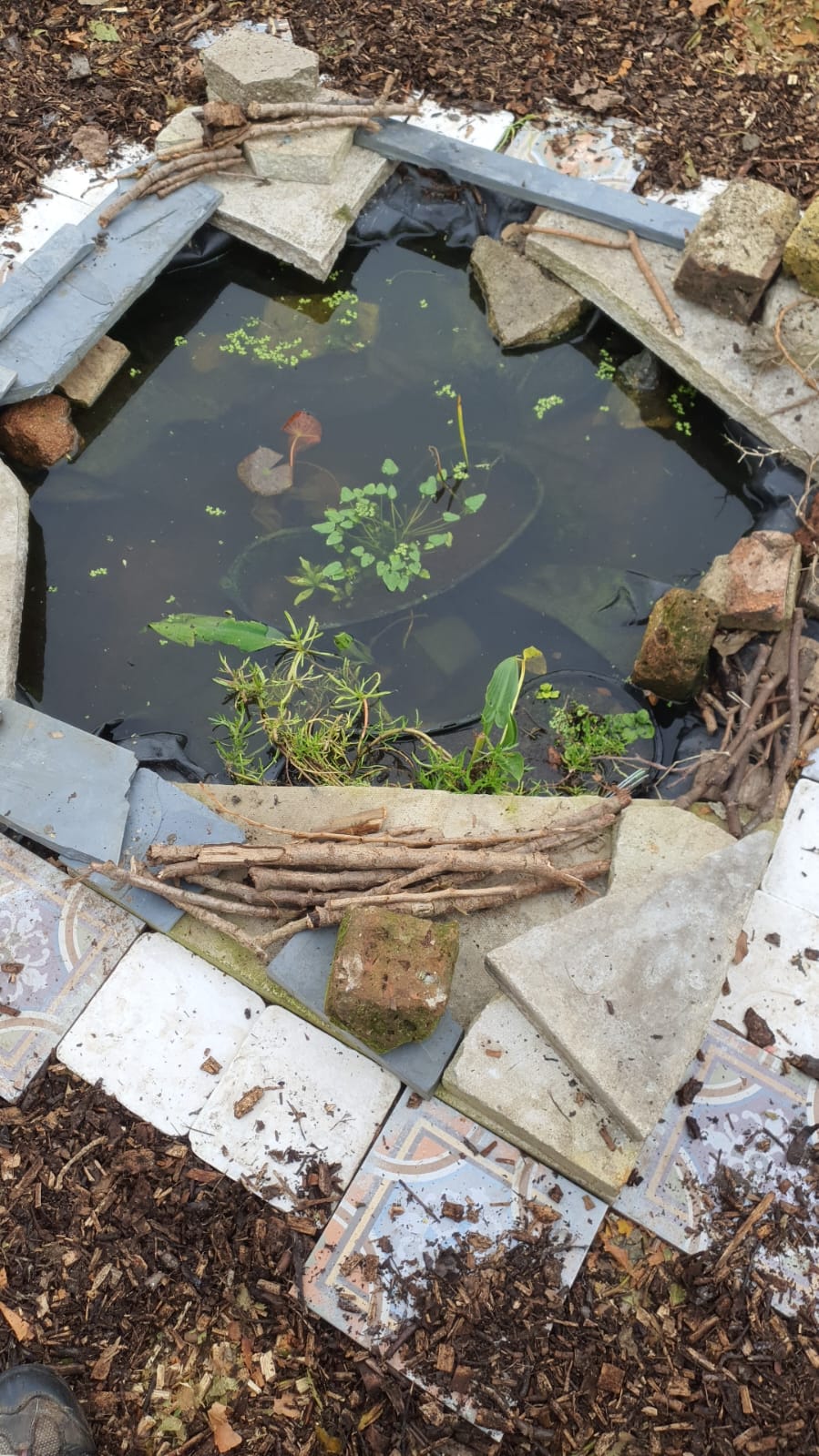
The local allotment fox comes to visit – for a little drink at the pond.
I am also on a 9-month placement at Organiclea – this is to develop my skills in working with fruiting plants – trees, bushes, etc.
I am also involved in Time to Grow and the Waltham Forest Food Growers Network and Capital Growth. I am interested in food sovereignty though learning and practicing growing as much food as possible – so that I can share this with others.
And think of every living thing without exception: the weak and the strong, from the smallest to the largest, whether you can see them or not, living nearby or far away, beings living now or yet to arise – may all beings become happy in their heart of hearts!
This quote is from the Kariniya Metta Sutta, the Buddha’s words on compassion – it encourages well wishes to all beings. It invites us to develop metta: loving kindness – unconditional good will towards all beings – whether visible or invisible.
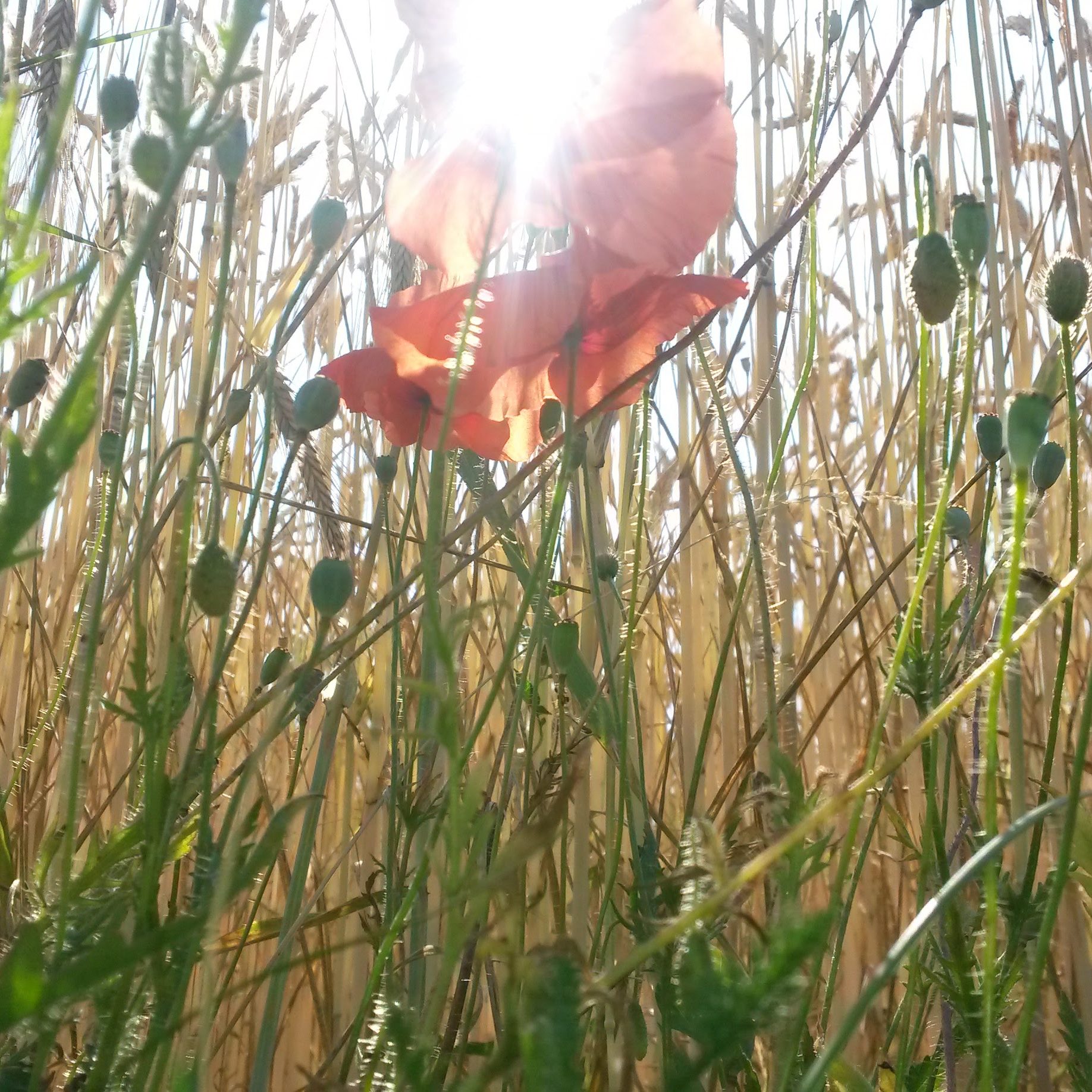
Poppy flower – a being dancing in the sunlight, in a wheatfield.
So what is it to be invisible, not to be seen or acknowledged? What is it to simply be overlooked – as if you do not even exist? It is these beings that I wish to consider – to bring into a greater sphere of compassionate awareness. Mettā is one of the four “divine abodes” (Pali: brahmavihāra) – this includes feeling happy when others are happy. It includes feeling compassion when others suffer. In short, feeling interconnected with all beings.
The result… interpersonal harmony, meditative concentration, our own wellbeing regardless of what is happening around, regardless of external circumstances. This is happiness indeed! Mettā is indeed one of the ten “perfections” (pāramī) that facilitates the attainment of awakening – Bodhi – itself.
The Buddha taught the practice of loving kindness to help some monks were trying to meditate in a forest. They had became frightened by ‘earth devas’ or ‘forest spirits’ – that were ‘invisible’ to them. Through mettā they began to radiate loving-kindness. The invisible beings settled, and left the monks to meditate peacefully amongst them.
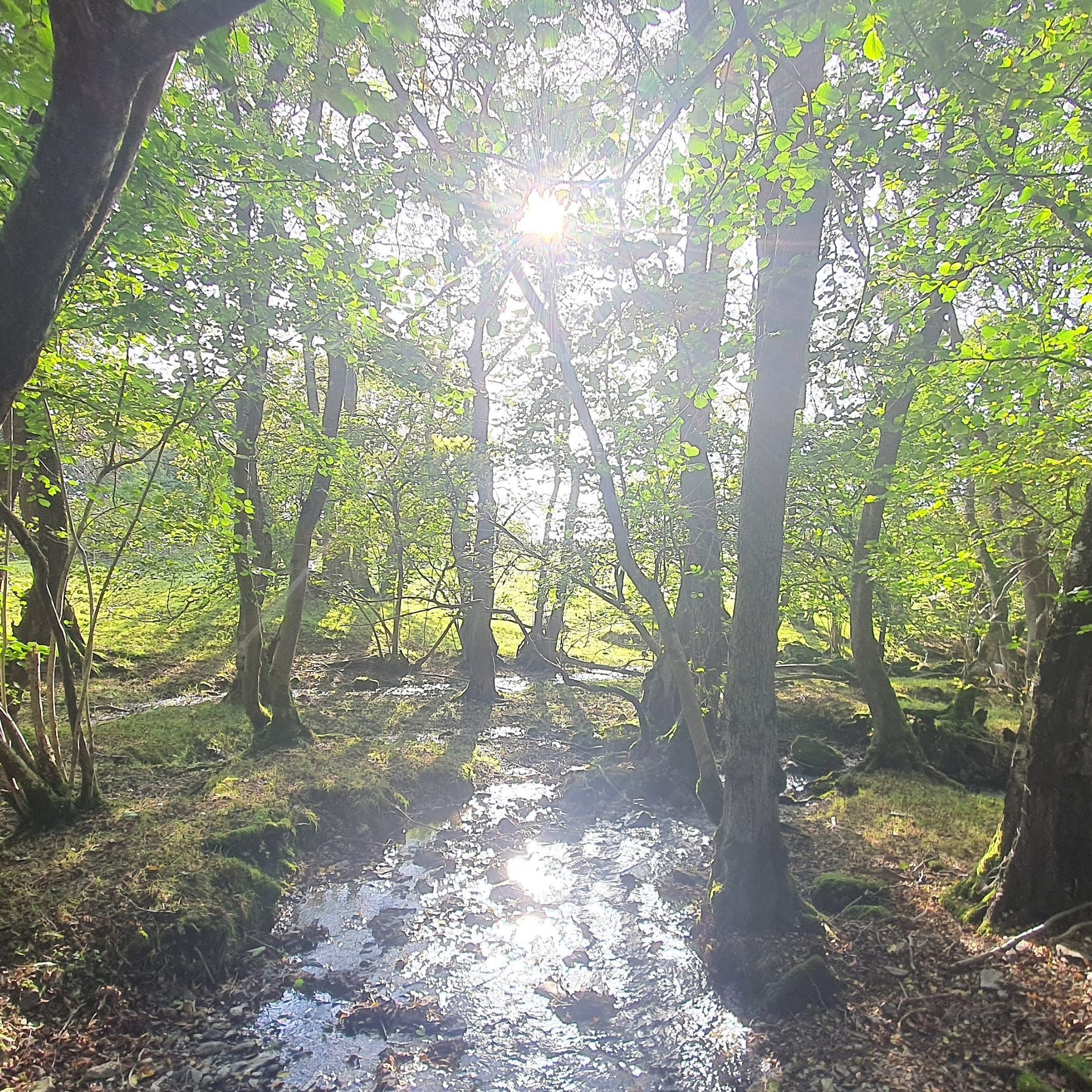
Sunlight on a stream, interacting living elementals within the realm of space
Shamanism is embedded in animism. It recognises how our states of heart-mind affect the living space around – visible or invisible. Our thoughts, words, actions evoke resonances though the time-space continuum. These can hurt and harm others, energetically, mentally or physically. Shamanism includes practices to remove harmful ‘intrusions’ and re-establish harmony in a person and their environment.
This animist paradigm exists globally, across cultures. Shamanism is the practical engagement with an animate universe. The universe is alive, our actions, thoughts and words have effects on others. This is the basis of the ethics of Buddhism too. By empathizing with others though loving kindness and compassion, we become free – and non-violent.
Let’s acknowledge invisible beings – nature spirits, devas, earth spirits – and that they also suffer as a result of human activity. Let’s acknowledge that a minority of human on the planet do the majority of the damage. Here is an example. If you have the power and privilege to be able to travel by plane then you are in the top 10% of people creating 80% of the air pollution on the planet. We are complicit in contributing to countless lives lost to flooding, fires or starvation.
Let’s follow the teachings of Buddhism and the practices of Shamanism to develop compassion and loving kindness, creating compassionate thoughts, words and deeds.
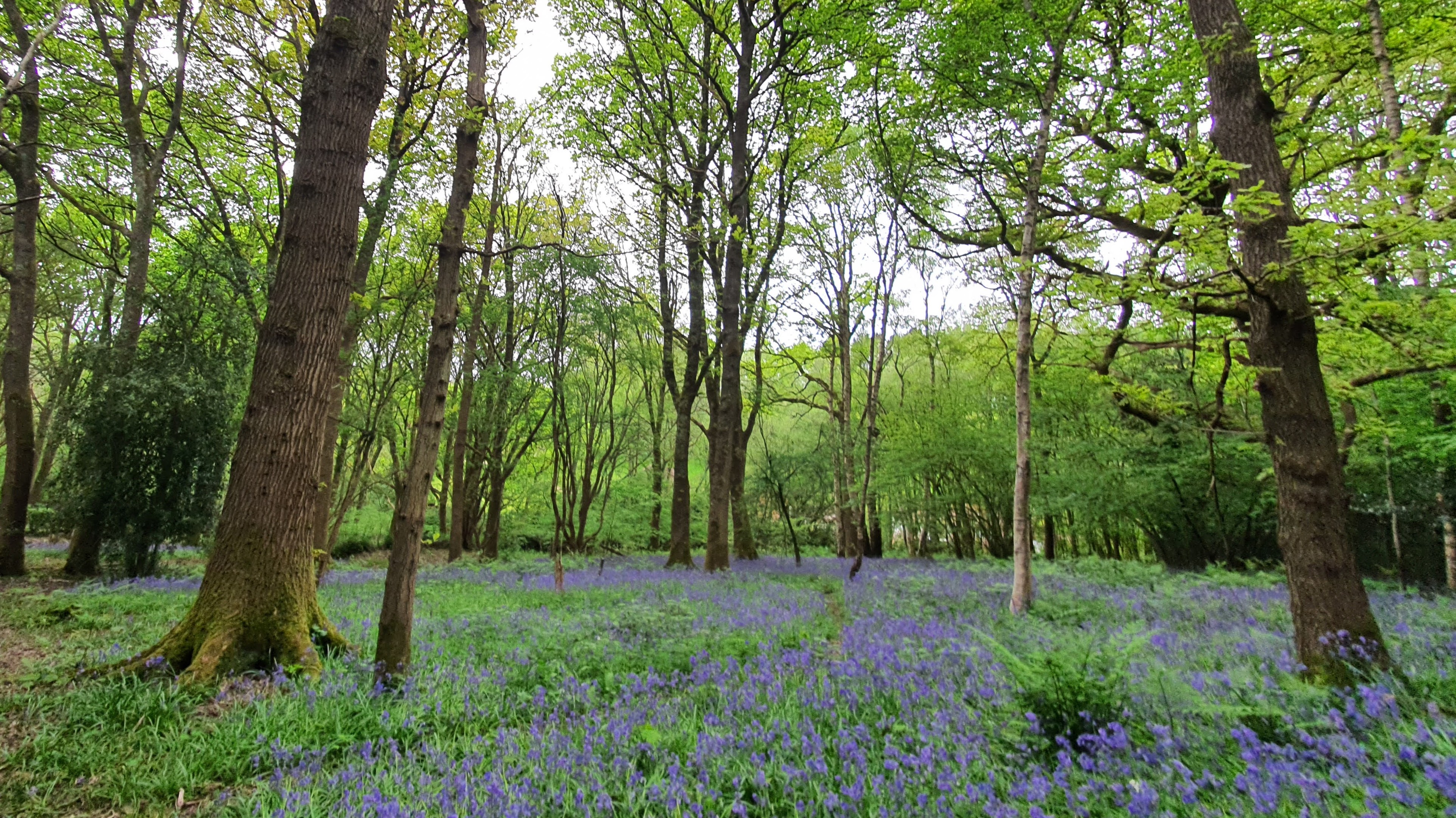
Bluebells protected by tree spirits and a living sign of spring and the uprising energy of renewal
‘…a universe conceived of as dead cannot be a universe in which one stands any chance of attaining Enlightenment.’ – Sangharakshita, Living with Awareness
Meditation and spiritual practices enable a dissolution of the ‘false view’ of separateness of ‘self’ and ‘other’ – there is the arising of interconnectedness with the living universe.
What is Shamanism? Indigenous practices of connecting to the non-material or spirit realm have been in place, cross-culturally, for thousands of years.
In Shamanism and Buddhism the universe is alive and sacred and there are practices for directly experiencing this. However, centuries of trauma have lead to disconnection from the realms of ‘non-ordinary reality, the spirit world. This has happened as a result of many factors, including colonialisation, removal of peoples from their ancestral lands and the imposition of oppressive belief systems.
Mircea Eliade explains, in his book, “Shamanism: Archaic Techniques of Ecstasy”, that ‘shamanism’ is pre-eminently a religious phenomenon of Siberia and Central Asia and which may have evolved from the same foundations as Buddhism – and spread as Buddhist teachings and practices also spread.
Indeed the origins of the word “shaman” go to the Tungusic word, šaman – and even further back to the Sanskrit word “Sramana” (श्रमण) which means “a seeker” or “one who toils or exerts themselves for a higher religious purpose”. This correlation presents the shaman as one who “toils”, “labours”, makes effort in practicing to achieve spiritual liberation.
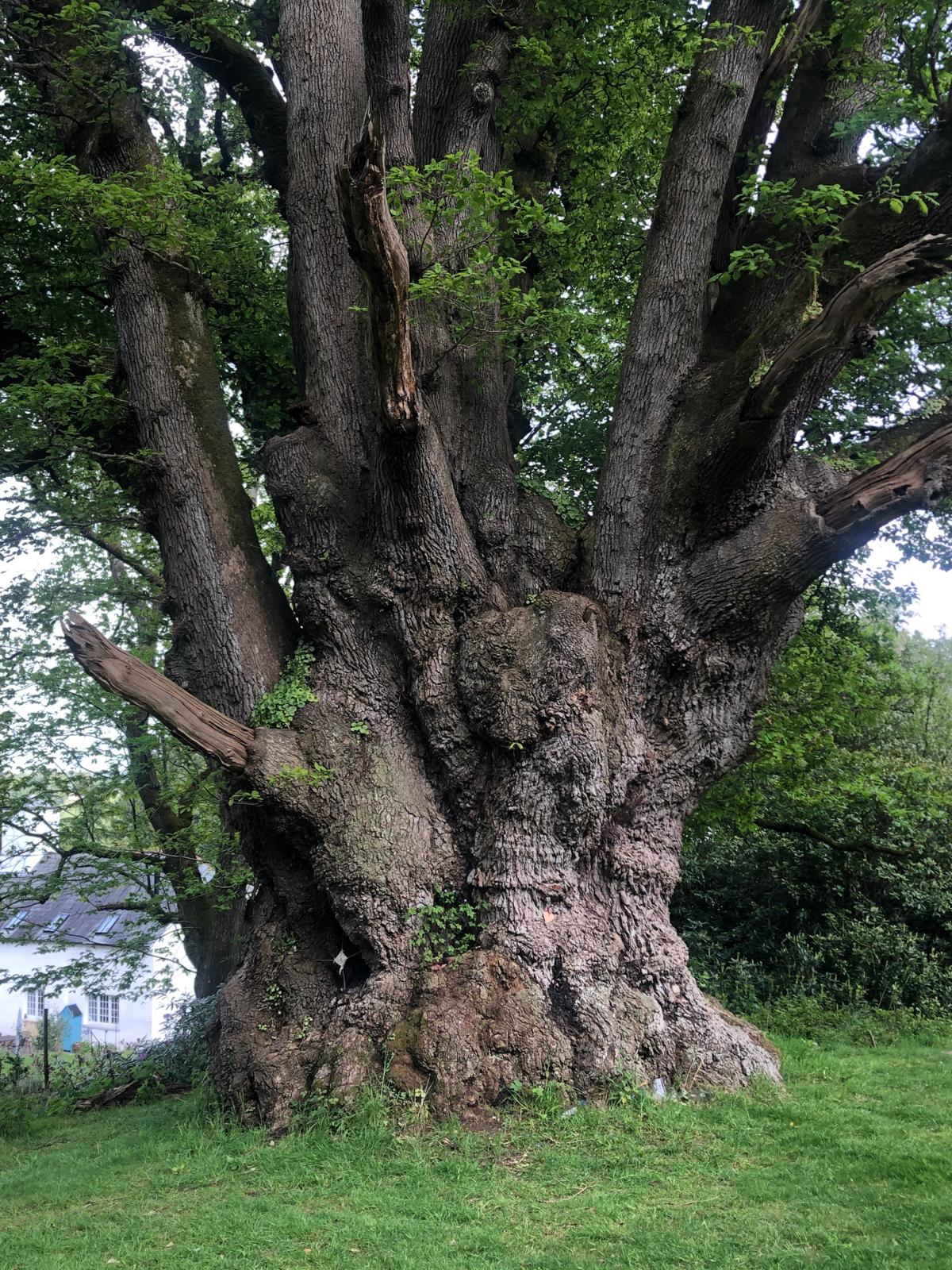
Ancient Oak at Alfoxton Park – a portal to communications with spirits of the land.
While this may be stereotypically associated with an ascetic lifestyle, it is at its heart about seeking enlightenment or liberation through a renunciation of material attachments and deeper connection to the esoteric and spiritual. From this understanding, there is a deep connection between Buddhism and Shamanism.
For the ethnologist, the shaman has been described as a ‘medicine man’, ‘sorcerer’, ‘magician’ or ‘druid’. For those able to interact with the spirit world – the universe perceived as living – there is an understanding of the realms beyond material, dualistic perceptions of ‘ordinary reality’.
In classical shamanism, which I practice and teach to others, the key practice is to form an intention and ‘journey’ though the imaginal consciousness, into the spirit realm. This can include exploring and interacting with the spirit world. This journeying involves altered states of consciousness, such as meditation, trance – and the tool to support a shift in consciousness is the ‘sonic drive’, the repetitive drum beat, delivered at a particular frequency.
The purpose of shamanic journeying can be to clarify answers to life’s questions of to direct spirits or spiritual energies into the physical world for the purpose of healing, divination. All this is to aid the community in some other way, including those in the community who have passed and need support to transcend from connections with the ‘middle realm’. All in all the practice is to restore balance and harmony.
With a primary purpose of helping or healing those in the community, Shamanism expresses the Buddhist ideal of the Bodhisattva. The Bodhisattva is one who vows to attain enlightenment for the benefit all beings. Shamanic practice includes a requirement to practice breaking through the blockages of conditioned existence in order to connect with a ‘living transcendental plane’ – and to do this for the benefit of all beings, including the ancestors, the children and others in the community.
Places in nature that link the sky with the earth are immensely potent as places of healing and communication with the spirit realm.
This is a term that I was searching for to name the emerging experiences related to engaging with the Spirits of Nature and the land-based practice of service in growing and caring for plants and other beings on my allotment.
In May 2024, I was allocated an allotment and it has been an intense journey bringing together my training in Horticulture and skills in growing plants for food – from my placement at Organiclea last year. I had been calling out to spirit, requesting to deepen in relationship to the land, when this offer emerged.
I feel honoured and blessed to be able to do this work – and sense the deepening engagement with the spirits of nature, the land and the cycle of the sun around the earth. I am delighted to read about the acknowledgment of ancient ways of revering and honouring our reciprocal relationship with the land.
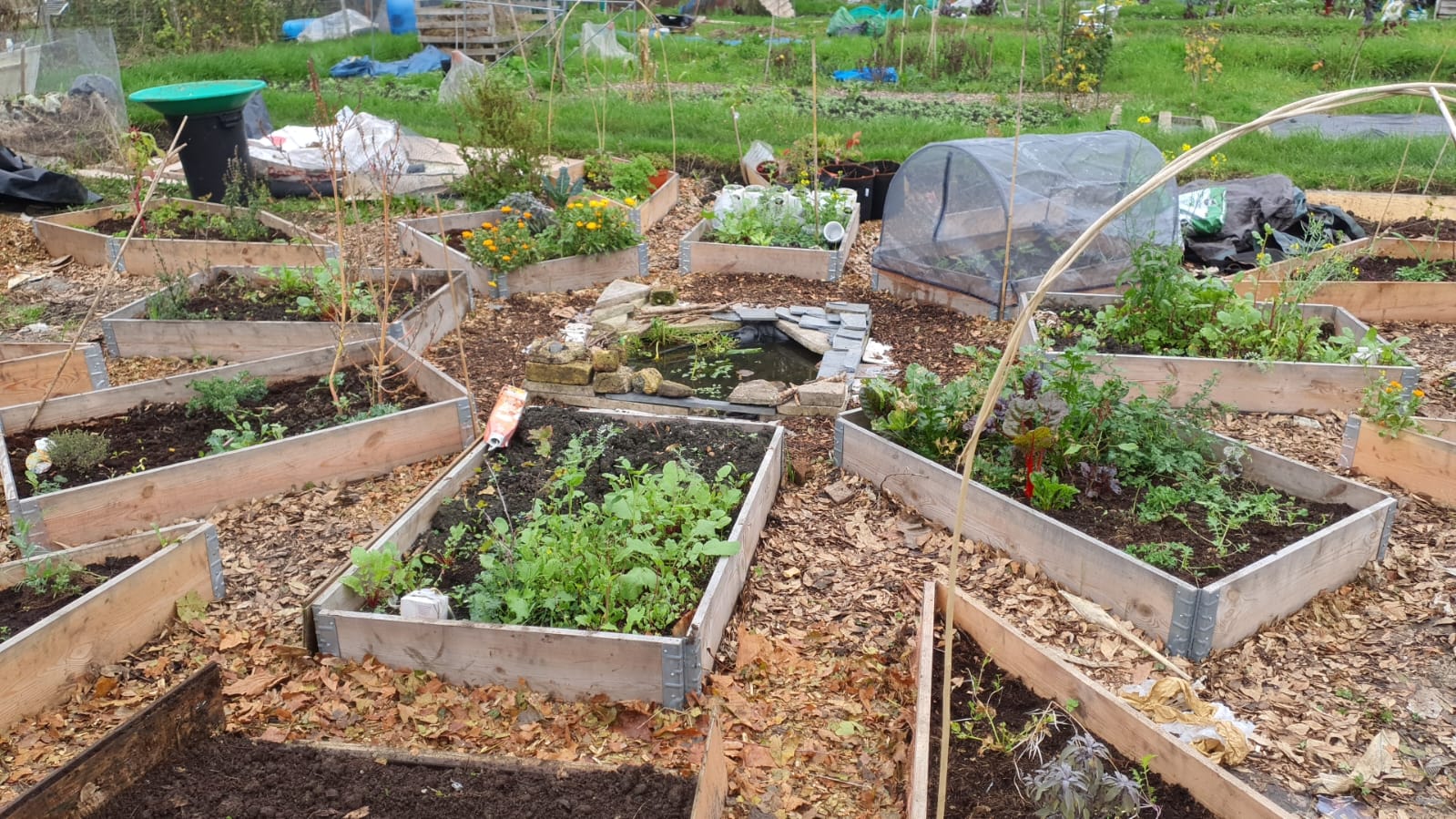
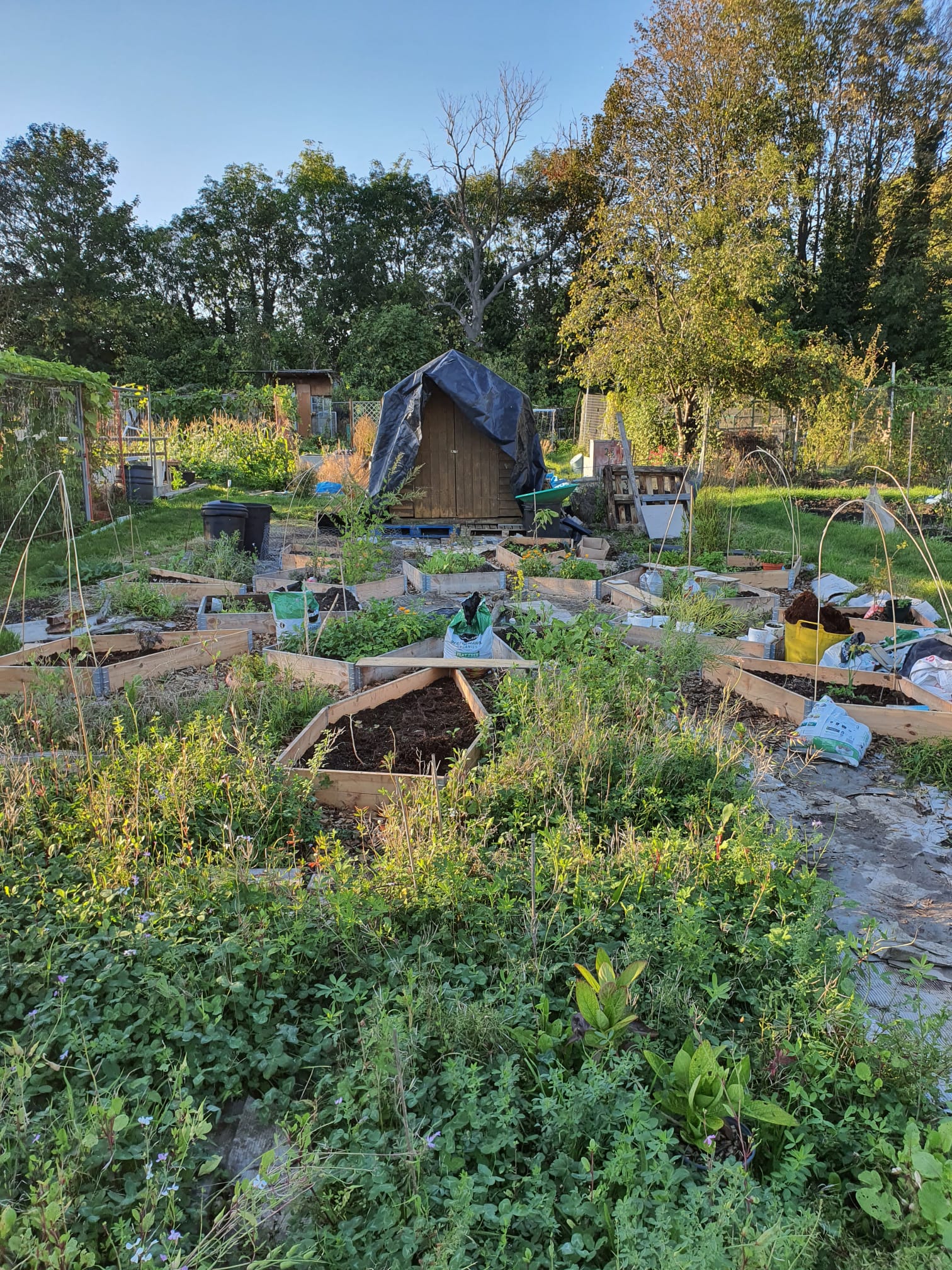
When I was first at the allotment this is what it looked like – covered with a range of plants – rosebay willow herb, creeping cinquefoil, couch grass and field bindweed.
It was so peaceful and beautiful – though part of having an allotment is to grow plants on it and I had 3 months to cultivate at least 25% of it.
My neighbours have been welcoming and given me some plants and lent me their tools on occasion too.
I cleared some of the land to see what was there and found the soil compacted and eventually eased in some coconut coir as a mulch and some compost.
Initially I planted green manures, a mix of classical seeds for this – phacelia, clover, alfalfa – and a few extras simply because I had packets of the seeds at the time – radish and pea seeds that I had bought for sprouting. The soil needed ground cover and protection from the summer that was emerging – and this would help to improve the soil composition and fertility.
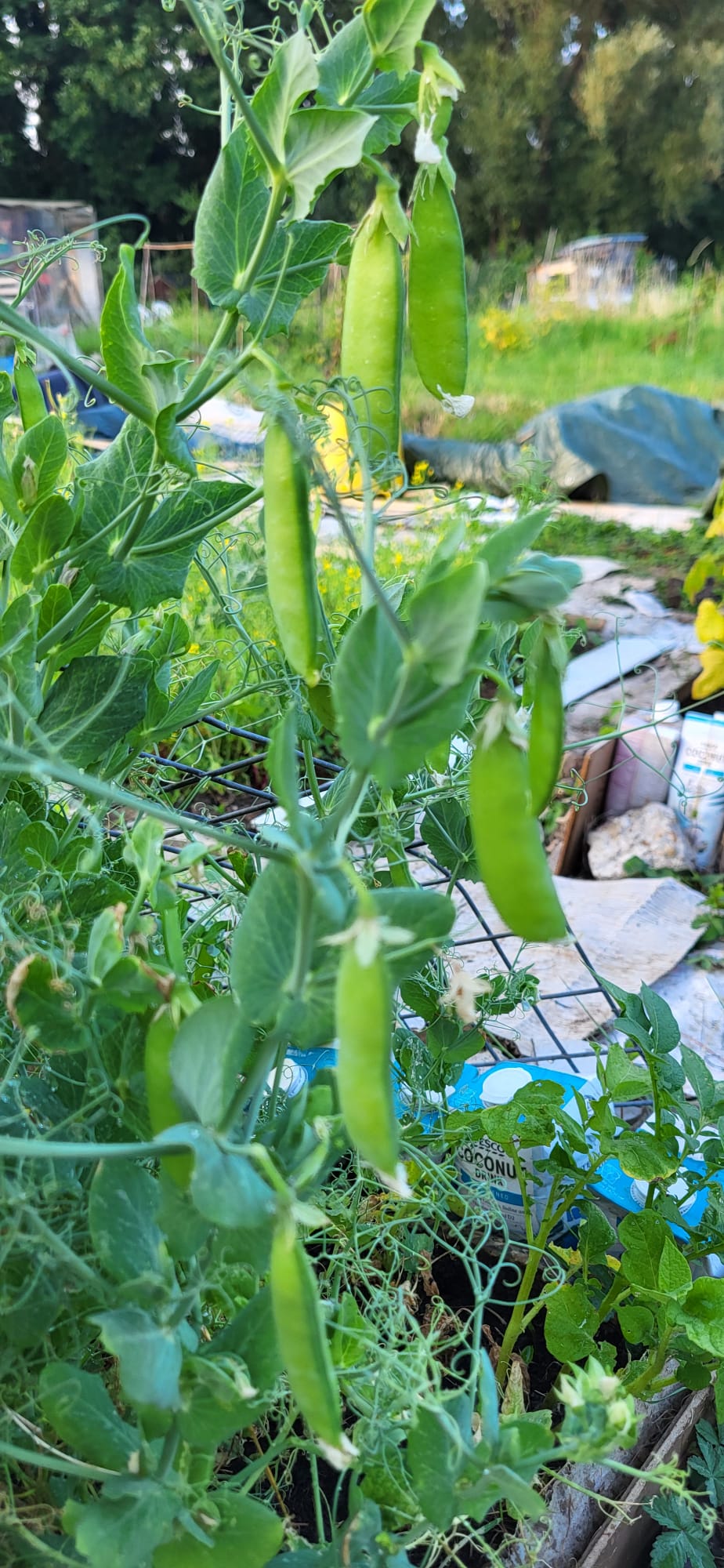
The plants grew quickly in the warmth and rain and survived the hungry slugs. The peas gave some beautiful delicate white flowers and provided some mangetout!
Green manures can be beautiful too.. full of flowers. And why not enjoy plants that are edible – clover leaves, alfalfa tips and plenty of French Breakfast Radishes and radish leaves to enjoy from this luxurious ground cover that has healed, protected and been a home to many beings, including bees, spiders and all sorts of insects.
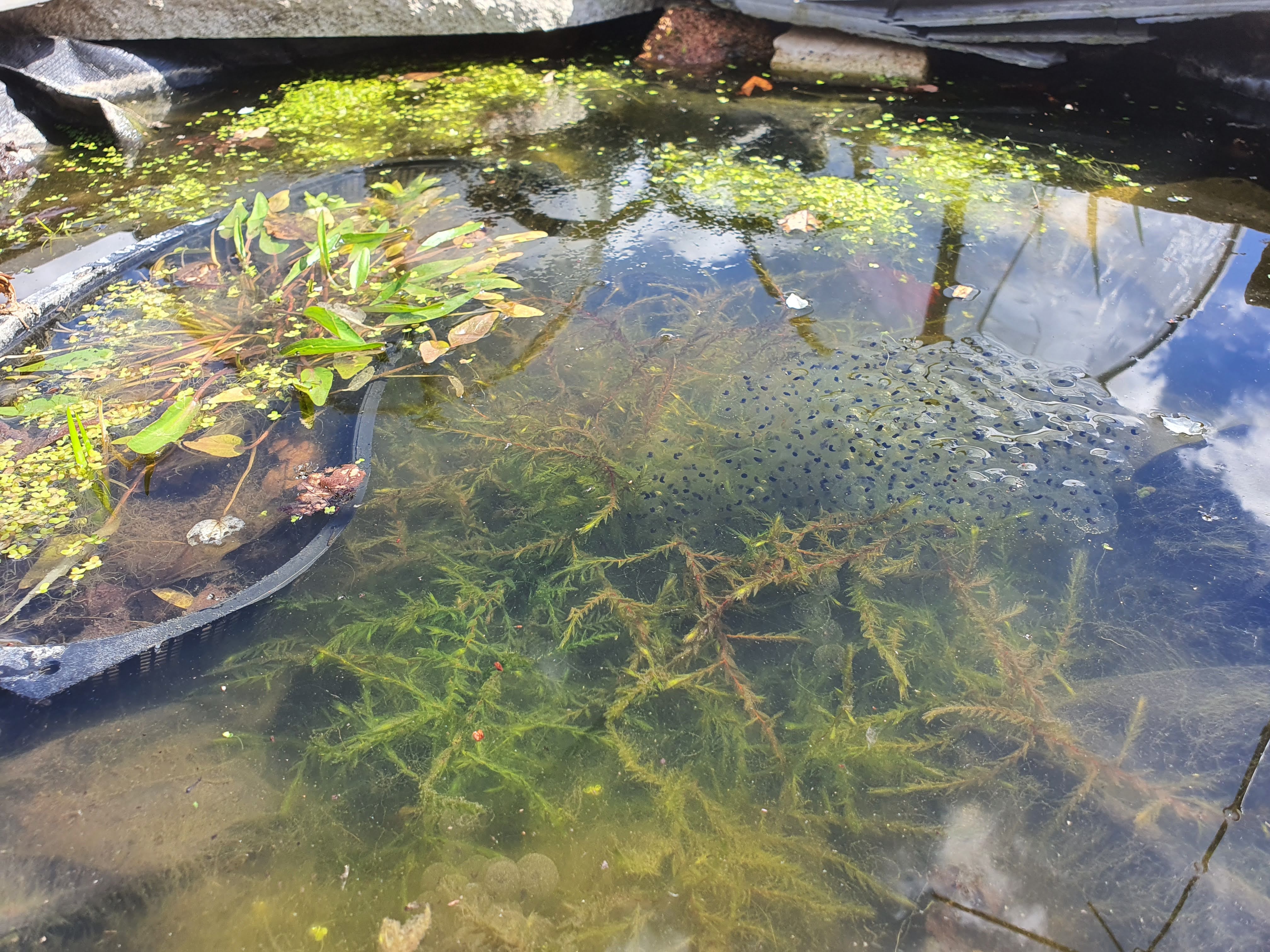
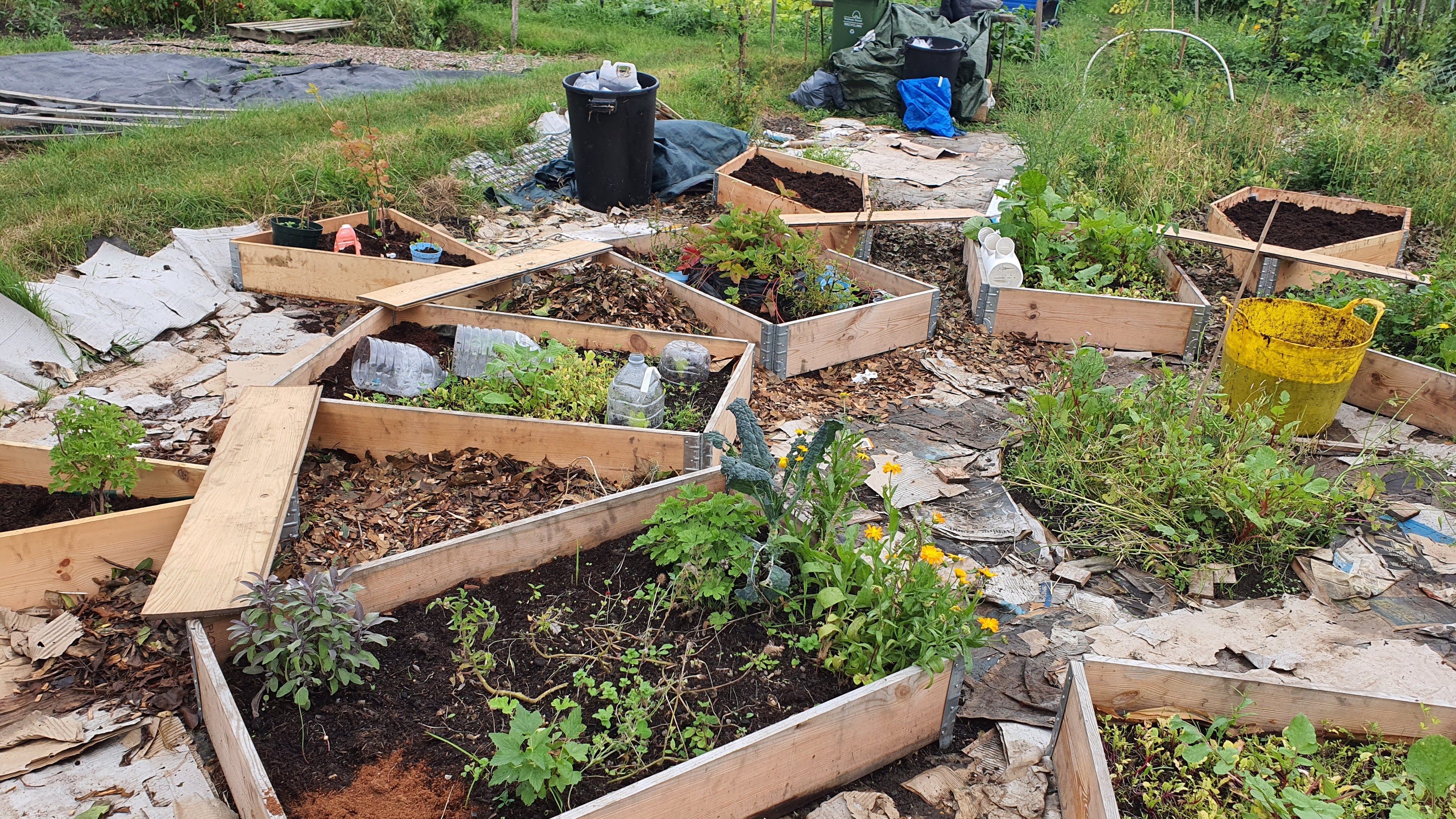
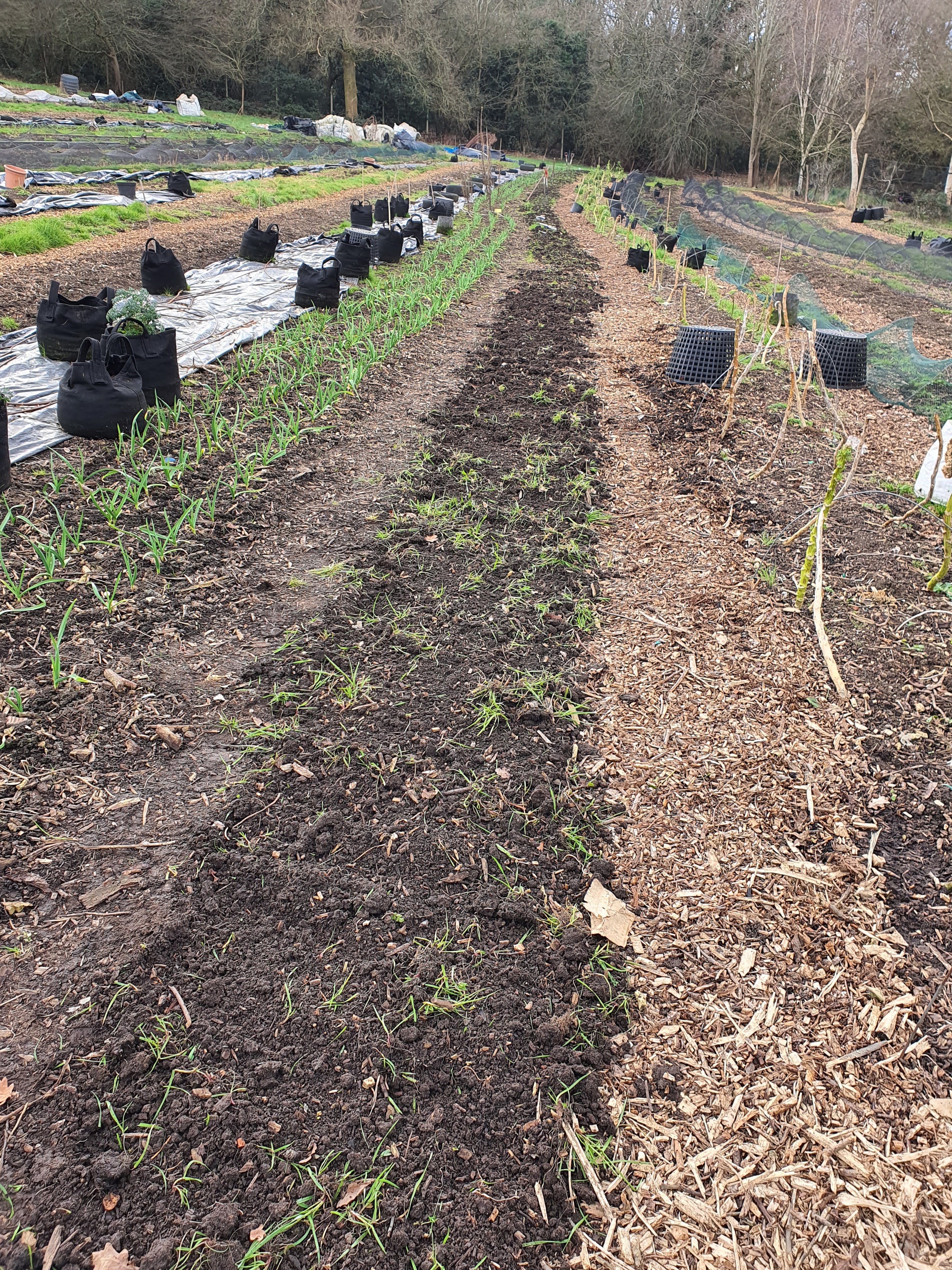
Mainly I have created a mandala of raised beds and a pond in the middle – this is going to be a habitat for the frogs, which I hope will enjoy eating some slugs.
I also found a second-hand shed on Freecycle and my partner helped me get it to the allotment and put it up. I also found other resources at the local recycling centre.
It has been quite a journey and I hope that the spirit of the land feels somewhat nurtured – though it will take time to settle and allow the natural diversity to emerge amongst all the food plants there.
All in all, it has brought hours of peace and connection with the earth and wonder at the range of little creatures and beautiful surprising plants that have appeared amongst the ones that were planted.
I am learning about the seasons and how the rain, wind and sunshine interact with the animals and plants – and myself – as we are all interconnected.
And especially about the spirt of the Earth and how the soil is living and needs protection and nourishment in order to protect, nourishes and heal in reciprocity.
And that maybe I need less leaf mulch on the paths!
Harner Shamanic Counselling is a method developed in the 1980s by Michael Harner, an American Anthropologist, Educator and Writer. He conducted extensive cross cultural anthropological research with those practicing Shamanic methods. Though this, he developed Harner Shamanic Counselling.
Shamanic Counselling restores and enhances our individual spiritual power. It helps us to become our own divinatory shaman and gain answers to important life questions – to help us with almost any issue: physical, emotional or spiritual health, work, relationships, fears, addictions etc.
Shamanism is humanity’s oldest spiritual tradition, dating back at least 40,000 years. It is a body of spiritual techniques that include the art of moving ‘outside of time’ and thereby enabling contact and communication with wise, compassionate and transcendent beings. A practice that enables healing and problem solving on behalf of oneself and others.
Training in the method is undertaken over at least five – and up to eight – in-person sessions, each lasting about 2 hours. The sessions involve teaching you how to undertake shamanic journeys independently to obtain reliable answers to important life questions – to be able to communicate with the ‘true counsellors’, transcended, loving, helpful ‘spirits’ or ‘beings’ that exist all around us.
Shamanic journeying involves shifting one’s consciousness to experience more than ‘ordinary’, everyday reality – this is the informative, creative, healing and imaginal realm known as ‘non-ordinary reality’.
If this interests you please contact me to schedule an initial chat. All the sessions are provided in exchange for a donation – the amount of which is determined by you. Please be aware that there are limited spaces available and I am in training under supervision.
Last weekend I had the pleasure of co-leading the Buddhism and Deep Ecology Retreat with Sanghasiha, another Order Member in the Triratna Buddhist Community. It was hosted by the Alfoxton Park Community and this was a brilliant venue.
The 900+ year old Oak Tree that provided a wealth of inspiration and healing presence.
Sanghasiha and I led a range of workshops and talks, including meditation in the mornings and pujas in the evenings. Pujas are devotional rituals with chanting to invoke the Buddhas and Bodhisattvas. See here for a Friday evening one that I attend at times.
I led two workshops. The first was a healing session, based on working with trees and in this case, with a wonderful Oak Tree that is over 900 years old and which was central to this group practice. I also explored ways of working with energy, including a few practices for cultivating ‘chi’ which was key to the shiatsu teaching and training that I did some years ago.
The second workshop was on Shamanic Journeying. Shamanism is a healing modality that I am using more frequently and as a result have had it included in my practitioner insurance. I realise that this year marks 10 years since doing The Shaman’s Path – an introductory workshop led by The Sacred Trust.
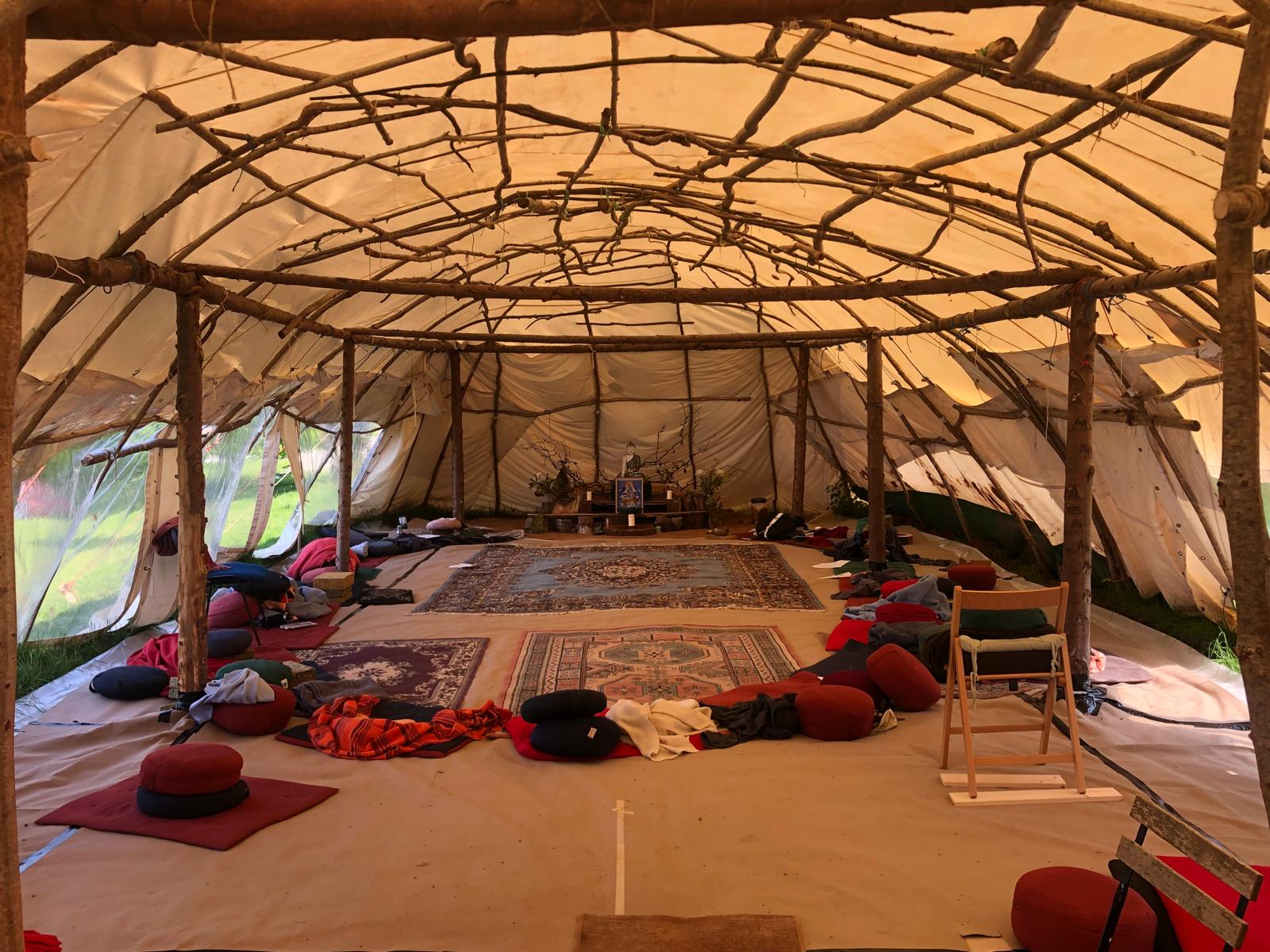
Inside the large ‘bender’ where we held meditations and most of the workshops. There was plenty of space for us all.
This weekend I am about to continue with further training. I would like to share more about this inspiring, animistic and ancient modality of healing in future posts.
In addition, once I get some photos, I will add these to this page. At the time I had my phone turned off for the duration of the workshop – which is a practice for staying present and supporting a focused and undistracted frame of heart-mind.
I was recently contacted by Kris Deva North, my one of my Chi Nei Tsang (CNT) teachers. He had some questions for me and I thought that I would post about them here – it has been an interesting journey.
KRIS: What made you interested in CNT – if you can remember!
Me: I became interested in CNT to complement the Shiatsu practice I had at the time. I was also training with the London Healing Tao and developed a deep respect and appreciation for my teachers Kris Deva North and Mantak Chia. I had been building skills in sensing the energy and using it for healing, especially being able to ‘read’ the hara (tummy region) and understand how the client’s own healing processes could be enhanced. CNT took this to another skill level and enabled me to sense a broader range of qualities of each of the meridian energies and their corresponding organs in the hara.
KRIS: What did you feel in the CNT training?
Me: During the CNT Training I felt more aware of subtle nuances in the hara and overall body. This included how the energy flowed (or did not due to blockages) and a range of emotional and energetic communications coming from and going between the internal organs of the hara. When I received treatments I felt emotional energies flowing and expressions of thoughts and feelings during the healing process. My fingers and hands became stronger, more agile and freer to move and intuitively communicate directly with unconscious, embodied processes deep within the psyche of the individual.
KRIS: What part does it play in your life?
Me: CNT plays a large part in my work as a bodywork therapist and (emerging) shamanic practitioner. I get regular messages from people asking for sessions – either as part of their ongoing healing and transformation journey, or for a specific ailment happening in their lives. They can find out more here: Chi Nei Tsang with Holistic Education
CNT includes working with trees and their energy. This has continued through the years and I regularly visit particular trees to enlist their support in the treatment sessions. They also help with clarifying my own energy and staying grounded and effective in this work. I have also led workshops supporting others in deepening a connection with nature through trees.
CNT also helps me to keep my own energy field clear and help healing processes to continue. Life has ups and downs and working on myself, doing self-CNT, helps me to be more resilient in life and compassionate towards myself and others.
CNT includes sharing practices with others so that they can support their own healing.
Apart from all the Educational Psychology work, Shiatsu and Chi Nei Tsang sessions and teaching Buddhism and practicing yoga and meditation, I am also developing my skills in Horticulture. And today I got a place as a volunteer Trainee Grower in ‘Plants and Production’. I am delighted!
It all started in May 2022, when I started a Level 1 City and Guilds Horticulture course at Organiclea, a worker’s cooperative north of Chingford. I had heard about it because it was where I was getting my weekly bag of locally grown, seasonal organic veg.
As a new year’s resolution, in January 2022, I had signed up to Organiclea’s Fruit and Veg Box Scheme . I wanted to contribute to minimising the disastrous effects of the climate emergency in this essential way – to be the change I wanted to see in the world. I had come to face the truth that the lives of all living beings on the planet are at risk of extinction. So many ‘tipping points’ have been passed… we are facing mass species extinction…. what can I, as an individual, do about it?, I wondered.
I decided to be conscious about the food I ate – I was already eating as a vegan and wanted to do more – and Organiclea’s food is produced with in reach of the city, without the harm caused by pesticides, herbicides – and not linked to animal farming, which is cruel and environmentally destructive. For the amount, variety and tastiness of the food, this was a cheaper and easier way to get quality produce. And the energy that was imbued in the food was exquisite, complex, ‘happy’ – another blessing!
Back to the Horticulture Training story… after doing Level 1, I realised that I loved horticulture. Even more, it was really lovely just being on the farm and bonding with the plants and the soil itself and being part of this community.
In July, at the end of the course, a group of us encouraged each other to go to an open evening where we could learn more about the Level 2 course. We filled in a long forms and did an assessment there and then and pick a course. I decided to go for the Level 2 in Practical Horticultural Skills – after all, I needed to learn the basics and it was on a day of the week that I could do. I was delighted when weeks later, I received an email offering me a place on the course.
I decided I would need time to practice more on the farm. I did one of the monthly Volunteer Induction Sessions – I think it was the first Wednesday in September 2022. And just like that, I was free to come on Wednesdays and Fridays at 11am and do some volunteering with anyone else who was there too. I chose to go on Wednesdays. Here’s a picture of one session on the farm, in September when the leeks are ready for harvesting.
In October, my Level 2 Course started and initially it was a bit tricky, getting into the new vocabulary, learning to use the tools properly, making compost and making leaf mould. I also learnt how to use secateurs properly and got my first pair of secateurs. I tried my best to keep up with the homework and prepare for the assessments. There were interesting people to talk to when there was the chance – it was enjoyable way to spend the first few months of my ‘semi-early retirement’.
By the time we finished the first term’s work, it was December, and our final practical assessment of the year was to prune fruit trees in winter!
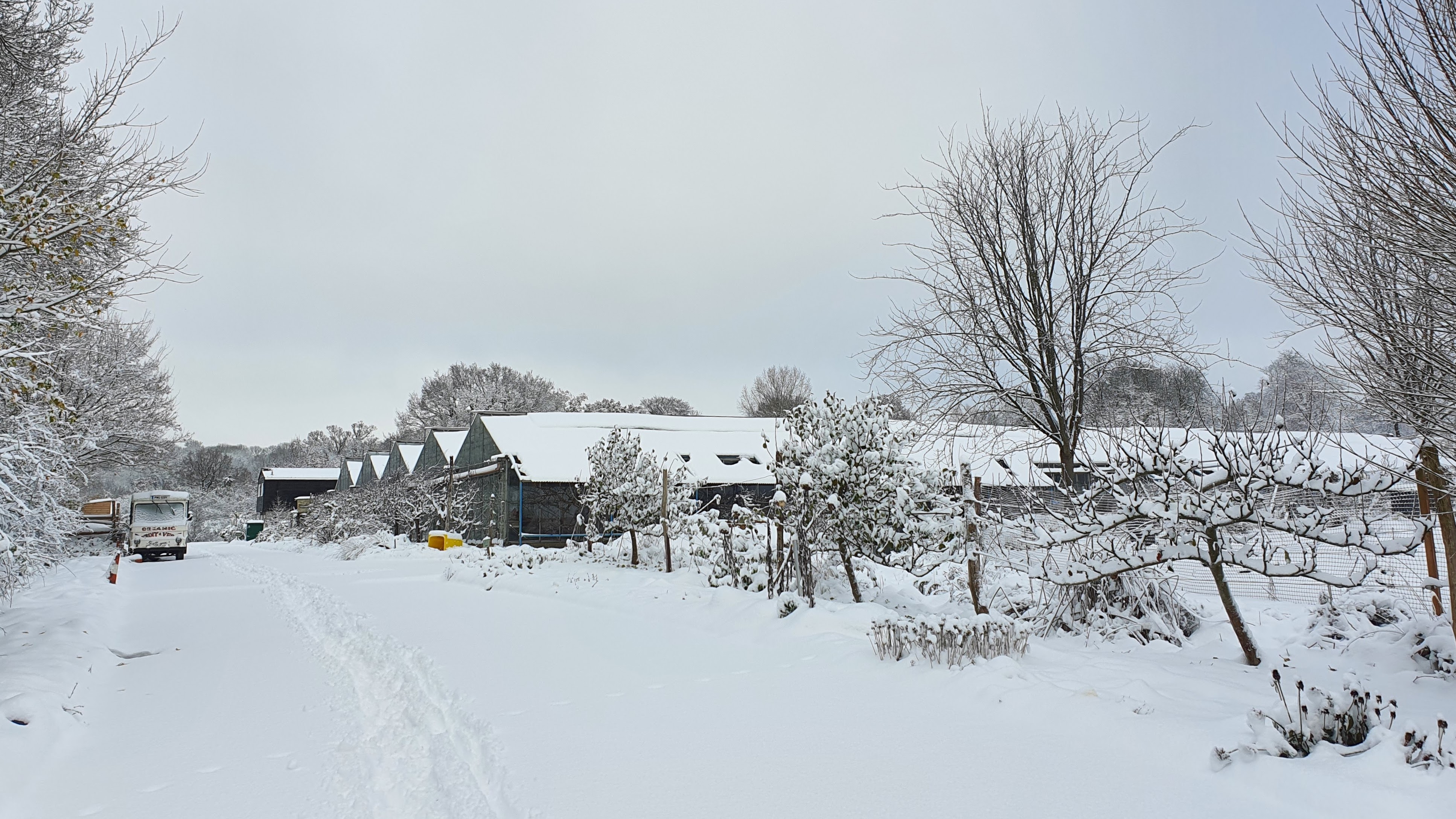
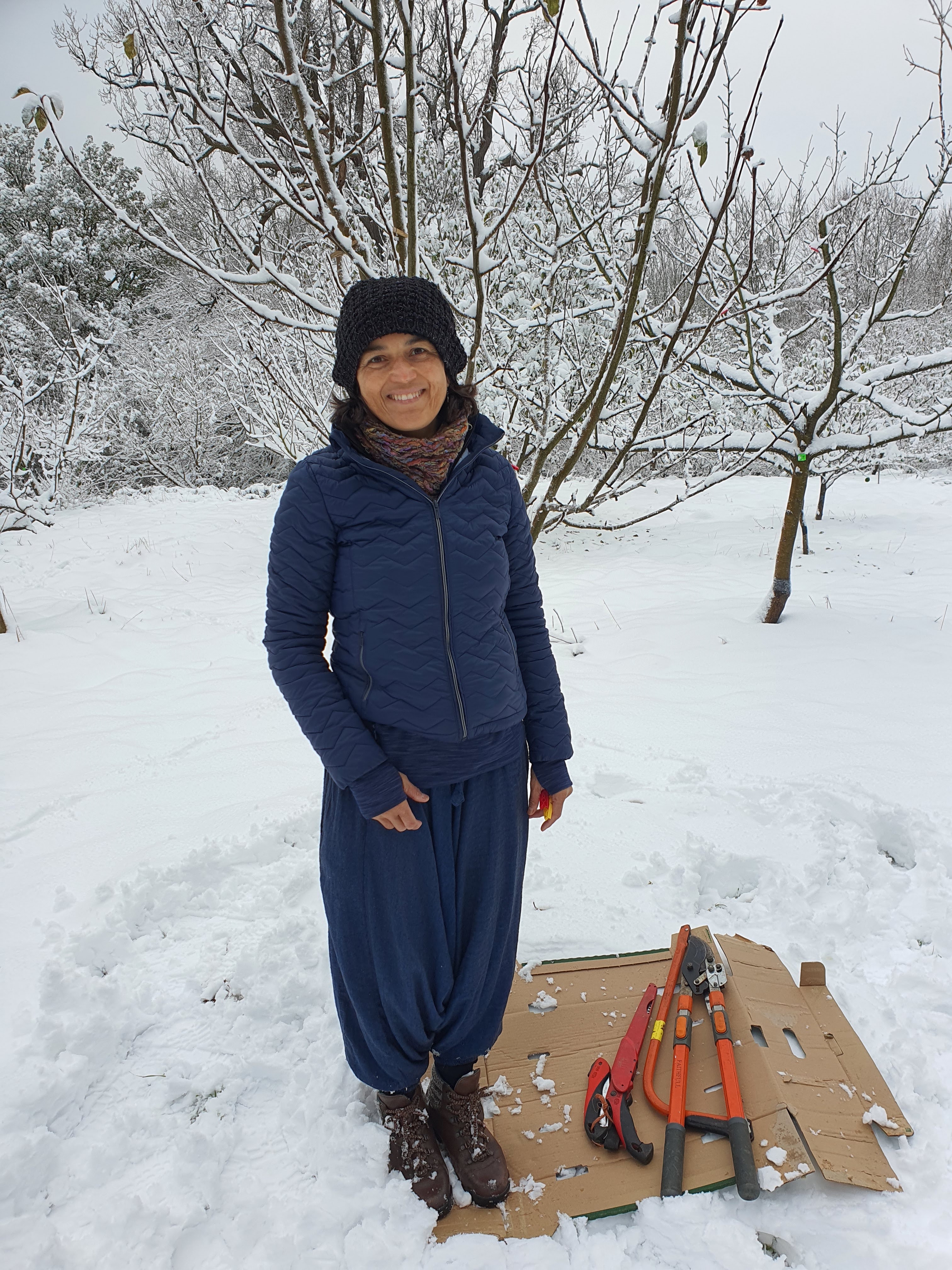
That night the temperature dropped and it snowed. We came to a snowy white Organic lea that was more beautiful than ever.
Here I am next to my little apple tree, all set to start the pruning!
So then came Janaury 2023 and I joined up on the New Entrants Start-up Scheme (NESS) – that is another story.
Then I heard about some volunteer trainee placements and looked into it and decided to give it ago and apply. I did the interview yesterday and today, 15 March 2023, I got a call to say that I have a place: I am going to be a Trainee Grower in Plants and Production. I am amazed. It has all happened so fast.
I’m following my heart, seeing where it leads, catching and honouring the thread of grief, hope and blessings for all beings throughout all time and space. And it is leading to the soil, to the earth, to the plants and animals – human ones included – all Earthlings.










 Holistic Education