
On 28 and 29th March, I travelled to the Penge Community Centre where Kris Deva North of the London Healing Tao Centre was running one of his Chi Nei Tsang training weekends.
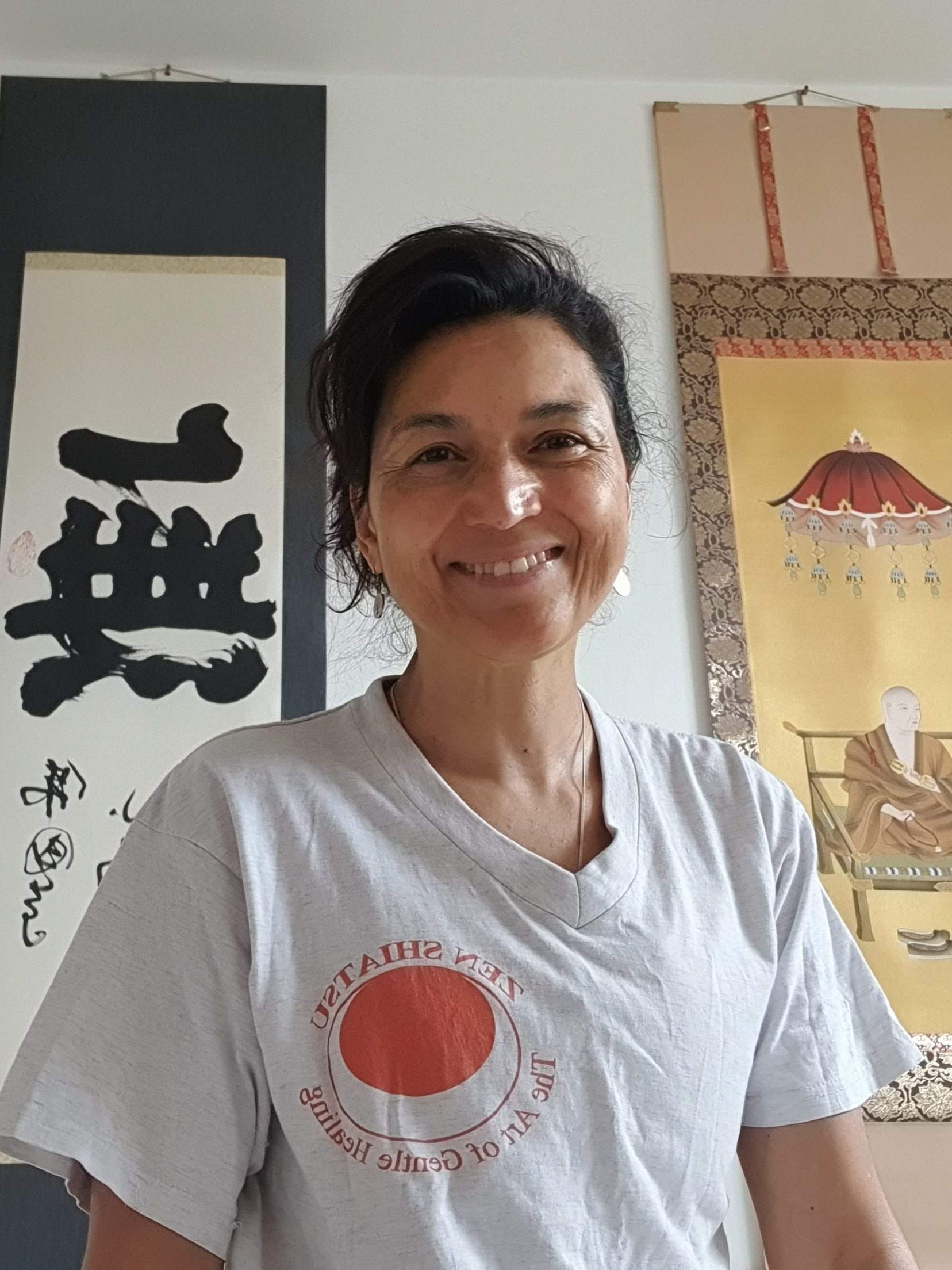
I enjoy supporting and assisting on this events, with Kris – and this supports my own practice of Chi Nei Tsang. I first trained in Chi Nei Tsang – or CNT – in 1999 – initially taught by Kris and then, in 2000, I repeated Level 1 with Mantak Chia who was visiting London at the time. My CNT text book was signed by Mantak on 11 November 2000. This was when I was assessed by him and officially qualified.
Since then, I have been incorporating this form of therapy into the range of healing modalities that I use. I first trained in Holistic Massage, Reiki and Zen Shiatsu – that’s 30 years of practice – including 14 years as a Shiatsu teacher. In the last few years, I have also started incorporating techniques under the remit of Shamanic Healing. These practices are mysterious and beautiful, a gift from the Ancestral Spirits. And all these practices connect very well with CNT.
In the last few years, CNT has risen in popularity. And understandably so, as a full CNT session is immensely transformative. So what is CNT?
At one level, CNT can seem to be about getting your tummy massaged in a healing, soothing way – though various techniques including pressing, poking, prodding and tiny gentle ‘spiralling’ movements. At another level it is important to remember that CNT involves using Chi – the energy, the ‘life force’ that permeates through all things. Furthermore, ‘nei Tsang’ refers to the main internal organs, such as the heart, liver, spleen, kidneys, intestines and so on. In effect, CNT is a therapy that works through multiple levels, from the physical, to the etheric – the level through which the meridians flow – and beyond, the spiritual.
And if you are looking for a CNT session, you may be lucky and simply find someone that you connect well with. This connection, the healing relationship, can go a long way indeed.
Furthermore, CNT is that it does not end once the treatment is over. There is ‘home practice’ to be done. The CNT practitioner is required by the training itself to impart some CNT techniques for the client to practice at on themselves. This enables the empowerment and engagement in the healing journey.
In addition, the process of healing involves giving and receiving, such balance and harmony can be restored. I offer sessions on a ‘donation basis’ where the intention is to empower the person receiving the sessions to express appreciation by donating to reciprocate the practitioner’s time and skills. This can make the donation part of the healing process itself. The dichotomy between ‘healer’ and ‘the healed’ may need to dissolve away such that ‘healing’ is no longer being ‘done to’ and instead is being ‘done with’.
At its best, CNT is a creative, positive, life affirming, co-created process, enabling integration and awakening from the depths to the heights and back again.
 Holistic Education