
Please bear in mind that this is a complex question. Therefore, if you ask another Educational Psychologist (EP) you’ll get another perspective on the answer to this question. At least in the UK, EPs are trained to doctoral level in the field of Educational and Child Psychology. There is pre-requisite training to get on the course itself. if you manage to get on the three year training course, you’ll discover that it is comprehensive it what it covers and includes placement experience.
Those that make it will be trained in a range of skills, including in child development and the interacting factors within an ‘ecological system’.
Using this expertise, the EP uses information from school staff and the families in the ‘consultation meeting’ to discuss the situation and explore it in depth.
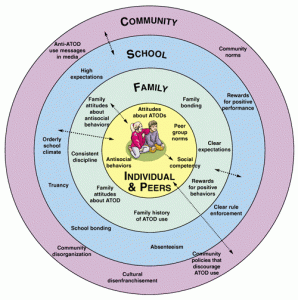
There may be a range of additional factors that need to be taken into account – at different levels of the ‘ecological system’ around the child.
Then from there, EP determines the kinds of recommendations that are needed to support the child/teenager/ young person – your child, your teenager – in making progress with their learning. This is done with the aim of ‘working out what to do’ – creating a plan of actions to help the child or young person make effective educational progress within their ability.
Case conceptualisation: During the consultation, the EP uses their expertise to make a professional judgements about how the complex factors interact together (‘initial guiding hypothesis’). The child’s difficulties are ‘conceptualised’ (case-conceptualisation) as fully as possible. The conceptualisation of the case and all its interacting factors is a complex process.
Individual Intervention Plan: The aim of the process is to create a plan about what to do (intervention plan) and to test it out (actually try out what the EP recommends) and develop ways to help the child make process in their learning. Over time, school staff and the family learn what can help the child’s development, participation, learning and achievement. Once this happens the ‘problem’ is solved and there is no more need for EP input.
One ‘problem-analysis’ model has six phases. There are others with fewer, such as the ‘plan, do review’ model. This one gives some detail (too much?) about the process.
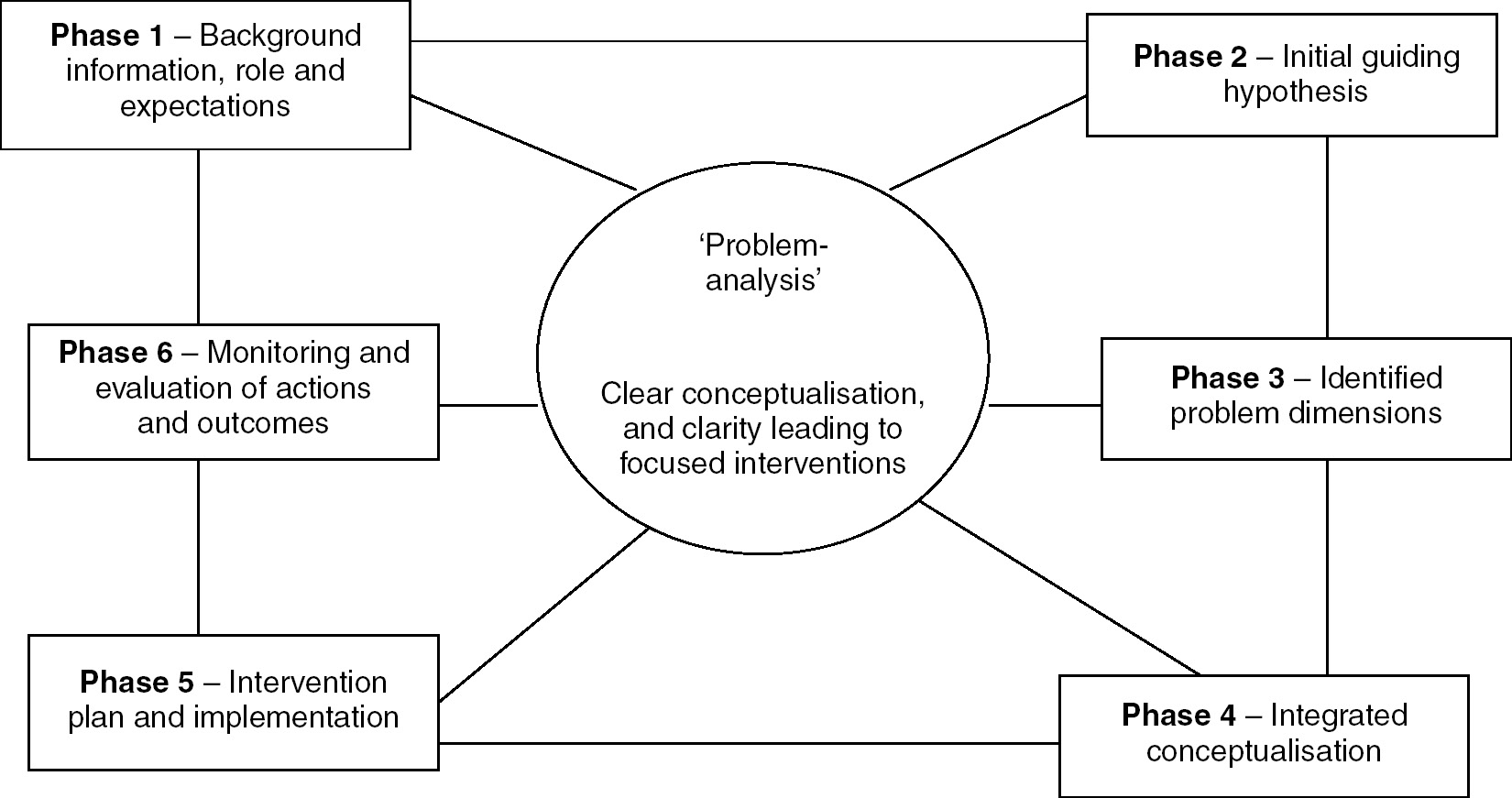
- Background information, role and expectations: this information is the gist of the initial consultation
- Initial guiding hypothesis: The EP starts to form a concept of what the underlying interactive factors are that are impacting on the ‘problem’
- Identified problem dimensions: By asking further clarifying questions, the problem is further analysed.
- Integrated conceptualisation: The key dynamics are identified.
- Intervention plan and implementation: The EP may make so suggestions about what to try out. You may want to discuss these further and collaboratively you work out what is best to do, and over what period of time. Essentially, the plan at best, includes ‘targets’ that are SMART: Specific, Measurable, Achievable, Realistic and Timed. Even better is to write this down so that you can refer to it once you have given it a go – the implementation phase. It takes time to ensure that there is effective implementation.
- Monitoring and evaluation of actions and outcomes: As the family and school try out the suggestions, they also need to reflect upon what works. The implementation plan may be adapted as the child makes progress. This can be done with or without further input from the EP. Once the child makes sufficient and sustained progress, there is no more problem – it is solved.
An example of reading: A common problem I am asked about is reading. There are many factors that can impact on a child’s ability to develop fluent reading skills: decoding skills, phonological awareness, sight word recognition, vocabulary, verbal reasoning skills and so on.
See Scarborough’s Reading Rope as a theoretical model for developing reading skills.
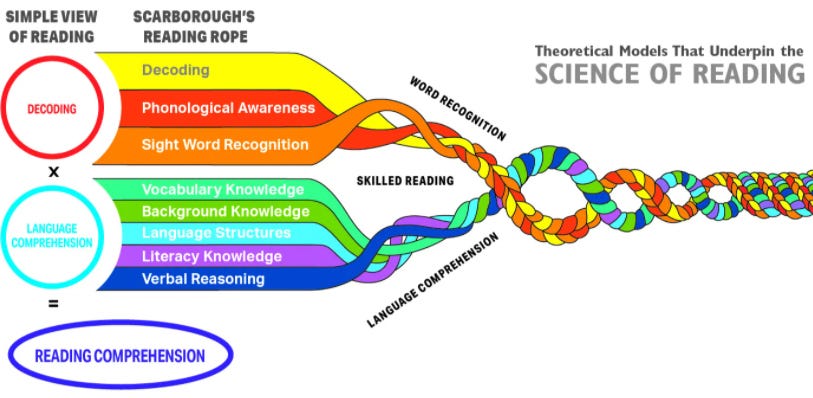
The EP needs to gather information about them all and make professional judgements about the factors that have impacted positively or negatively on each one.
 Holistic Education